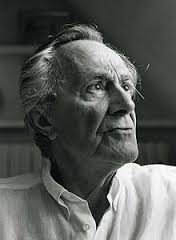
Lyotard was a French philosopher, sociologist, and literary theorist. His interdisciplinary discourse spans such topics as epistemology and communi- cation, the human body, modern art and post- modern art, literature and critical theory, music, film, time and memory, space, the city and landscape, the sublime, and the relation between aesthetics and politics. He is best known for his articulation of postmodernism after the late 1970s and the analysis of the impact of postmodernity on the human condition.
Introductory Comments
For Lyotard, the Enlightenment's great ambi- tion was to replace superstition with a single, sovereign Reason - one grand story in which Science, History, and Humanity marched arm-in-arm toward universal emancipation. The trouble, he argued, is that the 20th century turned that parade into a procession of catas- trophes: Auschwitz made a mockery of moral progress, the gulag discredited Marxist libera- tion, and technocratic capitalism reduced "truth" to whatever produces efficient output. The Enlightenment promised to free us by unifying knowledge; instead, its metanarratives became instruments of the very domination they claimed to dissolve.
Postmodern society, Lyotard contends, has quietly outgrown these grand stories - and is better off for it. Knowledge now lives in a plu- rality of language games, each with its own local rules, each producing its own petits récits, none entitled to legislate over the others. Sci- ence, art, ethics, and politics no longer salute a single flag; they improvise, negotiate, and disa- gree. Unity and consensus, far from being the crown of reason, become the gentle tyrannies of our age - ways of smuggling one idiom into the place of all others and calling the silence "agreement." In short: where the Enlighten- ment heard a symphony, Lyotard hears a jam session - a rich mixture of sounds playing off one another, without "help" from a conductor.
Some of Lyotard's Key Positions
The metanarratives exalted by the Enlighten- ment - the objectivity of science, the inherent goodness of humanity, the possibility of abso- lute freedom, the steady progress of history towards civilization - can now be seen for what they really are: cultural myths and political palliatives.
The world today is clearly too diverse and too alert to diversity to accept such universal "truths." We are also now too conscious of the power of cultural and political bias to swallow those earlier palliatives.
What we need today are not metanarratives, but micronarratives. We need to appreciate differences in character, differences in culture, differences in perspective. Universals - especially those exalted universals of the Enlighten- ment - should no longer be permitted. Instead, As Wittgenstein recommended, we should look at the individual language games at work in words like "justice," "progress" and "beauty."
We also need to realize that the meaning of such words is not to be found in what we com- placently call reality. We need to realize that such words have no one meaning. Rather, they have multiple meanings, according to multiple perspectives. The differences in meaning and perspective - not some pretended consensus - are what we need to uncover and explain.
Place in the History of Ideas
Lyotard's Place in History of Ideas
Charles J. Stivale: Jean-François Lyotard's is a dense work of philosophical, political, and ethi- cal reflection aimed at a specialized audience versed in current debates in logic, pragmatics, and post-structuralism. Even George Van Den Abbeele's excellent translation…, does not, indeed cannot, alleviate the often terse prose with which Lyotard develops his reasoning. With this said, I must also observe that this work is of vital importance in a period when revisionism of all stripes attempts to rewrite, and often simply deny, the occurrence of historical and cultural events, i.e. in attempting to reconstruct "reality" in the convenient names of "truth" and "common sense."
Michael Bérubé: Though I get impatient with Jean-François Lyotard and with all who cite him as a bringer of Higher Truths, I find him impossi- ble to dismiss completely - if one is going to be a responsible citizen of the world. For Lyotard surveys the world’s different ways of thinking and believes that to bring them to “consen- sus” - or even to try to get them communicat- ing reciprocally - is to do irreparable harm.... More than this: for Lyotard, the effort to nego- tiate the heterogeneity of language games amounts to a kind of terror. This view is badly mistaken, I think…. And yet Lyotard’s idea of the "differend," or the nonnegotiable differ- ence, strikes me as absolutely essential to an understanding of education & cultural conflict.
Random Thoughts on Lyotard
Unimpressed with Lyotard's postmodernm ca- cophony of voices, Habermas responded with philosopher's most devastating weapon: the internal contradiction: If incredulity toward metanarratives is itself a sweeping, universal claim about the nature of knowledge and soci- ety, then Lyotard's postmodernism is - rather embarrassingly - a metanarrative about the impossibility of metanarratives. Worse still, Lyo- tard made this argument in dense, systematic, carefully reasoned philosophical books, which is to say he constructed an elaborate theoretical edifice to argue that elaborate theoretical edifices cannot be trusted.
Habermas's deeper worry, however, was not merely logical but political. Without some shared rational standard - without, that is, the possibility of appealing to norms that transcend any particular language game - we are left with no principled basis from which to condemn oppression, expose ideology, or demand justice. If every claim to universality is just a disguised power grab, then the victim's cry for justice is no more valid than the oppressor's justification for cruelty; they are simply two more language games, playing by different rules. For Habermas, abandoning universal reason in the name of liberation is rather like burning down the courthouse to protest an unjust verdict - the gesture feels radical right up until the moment you need somewhere to file your appeal.
Brandom (We adopt different vocabularies to different contexts & problems.)
Gadamer (We inevitably think and speak as part of cultural traditions.)
Jacobi (Demonstrative reasoning can never lead us to understanding reality.)
Kant (The sublime is a mix of feelings we have confronting the overpowering.)
Levinas (General theories of human history are both unhealthy & unneeded.)
Nagel (We can't view reality devoid of assumptions, perspectives, and biases.)
Putnam (There can be many objective and correct descriptions of reality.)
Rorty (There can be no non-circular justification for any metaphysical belief.)
Wittgenstein (Language is an activity or form of life. It's a "game" we play.)
Thinkers with opposing positions:
Badiou (Though truth is real, it exists in the context of metaphysical pluralism.)
Cousin (Reason enables us to pass beyond the relative and subjective.)
Frege (Logic is the appropriate measure of what can or cannot be.)
Habermas (We must not give up on Enlightenment ideals of reason & science.)
MacIntyre (Society relies on narratives that give coherence & meaning to life.)
Nussbaum (Truth exists and reason is our best tool for finding it.)
Popper (The search for truth should be completely fact-based and objective.)
What others said about Lyotard
Kem D. Crimmins: [T]he task of philosophy, according to Lyotard, is to champion and protect the diversity of discourse and practice.
Richard Wolin: The basic imperative of postmodern politics, [for Lyotard], is to create communities in which the integrity of different language games is respected - communities based on heterogeneity, conflict, and "dissensus."
Peter Gratton: [A]ll of his works attempt to testify to that which escapes language, though we never stop attempting to articulate.... The postmodern, then, bears witness not to the fact that there are no facts, but rather that those claiming a passkey to reality merely want to make a claim for the hegemony of one phrase regimen (e.g., the sciences...) over all others.
Jeanne Willette: Lyotard considered that any form of control of knowledge was a form of violence and terror against intellectual freedom…, using words… laced with his past experiences with totalizing systems.
Terence Green: He wrote as if he believed himself to be a divine oracle, and his minions have tended to write in the same impenetrable way ever since.
Richard Wolin: He argued that, because rational thought or judgment is discursive and works of art are inherently symbolic, certain aspects of artistic meaning… will always be beyond reason’s grasp.
Michael Bérubé: If you pursue Lyotard too far, of course, you wind up unable to criticize other cultures’ practices of female circumcision or widow burning, but if you don’t pursue Lyotard at all, you risk succumbing to the fantasy that all disputes between "reason" and "unreason," or between different varieties of reasoning, can be mediated by a double dose of reason.
Peter Gratton: The range of Lyotard’s works were not limited to diagnosing the politics of postmodernity, but also made important contributions to aesthetics, the philosophy of science, and the philosophy of language....
Main interests: Alienation, Art and Aesthetics, Communication, Cultural Studies, Language, Literary theory, Literature, Politics, Popular Culture, Psychoanalysis, Science, Social Theory, Sublime Nature