Thomas Nagel (1937)
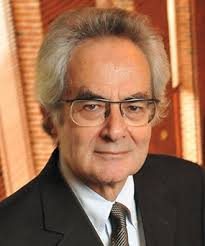
Open Nagel's interactive page (graphs of influences, similar and opposing positions, and quotes)
Background
Thomas Nagel
Born: July 4, 1937 in Belgrade, Yugoslavia
Alma mater: Cornell Univ. (BA), Corpus Christi
College, Oxford (BPhil), Harvard Univ. (PhD)
Notable work: The Possibility of Altruism,
"What Is it Like to Be a Bat?", Mortal
Questions, The View From Nowhere, Equality
and Partiality, The Last Word, Mind and Cosmos
School: Analytic philosophy
Main interests: Political philosophy, ethics,
philosophy of mind, epistemology, science,
evolution, consciousness
Influences: John Rawls, Ludwig Wittgenstein,
J. L. Austin, H. Paul Grice, Timothy Sprigge,
Elizabeth Anscombe, Saul Kripke
Influneced: Derek Parfit, David Franklin, Susan
Wolf, Rebecca Goldstein, Shelly Kagan, Samuel
Scheffler, Philippa Foot, David Chalmers, Colin
McGinn, Alvin Plantinga, Sam Harris
From Wikipedia
[Nagel's] main areas of philosophical interest are legal philosophy, political philosophy, and ethics. [He] is known for his critique of material reductionist accounts of the mind, particularly in his essay "What Is It Like to Be a Bat?" and for his contributions to liberal moral and political theory in The Possibility of Altruism and subsequent writings. He continued the critique of reductionism in Mind and Cosmos, in which he argues against the neo-Darwinian view of the emergence of consciousness.
Introductory Comments
Nagel believes that virtually every major solu- tion to the mind-body problem either explains away consciousness or turns it into a ghostly intruder in the physical world. Reductive mate- rialism tells us that thoughts and feelings are "really" just brain processes, but Nagel argues that no inventory of neurons, synapses, or elec- trochemical firings can capture what experience feels like from the inside. The taste of coffee, the sting of shame, the eerie redness of a sunset - these are not visible from the outside looking in. Cartesian dualism, the venerable alternative, posits mind and matter as two distinct substances. But this merely relocates the problem: if mind and matter are fundamen- tally different kinds of thing, how on earth do they manage to talk to each other?
The remaining popular options fare no better. Eliminativism - the view that mind is a kind of folk illusion - asks us to deny the most undeni-able thing we have, which is rather like arguing that argments don't exist. Epiphenomenalism, which grants that consciousness exists but de- nies it any causal power, turns the mind into a mere spectator of its own life - a ghost that cannot even rattle its chains. And theism, which turns to God for the answer, simply reloates the mystery into a mind even larger and more inex-plicable than our own. In the end, Nagel sees each of the standard "answers" to the mind-body problem as less solution than evasion.
Some of Nagel's Key Positions
Greater objectivity does not always yield great-er understanding, especially in ethics, politics, and the study of mind. The objective stand- point of natural science, however powerful, leaves out something essential: the subjective character of conscious experience. Human understanding cannot be reduced to the software of computers nor to the hardware of the brain. Perception and thinking are qualita-tive - they have a certain experiential feel, a character from the inside.
Consider the bat: even complete physical knowledge of a bat's nervous system would not tell us what it is like, from the inside, to be a bat. The point is not that bats are mysterious but that subjective points of view cannot be captured by methods designed to abstract away from any particular point of view.
To be a conscious thinker is to occupy a subjec- tive perspective on the world. A philosophy that tries to eliminate that perspective in favor of a purely objective "view from nowhere" leaves out precisely what most needs explain- ing - and gives us reason to doubt that reduc- tive physicalism is the whole story. But the goal is not to abandon objectivity - just recognize its limits. Human understanding is divided between subjective and objective standpoints, and philosophy matters because it tries to understand how those standpoints fit together.
Place in the History of Ideas
Nagel's Place in History of Ideas
P. N. Furbank: Thomas Nagel has been insisting that we must remain patiently agnostic in the face of this reductionist identification of mental with physical. In a famous essay from 1974, called “What Is It Like to Be a Bat?,” he defend-ed the sovereignty of subjective consciousness. Each of us conscious beings, when we experi- ence a simple thing like yellowness or a hand- clasp or anger, enjoys a personal, non-fungible subjectivity, whose mystery will never be acces- sible to the measurers of sparks and drips.
Charles Taliaferro: Nagel's defense of the legitimacy of both one's subjective perspective and an objective, nonindividual point of view, has been part of Nagel's resistance to philoso-phies that do away with either. So, in several books and many articles, Nagel has authored an influential critique of forms of physicalism that eliminate or do not take seriously the reality of subjective experience, and he has also been highly critical of philosophies that give way to skepticism because they grant excessive authority to subjectivity.
Christine M. Korsgaard: An agent has a special relationship to his own projects and own loved ones, and Nagel argued that, because of that relationship, the agent’s desires to engage in those projects and to promote the happiness of his loved ones are sources of reasons for him but not necessarily for anybody else.
Random Thoughts on Nagel
After rejecting all the standard answers to the mind-body problem (see Introductory Com- ments), Nagel cautiously entertains a dual-spect view: mind and matter are not two separate substances but two faces of a single underlying reality, neither reducible to the other. This at least avoids the collision problem of dualism and the disappearing act of physicalism. Howev- er, Nagel insists that the related theory of emergence - the popular notion that mind aris- es naturally from sufficiently complex matter - can't do the job alone. To say that conscious- ness simply pops into existence once neurons get complicated enough, is for Nagel not an ex-planation but a promissory note labeled "mys- tery solved here."
Nagel toyed with more radical ideas, including panpsychism: if full-blown consciousness cannot spring from ingredients that are wholly non-mental, then the basic building blocks of reality must already possess some proto-mental char- acter. He also explored a natural teleology, in which the universe harbors lawlike tendencies toward life, consciousness, and value - neither divine purpose nor blind chance. The universe, on this view, may contain a faint bias toward waking up and thinking about itself - though Nagel presents these ideas less as final answers than as lanterns carried into very deep fog. And as to natural selection, Nagel is sure it's part of the story - but not at all sure as to what part.
Influences
Nagel was influenced by: Anscombe, Austin, J.L., Grice, Paul, Kripke, Rawls, Sprigge, Wittgenstein
Nagel influenced: Chalmers, Foot, Frankel, David, Goldstein, R., Harris, Kagan, Shelly, McGinn, Parfit, Plantinga, Scheffler, S., Wolf, Susan
Similar and opposing positions
Thinkers with similar positions:
- Brandom (Much of the meaning of words springs from their inferences and uses.)
- Chalmers (There's an explanatory gap between physical & phenomenal realms)
- Davidson (Our reasons do not need to be precise to be causally effective.)
- Deleuze (Philosophy is the creation of concepts, not the discovery of truths.)
- Derrida (There is nothing outside context. All meaning relies on context.)
- Goodman (There are no unquestionable "givens" in what we call knowledge.)
- Lyotard (We've outgrown our need for universal theories & grand narratives.)
- MacIntyre (Rationality is inevitably linked to cultural traditions.)
- McGinn (Our minds may not be equipped to grasp the causes of mind.)
- Putnam (There are multiple descriptions of reality that are equally true.)
- Schlegel (There are no first principles that can guide us to the truth.)
Thinkers with opposing positions:
- Cousin (Reason enables us to pass beyond the relative and subjective.)
- Descartes (Animals are not conscious creatures, but unconscious machines.)
- Frege (Logical & philosophical problems can be solved by perfecting language.)
- Popper (The search for truth should be completely fact-based and objective.)
- Reid (When philosophy contradicts common sense, it should be dismissed.)
- Tarski (The meaning of a sentence is equivalent to its truth conditions.)
What others said about Nagel
- Kieran Setiya: For Nagel, reality has a subjective dimension closed off to all objective inquiry.
- Charles Taliaferro: While there is not a single... theme running through all his work, Nagel has persistently engaged the problem of reconciling an objective view of reality with one's subjective, individual experience as a person.
- P. N. Furbank: Nagel doesn’t intend to be an obfuscator or a mystic. He is a dyed-in-the-wool atheist and takes pains to make that clear. He is very much on the side of science. But he feels that science has oversimplified two important mechanisms of nature: mind and evolution. The mind must be more than [matter]; and consciousness must have evolved [for a reason].
- Charles Taliaferro: Nagel allows that there is some tension between such an agent-neutral perspective and some of the values that have their place in specific, personal contexts.
- Kieran Setiya: For Nagel, moral reasoning is no more occult than our capacity for justified beliefs about... the distant past, and the far-flung future.
- P. N. Furbank: Nagel thinks one must go beyond the Darwinian story to explain the appearance of "conscious organisms, and not merely behaviorally complex organisms."
- Kieran Setiya: [Nagel embraced] a radical metaphysics in which there is an essentially subjective aspect to everything that exists, from human beings down to fundamental particles. We don’t know what it’s like to be a quark, but... it must be like something. To make sense of consciousness, and the evolution of reason, Nagel holds, we need a conceptual revolution.
- P. N. Furbank: ... Nagel believes that certain deeds would be wrong whether humans thought so or not, and this structure of morality must have existed independently before conscious minds started musing over it.
Schools: Absurdism, Analytic Philosophy, Antireductionism, Common Sense Realism, Deontological Ethics, Liberalism, Positivism, Pyrrhonism, Social Liberalism
Main interests: Consciousness, Death, Epistemology, Ethics, Evolution, Fact–value distinction, Free/Unfree Will, Law, Mind, Personal Identity, Political Philosophy, Science, Set Theory, Time
Nagel's answers to philosophical questions
Epistemology
"If you can’t prove that anything exists outside you own mind, is it all right to go on believing in the external world anyway?"
Understanding does not necessarily improve in relation to objectivity, particularly regarding moral, social & political matters.
"If we tried to rely entirely on reason, and pressed it hard, our lives and beliefs would collapse…."
"Objectivity of whatever kind is not the test of reality. It is just one way of understanding reality."
To attempt to escape our subjectivity through logic and science is to abstract away what most needs explaining: our humanity.
Ethics
"[E]xpressivist accounts of... moral judgments [expressing our responses] are no more plausible than" subjectivist accounts.
"To look for a single general theory of how to decide the right thing to do is like looking for a single theory for [believing]."
Altruism is possible: As one can act on the interests of some future self, so one can act on the interests of some other being.
"Absurdity is one of the most human things about us: a manifestation of our most advanced and interesting characteristics."
Ethical behavior requires that we recognize the reality of other people and that we see our individual self as one among many.
"I conceive ethics as a branch of psychology." However, that in itself does not mean that our ethical beliefs are false.
"I should not really object to dying were it not followed by death."
"If… from eternity's point of view there is no reason to believe that anything matters, then that does not matter either…."
Metaphysics
"Materialism is incomplete even as a theory of the physical world, since the physical world includes conscious organisms…."
"I’m not sure I understand how responsibility for our choices makes sense if they are not determined."
The dualism of mind and matter is real. The subjective & experiential nature of consciousness can never be reduced to matter.
"[T]here is a... connection in both directions between the physical and the mental, but... it cannot be discovered a priori."
"Without consciousness the mind-body problem would be much less interesting. With consciousness it seems hopeless."
Mind
"[F]undamentally an organism has conscious mental states if and only if there is something that it is like to be that organism."
Though the mind relies on the brain, it can't be reduced to the brain. The mind entails a conscious and subjective experience.
Human understanding is not purely rational. Our everyday grasp of things embraces our peculiar nature as conscious beings.
The mind isn't a mere by-product of the brain that can be easily dismissed. The mind is the essential aspect of a living creature.
"The existence of consciousness is both one of the most familiar and one of the most astounding things about the world."
Nature
"It is prima facie… implausible that life as we know it is the result of a sequence of physical accidents [plus] natural selection."
"Each of our lives is a part of the lengthy process of the universe gradually waking up and becoming aware of itself."
Philosophy
"Philosophy is the childhood of the intellect, and a culture that tries to skip it will never grow up."
"One of the legitimate tasks of philosophy is to investigate the limits of even the best developed… scientific knowledge."
Though logic has a role in philosophy, when it leaves no room for human subjectivity, logic strips philosophy of its relevance.
Political Philosophy
As admirable as Rawl's argument is, his notion for bringing about social equality needs to be more ambitious or expansive.
Psychology
"A theory of motivation is defective if it renders intelligible behaviour which is not intelligible."
"If I thought that everything I did was determined by my circumstance and my psychological condition, I would feel trapped."
We're "more of a maelstrom of impulses & passions, of cruelty, ecstacy, & madness, than is apparent to [our civilized selves]."
"The human will to believe is inexhaustible."
"If life is not real, [if] life is not earnest, and the grave is its goal, perhaps it's ridiculous to take ourselves so seriously."
Religion and Theology
"Perhaps the belief in God is the belief that the universe is intelligible, but not to us." Would this qualify as spirituality?
"If God exists, he is not part of the natural order but a free agent not governed by natural laws."
"We are an episode between two oblivions."
"It’s [my] hope [that] there is no God! I don’t want there to be a God; I don’t want the universe to be like that."
Science
Physics progressed by ignoring the mind, "but there may be more to the world than can be understood by physical science."
"Too many hypotheses [assume] that we [possess the] forms of understanding needed to comprehend absolutely anything."
"In spite of the exclusion of teleology from contemporary science, it certainly shouldn't be ruled out a priori."
Society
In man, the "universe has become not only conscious… of itself but capable in some respects of choosing its... future…."