Victor Cousin (1792 - 1867)
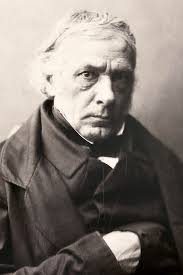
Open Cousin's interactive page (graphs of influences, similar and opposing positions, and quotes)
Background
Victor Cousin
Born: 28 November 1792 in Paris, France
Died: 14 January 1867 (aged 74) in Cannes,
France
Alma mater: École Normale Supérieure
Schools: Eclectic Spiritualism, Eclecticism
Main interests: Ontology, epistemology,
education, religion, history, psychology
Influences: Descartes, Maine de Biran, Kant,
Friedrich Heinrich Jacobi, Schelling, Hegel,
Pierre Paul Royer-Collard, Thomas Reid,
Plotinus, Condillac, P. Laromiguière, Locke
Influenced: Théodore Simon Jouffroy, Jean
Philibert Damiron, Adolphe Garnier, Proudhon,
Jules Barthélemy Saint-Hilaire, Felix Ravaisson-
Mollien, Charles de Rémusat, Emerson, Jules
Simon, Paul Janet, Adolphe Franck, Patrick
Edward Dove, Horace Mann, Calvin Stowe,
Theodore Parker
From Wikipedia
Cousin was a French philosopher. He was the founder of "eclecticism," a briefly influential school of French philosophy that combined ele- ments of German idealism and Scottish Common Sense Realism. As the administrator of public instruction for over a decade, Cousin also had an important influence on French educational poli- cy…. [Cousin believed that philosophy should] not be a mere aggregation of systems, as is ignorantly supposed, but an integration of the truth in each system after the false or incomplete is discarded.
Introductory Comments
Cousin was a philosophical chameleon, taking on at least some of the colors of nearly every thinker he studied. Plato and Proclus, Descartes and Locke, Reid, Kant, Jacobi, Schelling, Hegel - and, one suspects, whoever he had just finished reading: Cousin was determined to find a pearl in every book he cracked open. He insisted, however, that this was a method, not an appetite. Eclecticism, he said, selects according to the observed facts of consciousness - and therefore differs from stirring everything together and hoping for the best.
His critics were unpersuaded. Hegel is said to have remarked that Cousin took a few fish from him and drowned them in his own sauce. Taine, a generation later, came at him with a hatchet, devoting several chapters to dismantling both Cousin’s philosophy and his reputation. Other critics accused him of dressing compromise up as reconciliation and misunderstanding a fair share of what he borrowed. Plus, a determination to find pearls in every philosopher can dull the critical edge - especially since not every oyster has one. The question, then, naturally arises: Is eclecticism here itself a problem? In his defense, Cousin could argue that truth is rarely the exclusive property of one school. In their defense, his critics could argue that, without a new synthesis of some sort, gathering conflicting ideas produces a collection - not a philosophy. And so the question: Is an open mind a way of seeing every color, or is it an admission of having none of one's own?
Some of Cousin's Key Positions
The basis of a sound philosophy is much the same as that of science: observation, induction, and analysis. Descartes began there - with the fact of consciousness itself - but soon deserted it for deduction and system-building. The Scottish philosophers, Reid above all, kept faith with the observational method longer and more fruitfully.
In philosophy, observation means the study of consciousness. Consciousness discloses three things: sensation, which reports the external world; will, which constitutes the self and is free and spontaneous, dependent on nothing, not even reflection; and reason, which is not personal at all. Reason's truths impose themselves rather than being made by us. Their source lies beyond the individual, and by that impersonal reason thought passes from psychology to God. The common-sense view of things is thus no illusion: matter, self, will, and other minds are all vouched for.
The same observation supplies a standard for judging philosophy's history, which shows every system holding a portion of the truth and erring only in mistaking its portion for the whole. Sensualism is right about sensation, idealism about the primacy of reason, skepticism about dogmatism's overreach, mysticism about reason pointing beyond the individual mind. Eclecticism gathers what is sound in each - not a scrapbook of borrowed opinions, but a selection governed throughout by the observed facts of consciousness.
Place in the History of Ideas
Cousin's Place in History of Ideas
George Boas: To Cousin common sense was a fusion of the best that had been done in philosophy, combining the empiricism of sensationalism in epistemology with the spiritualism of religion. The epistemology of Étienne Bonnot de Condillac and his school, Cousin felt, because it made the spirit of man a simple passive victim of external forces, had led them to atheism and materialism, both of which were to be condemned. Atheism and materialism could not give men those permanent principles that would guide their moral life. Such principles were to be found only if men realized that their minds were active as well as passive, their activity consisting in their use of their a priori categories of substance and causality.
James W. Manns: The philosophy Cousin promulgated, while it contained doctrinal elements, was characterized rather in terms of its method. "Eclecticism" is the name he gave to it, and it embodied the conviction that all philosophical systems contain something of the truth, commingled with certain false elements. The true philosophy would be the one which gathered the truths attained by various systems throughout the ages, and pared away from them whatever false beliefs they had been associated with.... [T]he very nature of the doctrine draws its adherents into a considera- tion of the whole history of philosophy.
Random Thoughts on Cousin
Besides the pros and cons of his eclecticism (see Introductory Comments), Cousin raises, indirectly, a question about how to do the history of ideas at all. Is it one long conversation across time and place, or should each thinker be met strictly on her own terms and judged on her own merits? Quentin Skinner made the strong case for the second. Read a text in its own context and its own idiom, answering the questions its author was actually asking - otherwise we will find in it only the doctrines we brought with us. And if a thinker's words are meant to work a spell inside our heads, reaching for comparisons may be the surest way to break it. Rorty took the other view. Philosophy is a conversation, he held, and the dead are still in it. He granted that reconstructing a thinker historically has its uses, but insisted we are also entitled to translate her into our own vocabulary and ask what she can do for us - anachronistically and unapologetically. Fittingly, he and Skinner co-edited the volume where the quarrel is staged.
But to enter a thinker’s head is almost always to discover other thinkers already living there. The choice, then, is probably false. One should first allow the thinker to cast the spell, then step outside it and examine how it was made - which words were inherited, which ideas resisted, and which connections remained unseen even by the thinker. The history of ideas requires both journeys: understanding means entering another mind; criticism means finding the way back out.
Influences
Cousin was influenced by: Condillac, Descartes, Hegel, Jacobi, Kant, Laromiguiere, Locke, Maine de Biran, Plotinus, Reid, Royer-Collard, Schelling
Cousin influenced: Damiron, J.P., Dove, P.E., Emerson, Franck, A., Janet, Paul, Jouffroy, T.S., Mann, Horace, Parker, T., Poe, Edgar A., Proudhon, Ravaisson, Remusat, C. de, Saint-Hilaire, Simon, Jules
Similar and opposing positions
Thinkers with similar positions:
- Berlin (Meaningful rational activity rests on the concept of human free will.)
- Habermas (Reason plays a constructive role in moral, political & social systems.)
- Heidegger (Philosophy should start with the objects of conscious experience.)
- Jacobi (Demonstrative reasoning can never lead us to understanding reality.)
- Lotze (Reality is larger & wider than philosophy. The Absolute is mere notion.)
- Lucretius (An occasional spontaneity or swerve in the atoms allows for free will)
- Peirce (Both mechanical necessity & absolute chance are at work in the world.)
- Reid (Common sense proves existence of an external world & an abiding self.)
- Schopenhauer (The will is who we are. It's the "me" at the center of each of us.)
Thinkers with opposing positions:
- Berkeley (Essentially the world does not consist of things, but of mental events.)
- Derrida (There is nothing outside context. All meaning relies on context.)
- Einstein (Free will isn't compatible with determinism. Our wills are determined.)
- Fichte (Intuition gives our minds direct access to the ground & nature of reality.)
- Herder (Sentiment is in harmony with reason since both arise from the soul.)
- Kierkegaard (Philosophy must embrace subjectivity as an essential resource.)
- Nagel (Being a thinker is to have a subjective perspective on the world.)
What others said about Cousin
- John Herman Randall Jr.: From 1820 to 1860, academic philosophy in France meant [only] one body of doctrine… and that doctrine was Victor Cousin.
- William Turner: Victor Cousin… sought to unite in one eclectic system Platonism, Neo-Platonism, and German transcendentalism, using the criterion of the Scottish school - common sense - as his guiding principle.
- Sir William Hamilton: [Cousin is a] profound and original thinker, a lucid and eloquent writer, a scholar equally at home in ancient and in modern learning, a philosopher superior to all prejudices of age or country, party or profession, and whose lofty eclecticism, seeking truth under every form of opinion, traces its unity even through the most hostile systems.
- Joseph Urbas: Cousin’s philosophy was popular because it spoke to the metaphysical needs and anxieties of the time by promising full restitution of everything that British empiricism seemed to have destroyed....
- Will Durant: [Victor Cousin believed that] we are constrained to see in this cradle of the human race [India] the native land of the highest philosophy.
- Jules Simon: Once infatuated with eclecticism, a man [like Cousin] is not only disinclined to think for himself, but he enters the schools of teachers utterly opposed to one another, in a settled spirit of docility and conciliation....
- George Boas: Each people, Cousin maintained, was given, presumably by God or by the inevitable course of history, an idea to represent, and its history was the realization of this idea. This idea expresses itself in all human concerns - in philosophy, religion, science, art, and morals. It is almost certain that Hegel was the source of this theory....
- Jules Simon: [As a lecturer, Cousin was] clear enough to give people some inkling of what they were applauding, obscure enough to give play to the imagination - gifted with a fine voice, an actor to his finger-tips....
Main interests: Education, Epistemology, Free/Unfree Will, History, Metaphysics, Psychology, Religion
Cousin's answers to philosophical questions
Art and Aesthetics
"The beautiful cannot be the way to what is useful, or to what is good, or to what is holy; it leads only to itself."
"Moral beauty is the basis of all true beauty. This foundation is somewhat covered and veiled in nature. Art brings it out…."
"Art neither belongs to religion, nor to ethics; but, like these, it brings us nearer to the Infinite…."
Education
"Ignorance is the primary source of all misery and vice." And education is the cure.
Epistemology
Kant is wrong. Principles of reason don't represent our own mental categories. These principles are universal & transcendent.
Principles of reason - particularly causality & substance - lets us transcend what is merely subjective & reach objective truth.
Law
"The universal and absolute law is that natural justice which cannot be written down, but which appeals to the hearts of all."
"Written laws are formulas in which we endeavor to express [what], under [various] circumstances, natural justice demands."
Metaphysics
By studying consciousness, we see that free will exists as spontaneous volition - and not reliant on anything other than itself.
Our common-sense view of things - causality, substance, self, other minds - is not an illusion, but represents the real world.
Philosophy
"What is philosophy? It is something that lightens up, that makes bright."
We should take an eclectic approach to the study of philosophy, integrating the partial truths of various schools of thought.
As with science, philosophy must be based on actual observations, but in philosophy what's observed is consciousness itself.
Political Philosophy
Stable government is never based on force: "You can only govern men by serving them. The rule is without exception."
"All men have an equal right to the free development of their faculties; they have an equal right to… sovereign justice…."
"[It's against] the laws of reason [that] the indolent man & the laborious man [should enjoy] an equal amount of goods."
Psychology
We are largely the product of our environment - "its climate, its waters, its winds, and the whole of its physical geography."
Religion and Theology
By cosidering the nature of causality, it's impossible not to conceive a first & supreme cause that's both absolute & infinite.
Morality can stand up on its own: "We need religion for religions's sake, morality for morality's sake and art for art's sake."