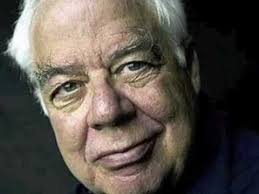
Rorty rejected the long held idea that correct internal representations of objects in the outside world is a necessary prerequisite for knowledge. Rorty argued instead that knowledge is an internal and linguistic affair; knowledge only relates to our own language. Rorty argues that language is made up of vocabularies that are temporary and historical, and concludes that "since vocabularies are made by human beings, so are truths." The acceptance of the preceding arguments [makes us] somewhat detached from [our] own beliefs.
Introductory Comments
For Rorty, knowing is something we do with words, not something words merely report. Be- liefs, theories, and facts have no existence apart from the sentences that express them, and sen-tences belong to vocabularies - those tangled webs of grammar and idiom that human com-munities invent, refine, and eventually aban-don. Words, in other words, are as imperfect and as mortal as the people who speak them. And from this modest observation a rather im- modest concluion follows: "since vocabularies are made by human beings, so are truths."
Why think of language this way? Because, Rorty argued, language evolved not to describe the world with photographic fidelity but to help us navigate it. Words are instruments, not mirrors. Like all biological abilities, language evolved as a tool for survival. As such, words are closer kin to fishhooks than to crystal balls - and we judge them by whether they help us cope, predict, persuade, and live together tolerably well. Once one digests this, a curious disposition tends to settle in, which Rorty christened "ironism": the willingness to hold one's deepest convictions with both passion and a wink, recognizing that they rest on no foundation, yet remain essen- tial. As he put it, "a belief can still regulate action, can still be thought worth dying for, among people who are quite aware that this belief is caused by nothing deeper than contin- gent historical circumstance."
Some of Rorty's Key Positions
Human knowledge belongs to human beings, not to any external objects that happen to be the subject matter of knowledge. This might seem to go without saying, but it needs to be said since so many people, including philoso-phers, assume that correct knowledge is a mirror of nature - that what is inside our heads can mirror what is outside our heads.
What is inside our heads are sensations, percep-tions and, most pertinent to what we call truth, language. Sensations and perceptions, being non-linguistic, cannot by themselves justify beliefs or count as knowledge. Knowledge is a linguistic affair. It is not only communicated through words or other symbols, it is made in and through them. Knowledge is then better understood as what our community finds it warranted to believe and assert.
Since language and the vocabularies it compris-es are human creations that appear and disap-pear over time, we must conclude that as vo-cabularies are made by human beings, so are truths. Accepting all this can lead to a certain "ironsm" - a somewhat paradoxical stand where one holds convictions seriously while acknowl-edging their contingent, historically condi- tioned origins - and to replacing the philoso-pher's traditional goal of objectivity with the more human goal of solidarity: expanding our sense of who deserves moral consideration.
Place in the History of Ideas
Rorty's Place in History of Ideas
Edward Grippe: Rorty’s thinking as a historicist and anti-essentialist found its fullest expression in 1979... book, "Philosophy and the Mirror of Nature." Abandoning all claims to a privileged mental power that allows direct access to things-in-themselves, he offered an alternative narrative which adapts Darwinian evolutionary principles to the philosophy of language. The result was an attempt to establish a thoroughly naturalistic approach to issues of science and objectivity, to the mind-body problem, and to concerns about the nature of truth and meaning. In Rorty’s view, language is to be employed as an adaptive tool used to cope with the natural and social environments to achieve a desired, pragmatic end.
John Searle: Galileo claimed to have discovered, by astronomical observation through a telescope, that Copernicus was right that the earth revolved around the sun. [Cardinal] Bellarmine claimed that he could not be right because his view ran counter to the Bible. Rorty says, astoundingly, that Bellarmine's argument was just as good as Galileo's. It is just that the rhetoric of "science" had not at that time been formed as part of the culture of Europe. We have now accepted the rhetoric of "science," he writes, but it is not more objective or rational than Cardinal Bellarmine's explicitly dogmatic Catholic views. According to Rorty, there is no fact of the matter about who was right….
Random Thoughts on Rorty
Rorty has sometimes been called a philosopher without a philosophy, and he would probably have tipped his hat at the description. Philo- sophical systems, political ideologies, artistic manifestos, even scientific paradigms - all were, to him, contingent vocabularies rather than sacred maps of reality. He treated theories less like divine revelations and more like well-worn pocket tools: useful for certain jobs, awkward for others, and eventually replaced when some- thing handier comes along.
Rorty also delighted in blurring the supposedly sharp line between philosophy and literature. Philosophers often imagine themselves as stern detectives interrogating reality under a bare lightbulb, while poets are cast as dreamy mak- ers of metaphor. Rorty thought the difference far less dramatic. New philosophies, like new poems, succeed by inventing fresh ways of speaking that make old descriptions seem stale, cramped, or faintly ridiculous. He once wrote, "I think of the course of human history as a long, swelling, increasingly polyphonic poem - a po- em that leads up to nothing save itself." From this perspective, Plato, Nietzsche, and Dewey were less discoverers of eternal truths than authors revising humanity’s ongoing script. If that sounds like a demotion, Rorty would say it is in fact a promotion: the philosopher, freed from the impossible task of mirroring the universe, is at last at liberty to help write it.
Rorty influenced: BonJour, L., Brandom, Habermas, Joas, Hans, McDowell, Mouffe, C., Posner, Vattimo, Wellmer, A., West, Williams, M.
Similar and opposing positions
Thinkers with similar positions:
Brandom (We adopt different vocabularies to different contexts & problems.)
Deleuze (Philosophy is the creation of concepts, not the discovery of truths.)
Derrida (A word's meaning is never nonlinguistic: Nothing's outside the text.)
Feyerabend (The mind/body distinction is confused. The mind is a physical thing)
Goodman (There are no unquestionable "givens" in what we call knowledge.)
Lewis, C.I. (Knowledge & evaluation are essentially animal adaptive responses.)
Lyotard (Unity and consensus are the greatest threats to human freedom.)
Nagel (As limited creatures, we will never achieve a unified worldview.)
Protagoras (No absolute truth exists - only what people deem to be the truth.)
Putnam (It's fruitless to aspire to a "God's eye view" of reality.)
Schlegel (There are no first principles that can guide us to the truth.)
Thinkers with opposing positions:
Berlin (Certain values, like liberty, are universal and qualify as "natural laws.")
Cousin (Reason enables us to pass beyond the relative and subjective.)
Habermas (We must not give up on Enlightenment ideals of reason & science.)
Nussbaum (Truth exists and reason is our best tool for finding it.)
Peirce (The truth about an event or thing is the totality of its consequences.)
What others said about Rorty
Susan Dieleman: Edward Grippe: In Rorty’s view, language is to be employed as an adaptive tool used to cope with the natural and social environments to achieve a desired,
E. Grippe: Motivating his entire program is Ror-ty’s challenge to the notion of a mind-independent, language-independent reality that scientists, philosophers, and theologians appeal to when professing their [version] of the truth.
Olavo de Carvalho: The main thesis of Mr. Rorty's thought is a declaration of intentions. The sentence "language is not an image of reality" rigorously means this and nothing else: "I, Richard Rorty, am firmly decided to not use language as an image of reality." It is the sort of unanswerable argument: an expression of someone's will cannot be logically refuted.
Jane O'Grady: [Rorty] was a rarity - an American philosopher who enjoyed a high reputation in France and Germany, and a public intellectual who was influential in literary theory and political thinking as well as in philosophy.
A. Malachowski: He wanted to help pave the path to a better future for everyone, not just philosophers. So he targeted both the individual and society.
R. Scruton: Rorty was paramount among those thinkers who advance their own opinion as immune to criticism, by pretending that it is not truth but consensus that counts, while defining the consensus [as] people like themselves.
Stanley Grenz: Rorty is confident that the pragmatists' enterprise can rid our society of the bugaboos that now beset it. By following the pragmatic agenda, he says, we could divest ourselves not only of the correspondence model of truth but also the subject-object model of inquiry and the "child-parent" model of moral obligation.
Hans Ulrich Gumbrecht: To write and teach in close proximity to this vulnerable, enormously well read and often ingenious Richard Rorty gave one the encouraging certainty of being in the presence of intellectual greatness.
Schools: Antireductionism, Atheism, Behaviorism, Common Sense Realism, Communitarianism, Deconstructionism, Eliminative Materialism, Fictionalism, Humanism, Liberalism, Naturalism, Neopragmatism, Pluralism, Post-analytic Philosophy, Post-modernism, Post-positivism, Pragmatism, Pyrrhonism, Quietism, Secularism, Skepticism, Social Liberalism
Main interests: Communication, Democracy, Epistemology, Equality, Ethics, Fact–value distinction, Habits, History of Philosophy, Human Will, Language, Literary theory, Literature, Metaphilosophy, Metaphors, Mind, Personal Identity, Political Theory, Politics, Progress, Religion, Science, Welfare State