Thomas Kuhn (1922 - 1996)
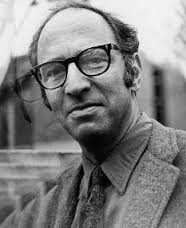
Open Kuhn's interactive page (graphs of influences, similar and opposing positions, and quotes)
Background
Thomas Samuel Kuhn
Born: July 18, 1922 in Cincinnati, Ohio
Died: June 17, 1996 (aged 73) in Cambridge,
Massachusetts
Alma mater: Harvard University
Era: 20th-century philosophy
Region: Western Philosophy
School: Analytic
Main interests: Philosophy of science, science,
history
Notable ideas: Paradigm shift, Normal science,
Incommensurability, Kuhn Loss
Influences: Kant, Koyré, M. Polanyi, Vleck,
Bachelard, Piaget, Russell, Popper, Hanson,
Cassirer, Rudolf Carnap, Pierre Duhem,
Stanley Cavell, Herbert Butterfield, Émile
Meyerson, Hélène Metzger, John Hasbrouck
Van Vleck
Influenced: Feyerabend, Lakatos, Kitcher
From Wikipedia
Kuhn made several claims concerning the progress of scientific knowledge: that scientific fields undergo periodic "paradigm shifts" rather than solely progressing in a linear and continuous way, and that these paradigm shifts open up new approaches to understanding what scientists would never have considered valid before; and that the notion of scientific truth, at any given moment, cannot be established solely by objective criteria but is defined by a consensus of a scientific community.
Introductory Comments
Kuhn's The Structure of Scientific Revolutions began its life with rather modest ambitions. In the 1950s, Otto Neurath and Rudolf Carnap invited Kuhn to contribute a brief essay on the history of science to their International Encyclo-pedia of Unified Science - a grand project launched by the Vienna Circle to consolidate all scientific knowledge under a single logical-empiricist umbrella. But as Kuhn burrowed into the archives, he found that the tidy story he was supposed to summarize refused to behave; instead of a neat progression, he uncovered a series of discontinuities, ruptures, and intellec- tual upheavals. By 1962, what was supposed to be an encyclopedia monograph had metamor- phosed into a slim but seismic book, published by the University of Chicago Press.
And here lies the delicious irony: the volume that was meant to buttress the Vienna Circle's vision of science as a clean, cumulative march toward objective truth ended up housing the very essay that would demolish it. The logical positivists believed science progressed brick by rational brick; Kuhn argued instead that it lurches forward through crises, revolutions, and incommensurable worldviews - what he called paradigm shifts - with plenty of sociology and persuasion mixed in. Neurath and Carnap had, in effect, commissioned their own obituary and handed Kuhn the shovel he would use to bury several of their most cherished assumptions.
Some of Kuhn's Key Positions
Though scientists take justifiable pride in the progress sciences, they (and others) generally misunderstand the nature of that progress. Science does not always proceed, as most people think, in a linear and continuous fashion - with scientists forever making new discoveries that rest upon earlier theories and occasionally refining those earlier theories based on their new discoveries.
At times science makes a dramatic and even revolutionary "paradigm shift" that shakes the very foundation upon which the science at issue had been built. These paradigm shifts rep- resent new ways of thinking about a science and open up new ways to investigating scientif- ic questions. Consider, for example: the medie- val theory of the four "humors" in medicine, Copernicus's heliocentric astronomy, Dalton's atomic theory, Darwin's theory of evolution, Einstein's theory of relativity, plate tectonics, germ theory, gene theory. These all represent conceptual breaks from the past.
Therefore, we must revise our notion of scien- tific "objectivity." Paradigm shifts are shifts in subjective perspective. If there is a basic objectivity here, it is not in these scientific perspectives per se, but rather in the objective fruitfulness of these perspectives - how they deliver better predictions and/or lead to more powerful insights.
Place in the History of Ideas
Kuhn's Place in History of Ideas
John Naughton: Before Kuhn, in other words, we had what amounted to the interpretation of scientific history, in which past [scientists] had engaged in a long march, if not towards "truth," then at least towards greater and greater understanding of the natural world. Kuhn's version of how science develops differed dramatically from the [standard] version. Where the standard account saw steady, cumulative "progress," he saw discontinuities - a set of alternating "normal" and "revolution- ary" phases in which communities of specialists in particular fields are plunged into periods of turmoil, uncertainty and angst.
Thomas Nagel: Much of what Kuhn says about great theoretical shifts, and the inertial role of long-established scientific paradigms and their cultural entrenchment in resisting recalcitrant evidence until it becomes overwhelming, is entirely reasonable, but it is also entirely compatible with the conception of science as seeking, and sometimes finding, objective truth about the world. What has made him a relativist hero is the addition of provocative remarks to the effect that Newton and Einstein, or Ptolemy and Galileo, live in "different worlds," that the paradigms of different scientific periods are "incommensurable," and that it is a mistake to think of the progress of science over time as bringing us closer to the truth about how the world really is.
Random Thoughts on Kuhn
Kuhn's The Structure of Scientific Revolutions (see Introductory Comments) genuinely trans- formed the history and philosophy of science, rescuing it from dull narratives of ever-accumu- lating genius and reframing scientists as humans embedded in communities, traditions, and prej- udices. Still, Kuhn's thesis has drawn serious fire. Critics - most famously Lakatos and Pop- per - charged that his notion of "incommensu- rability" slid uncomfortably close to relativism, implying that rival paradigms couldn't be rationally compared and that science was less about truth than about mob psychology among lab coats. Others noted that his central term, "paradigm," was used in so many senses (one scholar counted twenty-one) that it threatened to mean everything and therefore nothing.
Despite such criticisms, Kuhn's idea had a huge effect within science, and then, fittingly, under-went its own paradigm shift by escaping science altogether and colonizing nearly every disci-pline in sight. Economists now speak of para-digm shifts from Keynesianism to monetarism; historians invoke them to describe the move from Great Man narratives to social history; and in business schools, the phrase has been de-ployed so liberally that it adorns everything from management fads to smartphone launch-es. What began as part of a careful account of science is now a metaphor for any change more dramatic than rearranging the office furniture.
Influences
Kuhn was influenced by: Bachelard, Butterfield, Carnap, Cassirer, Cavell, Duhem, Fleck, Ludwik, Hanson, Kant, Koyre, Metzger, Meyerson, Piaget, Polanyi, M., Popper, Russell, Van Vleck
Kuhn influenced: Feyerabend, Kitcher, Lakatos, Lyotard, MacIntyre, Rorty, Rothbard
Similar and opposing positions
Thinkers with similar positions:
- Cassirer (Science is an ongoing, never completed synthetic process.)
- Einstein (Learning the history of scientific concepts frees our own thinking.)
- Feyerabend (New theories need not always be consistent with old theories.)
- Goodman (Our theories are just practical fictions - that is, useful until falsified.)
- Kant (The noumena or objective thing-in-itself cannot be directly known.)
- Peirce (Science achieves statistical probabilities, not certainties.)
- Quine (Scientific knowledge can't be reduced to a series of sense-data claims.)
- Rorty (The philosophic search for some objective basis of truth is fruitless.)
- Saussure (Our understanding of the world is shaped thru symbolic systems.)
Thinkers with opposing positions:
- Aristotle (Knowledge is simply empirical generalizations plus syllogistic logic.)
- Bacon, Francis (Progress in science springs from careful observation.)
- Frege (Logical & philosophical problems can be solved by perfecting language.)
- Hamann (Scientific reason leads to doubts about the reality of the world.)
- Popper (The search for truth should be completely fact-based and objective.)
- Rousseau ("Progress" in science & reason has not benefitted humankind.)
- Tarski (Scientific knowledge can be reduced to a series of sense-data claims.)
What others said about Kuhn
- Ernst Mayr: Kuhn's book mainly appealed to historians and social scientists. It was they who built it up into a big thing.
- John L. Heilbron: At a distance, where most viewers stand, [Kuhn's portrait of science] appears illuminating... and inspiring; close in, where historians and philosophers stare, it looks sketchy, puzzling, and richly challenging.
- Imre Lakatos: Kuhn as does Popper rejects the idea that science grows by accumulation of eternal truths. But while according to Popper science is "revolution in permanence," and criticism the heart of the scientific enterprise, according to Kuhn revolution is exceptional and, indeed, extra-scientific, and criticism is, in "normal" times, anathema.
- Alexander Bird: Kuhn’s treatment of philosophical ideas is neither systematic nor rigorous. He rarely engaged in… careful and precise analysis of other philosophers’ views, and when he did so the results were not encouraging.
- Imre Lakatos: But if Kuhn is right, then there is no explicit demarcation between science and pseudoscience….
- Freeman Dyson: If some of [Kuhn's] followers claim that he denied the objective validity of science, it is only because he overemphasized the role of ideas and underemphasized the role of experimental facts in science.
- Paul Churchland: In fact, Kuhn is decidedly conservative in his methodological impulses. If science is politics, then he is a staunch Tory, not an anything-goes radical. In fact, Kuhn was not attacking scientific standards. Rather, he was attacking a false and confabulatory theory about the nature of scientific standards, a worthy... philosophical theory called Logical Empiricism….
- Dennett: … it should be noted that Kuhn's book [about scientific revolutions] is perhaps the all-time champion in the category of Enthusiastically Misunderstood Classic. It's a wonderful book, in spite of all the misuse to which it's been put.
Schools: Analytic Philosophy, Antireductionism, Positivism, Post-positivism, Skepticism
Main interests: Communication, History, History of Ideas, Language, Mind, Progress, Science
Kuhn's answers to philosophical questions
Epistemology
"What a man sees depends [on] what he looks at &... what his previous visual-conceptual experience has taught him to see."
"Far from being magisterial in its objectivity, science was conditioned by history, society, and the prejudices of scientists."
Paradigm choice involves sociological, aesthetic, and persuasive factors, not just logic and evidence.
Truth about things can never be captured, so to speak, raw and unprocessed. "We see the world in terms of our theories."
"… though the world does not change with a change of paradigm, the scientist afterward works in a different world."
History
"… historians must approach the generation that held [past ideas] as the anthropologist approaches an alien culture."
Science
Scientific truth is never absolute: "The one thing... you shouldn't say is that now we've found out what the world is really like."
What scientists "see" in data depends on the paradigm they hold, so facts aren't neutral or independent of theory.
Paradigm shifts are in a sense subjective, but they at times deliver better predictions and/or lead to more powerful insights.
Scienctific theories are never final. Some scientists may be intent on preserving the status quo, but others will challenge it.
Science progresses at times through sudden and dramatic paradigm shifts that represent conceptual breaks from the past.