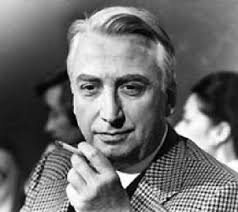
Barthes was a French literary theorist, essayist, philosopher, critic, and semiotician. His work engaged in the analysis of a variety of sign systems, mainly derived from Western popular culture. His ideas explored a diverse range of fields and influenced the development of many schools of theory, including structuralism, anthro- pology, literary theory, and post-structuralism. Barthes is perhaps best known for his 1957 essay collection Mythologies, which contained reflec- tions on popular culture….
Introductory Comments
Barthes believed that language is never inno- cent - every word carries cultural baggage, and every narrative quietly smuggles in assumptions about how the world works. Through structural and semiotic analysis, he sought to expose these hidden passengers. Consider his famous treatment of wine in French culture: the French don't simply drink wine; they participate in a national mythology in which wine signifies heartiness, fellowship, and Frenchness. By dis- secting the signs embedded in language - the difference, say, between "tipsy" and "drunk," or between a "connoisseur" and a "lush" - Barthes showed that what we take to be simple descrip- tions are in fact tiny ideological machines, humming away beneath our notice.
Crucially, Barthes was not interested in the empirical question of whether wine damages your liver - that's a job for doctors, not semioti- cians. His point was to show how wine gets laundered into a symbol of natural, timeless Frenchness, conveniently obscuring the eco-nomcs of the wine industry and the reality of alcoholism. The goal was denaturalization - peeling back the mask of the obvious to reveal the cultural construction beneath. For Barthes, whatever presents itself as "just the way things are" is precisely what most urgently needs interrogating. Ideology's cleverest trick is not to lie but to go without saying - and anything that goes without saying deserves to be said.
Some of Barthes's Key Positions
Please tell me whether or not the following statement represents a fair explanation of Ronald Barthes's fundamental belief; and if it is not his most fundamental belief, please explain what is:
Avant-garde experiments in form are especially praiseworthy in that they represent novel approaches that help us maintain our objectiv- ity. Their aim is not to explain the world to their readers or viewers, but to present the world in a novel way that allows them tointerrogate the world in a critical manner.
And to help them detect the many myths that permeate society: Consider, for example, how wine gets naturalized as essentially "French," hearty, and democratic, thereby concealing the economic realities of the wine industry and the actual harm of alcoholism. This is not to say, however, that truly neutral writing is possible.
On a more structural level, no word is neutral. Even seemingly simple distinctions - such as between "blouse" and "shirt" - carry cultural assumptions about gender, class, and social roles. These words participate in larger narra- tive systems that shape how we understand the world. By studying the signs, codes, and con- ventions that structure language, we can begin to uncover the ideological work they perform - and, in doing so, liberate the reader.
Place in the History of Ideas
Barthes's Place in History of Ideas
J. Y. Smith: An abstruse and sometimes oracular writer, Mr. Barthes was an exponent of semiol- ogy, which is the study of signs in all their manifestations, including music and language. Through the application of semiology and linguistics, he undertook to analyze the struc- ture not only of literature, but also of "ritual convention (and) public entertainment." If Mr. Barthes' methods were the rarified ones of the high critic, the continuing preoccupation of his life was the relatively common one of bourgeois "mythology." He argued that it is through an always-developing body of "myths" that the middle class imposes its system of values on society as a whole.
John Dugdale: In the Barthes myth, what goes without saying is that he practised structural- ism and/or poststructuralism and was a literary critic who believed that authors were somehow "dead." Each has some truth, but represents only one strand or phase of his writings. He did borrow a structural approach from linguistics and anthropology, but only from Elements of Semiology in 1964 to S/Z, his experiment-like dissection of Balzac’s "Sarrasine," in 1970; the science-mimicking approach and advocacy of neutrality disappeared (though not the urge to theorize) in his markedly subjective final dec- ade, which included first-person musings on photography, The Pleasure of the Text, a frag- mentary novel, journals and travel writing.
Random Thoughts on Barthes
In his landmark 1967 essay "The Death of the Author," Barthes pushed his goal of denaturali- zation (see Introductory Comments) to its most radical conclusion. If meaning is always cultural- ly constructed rather than naturally given, then the Author - that supposedly godlike figure who deposits a definitive meaning into a text like a message in a bottle - is himself a bour- geois myth. Once this myth is dismantled, meaning is no longer singular and fixed but plural, unstable, and gloriously up for grabs. The reader, long treated as a passive recipient dutifully unwrapping the author's gift, is sud- denly promoted from spectator to co-creator. It was, one might say, the most consequential pink slip in literary history.
This move undermines not just individual myths within texts but the entire interpretive model that treats reading as excavation - as though meaning were buried treasure and the author had drawn the only map. For Barthes, meaning is not something deposited in a work and ex- tracted by a clever reader; it is something that happens in the act of reading, produced fresh each time a reader encounters a text. The "death" of the author is not an entombment, but a transfer of authority - from the writer's desk to the reader's armchair. In liberating the reader, Barthes did not leave us with less mean- ing but with infinitely more. The author may be dead, but the reader, at last, is wide awake.
Barthes influenced: de Kuyper, E., Derrida, Foucault, Genette, G., Kristeva, Peeters, B., Salazar, P.-J., Sontag, Wood, James
Similar and opposing positions
Thinkers with similar positions:
Horkheimer (Popular culture encourages a passive & unquestioning worldview.)
Kristeva (The best modern literature opens the text to multiple meanings.)
Lacan (Symbols shape both our psychology and our culture.)
Lyotard (We can no longer believe in grand narratives that explain our world.)
Mead (The mind and self emerge from the social process of communication.)
Nietzsche (Life is not self-enclosed. Relationships give birth to meaning.)
Peirce (Since all thought takes time, all thought is in signs or sign processes.)
Peirce (Anything can be a sign as long as someone thinks it signifies something.)
Saussure (We must study signs & symbols to understand how language works.)
Sontag (Photographs seem to be complicit with reality - facts not comments.)
Thinkers with opposing positions:
Comte (The study of society should be empirical - based on facts, not fictions.)
Foucault (The "author-conccept" is relevant to our interpretation of the text.)
Habermas (We must not give up on Enlightenment ideals of reason & science.)
Leibniz (Reason enables us to pass beyond the relative and subjective.)
Picard (Modern literary criticism is a stupid mix of impressionism & dogma.)
Sartre (Human consciousness is innately & absolutely free. We are freedom.)
What others said about Barthes
Andrew Gallix: The intersection of life and writing was always at the heart of Barthes’s project.
Nasrullah Mambro: His work covers an enormous range of issues and topics, including the nature of writing, authorship and reading; myth and ideology; fashion; photography; narrative; the work of diverse writers… and sexuality.
Lesley Lanir: He continued to explain that the interdisciplinary nature of literary and cultural analysis had altered our conception of language and the traditional notion of what was understood to be a literary work and had thus resulted in the reader’s focus being changed from a "piece of work" as whole to an object known as the "text."
Susan Sontag: [Barthes is] the most consistently intelligent [as well as] the most important and useful critic - stretching that term - to have emerged anywhere [in the past 25 years].
Nasrullah Mambro: Unlike Benjamin, though, Barthes is neither essentially a Marxist philosopher nor a religiously-inspired cultural critic.
Simon Leys: [Barthes] has contrived - amazingly - to bestow an entirely new dignity upon the age-old activity, so long unjustly disparaged, of saying nothing at great length.
John Dugdale John Dugdale: With “The Death of the Author” (1967), the mythic element is the tendency to see it as the key to his work, a dethroning of all Authors, who deludedly imagine themselves in control, in favour of now-almighty Readers - an insurgency of myriad Barthes - who can gloss or anatomize books as they please.
J. Y. Smith: To the extent that the members of society remain unaware of values other than those dictated by the middle class, they are diminished as humans, in Mr. Barthes' view.
Main interests: Communication, Cultural Criticism, Film Theory, Language, Literary criticism, Literary theory, Literature, Mass Media, Metaphors, Music, Mythology, Popular Culture, Rhetoric, Semiotics, Theatre