Electric WebOpen the interactive pageAll thinkersAbout

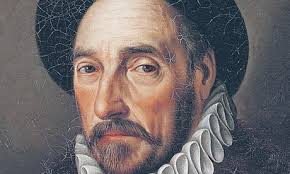
Michel Montaigne (1533 - 1592)

France · 1400-1599 · Wikipedia

Michel Montaigne

Open Montaigne's interactive page (graphs of influences, similar and opposing positions, and quotes)

Background

Michel de Montaigne
  Born:  28 February 1533 in Château de
     Montaigne, Guyenne, France
  Died:  13 September 1592 (aged 59) in Château
     de Montaigne, Guyenne, France
  Alma mater:  College of Guienne, Collège Royal,
     University of Toulouse
  Schools:  Renaissance humanism, Renaissance
     scepticism
  Notable ideas:  The essay, Montaigne's wheel
     argument
  Influences:  Horace, Heraclitus, Sextus Empiricus,
     Seneca, Plutarch, Cato, Ovid
  Influenced:  Shakespeare, Descartes, Francis
     Bacon, Pierre Charron, Hume, Nietzsche, Jean-
     François Lyotard, William Hazlitt, Emerson,
     Pascal, Gore Vidal, Rousseau, Proust, Albert  
     Hirschman, Eric Hoffer, Michel Onfray, José
     Saramago, Stefan Zweig, Isaac Asimov, Hobbes
From Wikipedia
 
Montaigne was one of the most significant philosophers of the French Renaissance. He is known for popularizing the essay as a literary genre. His work is noted for its merging of casual anecdotes and autobiography with intellectual insight. Montaigne had a direct influence on numerous Western writers; his massive volume Essais contains some of the most influential essays ever written…. He is most famously known for his skeptical remark, ''Que sçay-je?" ("What do I know?").
Introductory Comments
 
In his essays Montaigne says so many unflattering things about himself that, on the rare occasions when he says something to his own credit, we tend to believe him. Among those rare occasions is the delicious tale of the robbery. Traveling an isolated road, Montaigne and his companions were suddenly set upon by a band of armed men who demanded their valuables. Montaigne met the threat with an odd tranquility. Rather than panic, he addressed the ringleader courteously, even composedly, and the robbers rode off with their haul. Yet a few minutes later they came back - to return most of what they had taken. An unexpected gift in return for an unexpected courtesy?
 
Perhaps not. Perhaps it was something else. To borrow a page from Socrates, Montaigne might have said of himself (though he never did) that if he was saner than most, it was only because he alone knew how thoroughly mad he was. For Montaigne delighted in the inconsistencies and absurdities he found in himself - and in life at large. So it is tempting to think the chief robber sensed as much: sensed that his victim was quietly amused to find himself in the middle of a holdup. Other travelers had surely been polite before (why provoke armed men?), but none, perhaps, had been amused - and genuinely curious about the robbers confronting him. And that, one suspects, is what caught the chief robber off guard. Or at leasst it's delicious to think so.
Some of Montaigne's Key Positions
 
Truth eludes us. There are no self-evident axioms to build on, and reason, that supposedly reliable tool, is forever pressed into service to "prove" contradictory claims. No question of real importance has ever been settled for good. Worse still, for all our flattering talk of being rational animals, we are nothing of the kind. Passion and prejudice steer us far more often than reason does.
 
The confident certainty most of us feel is therefore unearned - and dangerous. It sets neighbor against neighbor and, on a larger scale, people against people. The wars we now see between Catholics and Protestants are a grim case in point.
 
Life would go better if we could simply confess how shaky our beliefs really are - if we held them modestly, allowing that we might be wrong and our opponents right.
 
This humility applies not only to politics and religion but to taste and morals as well. Every culture draws its own map of the beautiful and the proper. Aesthetics and, yes, even morality are largely matters of convention.
 
That said, two things do deserve universal endorsement: education and friendship. Without the first, we can never climb out of our own biases to glimpse how the world looks to someone else. Without the second, life would scarcely be worth the trouble of living.

Place in the History of Ideas

Montaigne's Place in History of Ideas
 
Sarah Bakewell: [Montaigne] proposed no theories, put no trust in reason, and showed no desire to convince readers of anything. In his vast book Essays, he contradicted himself, pre- ferred specifics to generalities, embraced uncer- tainty, and followed his thoughts wherever they led. Was he a philosopher at all? In his own view, he was, but only of an "unpremedi- tated and accidental" kind. He wrote about so many things, he said, that his essays were bound to coincide with the wisdom of the ancients from time to time. Others have seen him not just as a philosopher but as the world's truly modern thinker, because of his intense awareness that he was complex and self-divided, always double in himself, as he put it.
 
William Hazlitt: He was, without being aware of it, the leader of a new school in letters and morals. His book was different from all others which were at that date in the world. It divert- ed the ancient currents of thought into new channels. It told its readers, with unexampled frankness, what its writer’s opinion was about men and things, and threw what must have been a strange kind of new light on many mat- ters but darkly understood. Above all, the es- sayist uncased himself, and made his intellectu- al and physical organism public property. He took the world into his confidence on all sub- jects. His essays were a sort of literary anatomy, where we get a diagnosis of the writer’s mind....
Random Thoughts on Montaigne
 
If it's true, as the old adage has it, that no man is a hero to his valet, then Montaigne was his own valet - and a wonderfully cheeky one, forever delighting in the little indignities of his master. Montaigne, the Renaissance writer who invented the personal essay, turned self-deprecation into a high art. He showed that brutal honesty about oneself is not only brave but illuminating, since what is true of one man is probably, in some fashion, true of the species at large. This was the founding premise of his whole project: "Every man," he wrote, "bears the entire form of the human condition." So in studying the one person whose inner workings he could actually observe - himself - Montaigne was quietly studying all of us.
 
Stop there, though, and it sounds a touch too earnest. For Montaigne meant not only to understand humanity but to amuse it. He grasped, as few do, the strange power of candor: that by owning up to your more ridiculous side, you lose nothing in your readers' eyes. On the contrary, they admire the nerve and enjoy the show. Your flesh-and-blood valet may hold your vanities in contempt, but your readers will love you for confessing them - and love, too, that indiscreet servant who observes all and tells all.
 
But all this may seem to imply that Montaigne wrote only for his readers. Not so. The Essays were also - probably most of all - Montaigne's lifelong conversation with himself.

Influences

Montaigne was influenced by: Boccaccio, Cato, Democritus, Heraclitus, Horace, Lucretius, Ovid, Plutarch, Seneca

Montaigne influenced: Asimov, Bacon, Francis, Descartes, Emerson, Hazlitt, Hobbes, Hoffer, Eric, Hume, Lyotard, Newman, Nietzsche, Onfray, Pascal, Proust, Rousseau, Shakespeare, Vidal, Gore

Similar and opposing positions

Thinkers with similar positions:

Thinkers with opposing positions:

What others said about Montaigne

Schools: Epicureanism, Historicism, Humanism, Primitivism, Pyrrhonism, Skepticism

Main interests: Autobiography, Botany, Classics, Commerce, Communication, Death, Desire, Education, Ethics, Family, Free/Unfree Will, Friendship, Habits, Happiness, Health, History, History of Ideas, Human Will, Immortality, Law, Literature, Love, Medicine, Memory, Metaphors, Personal Identity, Politics, Psychology, Punishment, Sexuality, Tragedy, Virtue, War, Will, Wisdom, Zoology

Montaigne's answers to philosophical questions

Art and Aesthetics

On what grounds, if any, should the state regulate or censor works of art, including fiction?
"To forbid us anything is to make us have a mind for it."
What is beauty? Is it completely subjective? If not, how can it be objectively assessed?
Each culture defines beauty to suit its fancies. We see this vividly in the diverse ways nations see beauty in women.
How does art go beyond representation? Need the arts be representational at all?
"[W]henever [nature's] purity shines forth, she wonderfully puts to shame our vain and frivolous attempts [to capture her]."
What is the proper role or task of the art critic? Or does the art critic have no useful role?
"No two men ever judged alike of the same thing…, not only in different men but in the same men at different times."

Education

What methods are most effective or productive in educating the young?
Teaching should emphasize concrete examples & practical experience, not abstract knowledge & rote memorization.
What methods, arrangements or emphases in education should be avoided or replaced?
Tutors should avoid giving lectures: tutor-student dialogue is the best way to get a student to thinking for herself.
What, philosophically speaking, should be the emphasis or goal of a liberal education?
Education should help students think for themselves. Students should be encouraged to question what they are taught.
What are the relative merits of book learning and hands-on experience? Which is most needed?
"I prefer the company of peasants because they have not been educated sufficiently to reason incorrectly."
To what extent, if any, should education encourage the morals and mores of a given society?
A liberal education must first teach goodness. Without this moral knowledge all other learning can result in great evil.

Epistemology

Are sensations written on a "blank slate" or does experience rely on a set of innate assumptions?
"There cannot be first principles for men, unless the Divinity has revealed them; all the rest is nothing but... smoke."
Can anything be known without reference to experience? What about "pure" deduction?
Axiomatic or self-evident truths do not exist. We see this by the fact that no proposition commands universal consent.
To what extent can we rely on logic or reason? To what extent should we rely on logic or reason?
Despite our pretensions, we're not rational creatures. We're ruled more by passion and prejudice than by reason.
What is truth? Is it objective or relative or a bit of both? By what standard should it be judged?
Truth eludes us. Nothing is self-evident and nothing has been proven. Our sense of certainty makes no sense at all.
Is there one, ultimate way to approach the truth? If so, why is it better than other approaches?
"I study myself more than any other subject. That is my metaphysics, that is my physics."
What connection, if any, exists between truth and practical consequences?
Though truth is not a pragmatic matter, in the realm of action we are at times forced to make pragmatic judgments.
Is complete skepticism a viable or justifiable position? If not, what about limited skepticism?
Though complete skepticism is impossible, some is needed to encourage enquiry and restrain passions.

Ethics

Is morality relative and subjective? Can moral truths be objective in any sense? If so, how?
All moral judgments are matters of opinion, based merely on the biases of the individual and the customs of society.
What connection, if any, exists between virtue and happiness?
A temperate life if full of gentle pains and pleasures, whereas an intemperate life is full of violent pains and pleasures.
Is there a moral yardstick or ultimate good that can serve as a standard for judging our actions?
Since we are all inconstant and irrational creatures, humility and tolerance are needed to maintain a peaceful world.
What is friendship? How does it differ from love? How is it related, if at all, to ethics?
Its combination of love, harmony and selflessness makes friendship the most valuable and most constant of blessings.
What is the moral significance, if any, of death? Should our mortality affect how we live?
"I want death to find me planting my cabbages, but careless of death, and still more of my unfinished garden."

History

Does the course of history reveal a coherent story with a general theme and/or logical end?
Mankind appears in history "more alive & entire than anywhere else - [as does] the truth & diversity of his inner nature...."
Regarding leadership, do great men shape the times or do the times shape great men?
The best life is one that is in conformity with nature. The soul's greatness lies not in flying high, but in mediocrity.
How does learning history help us as members of a society or enrich us as individuals?
Only in the context of history, with all its large, various and shifting scenes, can a man truly know himself and his time.

Language

What is the role of language in our thought? To what extent does thinking rely on language?
Language is not needed for thought & communication. Animals can convey thoughts, as can we, through body & face alone.
Can language or the misuse of language at times pose a danger to an individual or to a group?
Language is not an unalloyed benefit for us. Indeed, "most of the sources of the disorders in the world are grammatical."

Law

What is the connection, if any, between morality and law?
"[Anyone of us who] placed all his actions and thoughts under the scrutiny of the laws [would no doubt] deserve hanging…."
What are natural laws and how, if at all, do they relate to civil laws?
If natural laws existed, one would assume they must be universal. Yet no civil laws are universally agreed upon.
What is justice? And what connection, if any, exists between justice and law?
Law & justice are two very different things: "There is nothing so... largely offending, nor so ordinarily wrongful, as the laws."

Mind

What is mind? Is it a substance or a process? Does it have parts? Does it serve a function?
"We are entirely made up of bits and pieces, woven together so shapelessly that each of them pulls its own way...."
Who or what is that being we call self? And is our sense of self-identity justified?
"What certainty can we find in something so changeable and unstable as the soul...."
What explains our sense of personal identity, despite the many changes we undergo in life?
"There is as much difference between us & ourselves as between us & others." Yet we remain confident in our sense of self.

Nature

Are the complex interrelationships we see in nature the product of intelligent design?
"Let us permit nature to have her way. She understands her business better than we do."
What place do humans have in nature? What, if anything, sets them above other animals?
Though we belittle other animals for lacking our so-called rationality, we excel them only in our absurd pretensions.
What was life like for people living in a state of nature, before civilization and government?
The instincts & behaviors of "primitive" people were not distorted by the complexities & corruptions of European civilization.
How should humans use or approach the rich assortment of life forms on earth?
"... the beasts & ourselves are in the same situation.... They flatter us, threaten us, & coax us; & we do the same to them."

Philosophy

How should the discipline of philosophy be best approached and/or pursued?
There should be "nothing more airy, more gay, more frolic, and I had like to have said more wanton, than philosophy."
What is the value of studying philosophy? How can philosophy enrich your life? Or can it?
Philosophy teaches us how to die: By learning how to approach life, we at the same time learn how to accept death.

Political Philosophy

When, if ever, is revolution justified? What are the inherent dangers of revolution?
"It takes a lot of self-love & presumption to... overthrow the public peace & introduce... many evils [that] civil wars... bring."
Should church and state be completely separate - with no interference in either direction?
Both as individuals and as states, we should be more tolerant of religious differences and less eager to fight over them.

Psychology

What are the major functions or forces at work in human psychology?
"Man... is a... vain, fickle, and unstable subject, and on whom it is very hard to form any certain and uniform judgment."
To what extent does reason determine our actions? To what extent do impulse and desire rule?
Despite our many pretensions, we are not ruled by reason, but by vanity, self-interest, passion and prejudice.
What irrational or instinctive forces determine (at least in part) human behavior?
"... the soul can be most readily thrown into mania and driven mad by its own quickness, sharpness and nimbleness...."
How should parents guide and discipline their children? What should be the goal of parenting?
Too often parents dote on their children's infantile play, then later ignore or dismiss their children's more adult pursuits.
How should one deal with normal distress, depression and other forms of emotional turmoil?
"Men are tormented by the opinions they have of things, and not the things themselves." Therefore, govern your opinions.
What role does habit play in our lives? How can it prove useful? How might it be detrimental?
Because social stability relies on the customs of its members, we should be very cautious in any changing such habits.
Is happiness actually possible? If so, how is it achieved? If not, what is our alternative?
"Whether you find satisfaction in life depends not on your tale of years, but on your will."

Religion and Theology

What explains the origin of religion: revelation, reason, fear, awe, story-telling, fellowship?
"Man is certainly stark mad: he cannot make a flea, yet he makes gods by the dozens." And yet the one true God does exist.
Does God exist? If so, can His existence be proven? And if it cannot, how do we know He exists?
Though we should, if possible, support our faith in God with reason, we must not think we can reason our way to faith.
What are the essential attributes of God? Given our own limitations, what can we say of God?
What I conceive: "God as an incomprehensible power, the original and preserver of all things, all goodness, all perfection…."
What role does faith play in religion? Is it more important than reason?
Reason is incapable of proving anything about the nature of God. Only faith can embrace the mysteries of our religion.
What is the role of miracles in religion? How much credence, if any, should we give miracles?
"It is probable that the principal credit of miracles, visions, enchantments... comes from the power of imagination...."
Is agnosticism or atheism a viable position, especially considering the high stakes?
"Atheism [is] a proposition [so] unnatural [&] monstrous, [so] hard to establish in the human understanding, [so] arrogant…."
How should we approach the study of holy texts? What role does interpretation play here?
Since a purely intellectual religion would never be compelling, the Bible was written to capture our human imagination.

Sex and Gender

Is sexual monogamy inherently virtuous? What exactly is wrong with sexual promiscuity?
Though marriage is needed in order to raise children, passionate & monogamous love can be harmful to one's freedom.
What is the psychological dynamics involved in sex? Does this differ between men and women?
"[I]t is not only a delight, but a glory to besot & debauch this dainty & nice sweetness, and this infantine bashfulness...."
What is the connection between sexual attraction and romantic love?
"I find after all that love is nothing else but the thirst for sexual enjoyment in a desired object...."
What is the function or nature of marriage? How should this function or nature be realized?
A good marriage is a type of friendship. "It is a sweet association in life, full of constancy, trust,... and solid services...."
How should differences between husband and wife be resolved? What makes a marriage work?
"A good marriage would be between a blind wife and a deaf husband."

Society

What strengthens a society and holds it together? What weakens a society and tears it apart?
Dogmatism and excessive certainty leads not only to fights between individuals, but also to wars between peoples.
Do our social institutions at times conflict with human nature and our ultimate interests?
Among so-called savages "you hear no words for treachery, lying, cheating, avarice, envy, backbiting or forgiveness."
What irrational or instinctive forces are at work in human society at large?
Custom, habit, bias, pride - all made worse by an excessive sense of certainty - are the main forces at work in society.
Can a society be organized upon rational principles? If so, what would be the benefits & costs?
Since all practices in one society can be matched with opposite practices in another, none deserve unqualified assent.
Do societies progress in any meaningful way? If so, how should we measure this progress?
Cannibals may be called "barbarians, but not in respect to ourselves, who surpass them in every kind of barbarity...."