Wilhelm Dilthey (1833 - 1911)
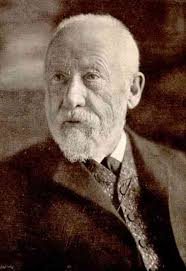
Open Dilthey's interactive page (graphs of influences, similar and opposing positions, and quotes)
Background
Wilhelm Dilthey
Born: 19 November 1833 in Wiesbaden-Biebrich,
Germany
Died: 1 October 1911 (aged 77) in Seis am
Schlern, Austria-Hungary
Schools: Hermeneutics, German Historism
Main interests: science, literary theory, literary
criticism, intellectual history, psychology,
hermeneutic circle, sociology, religion
Influences: Kant, Schleiermacher, John Stuart
Mill, August Böckh, Johann Gustav Droysen,
Hegel, Herder, Trendelenburg, Jacob Grimm,
Leopold von Ranke
Influenced: Georg Simmel, Max Weber, Karl
Jaspers, Heidegger, Gadamer, Habermas, Franz
Boas, Rudolf Steiner, R. G. Collingwood, José
Ortega y Gasset, Isaiah Berlin, Martin Buber,
Cassirer, Oakeshott, Husserl, Ricoeur, Carnap,
Benedetto Croce, Alan Donagan, Hans Freyer
From Wikipedia
Dilthey was a German historian, psychologist, sociologist, and hermeneutic philosopher.... As a polymathic philosopher, working in a modern research university, Dilthey's research interests revolved around questions of scientific methodol- ogy, historical evidence and history's status as a science. Dilthey has often been considered an empiricist, in contrast to the idealism prevalent in Germany at the time, but his account of what constitutes the empirical and experiential differs from British empiricism and positivism….
Introductory Comments
Suppose a letter arrives from an old friend. A chemist could analyze the paper, date the ink, and lift the fingerprints along the fold. None of this would explain why, by the second paragraph, you are blinking back tears. For that you need a different kind of knowing, one that grasps what the words mean, what your friend intended, and why it matters to you. Dilthey spent a long career insisting that this second kind of knowing is no poor relation of the first. The natural sciences explain, he argued, but the human sciences understand. And understanding has its own methods and its own claim to rigor.
He drew his tools from two predecessors. From Schleiermacher he took hermeneutics, the art of interpretation, which had already been widened from Scripture and the classics to any spoken or written word. Dilthey widened it again, to every expression of human life: a ritual, a legal code, a cathedral, a revolution. From Hegel he took, minus the metaphysics, the conviction that mind and culture are historical through and through. The result is one of his most striking claims: we do not come to know ourselves by peering inward. Introspection shows us a blur. History shows us what human beings have actually made of themselves. To understand a person, a book, a religion, or an institution is therefore partly to understand how it came to be what it is. For Dilthey, we are creatures who make history - but also creatures history has already helped to make.
Some of Dilthey's Key Positions
The natural sciences cannot account for the human world. Physics explains events by bringing them under general laws, but human life is made of purposes, values, and meanings that must be grasped from within. Hence the distinction between the natural sciences and the human sciences: history, law, literature, religion, the arts. The quarrel here is not with empirical rigor but with positivism, the view (associated with Comte and Mill) that the human studies must copy the methods of physics.
Understanding moves along a chain. Lived experience (Erlebnis) finds expression in gestures, laws, poems, and institutions, and others grasp it by interpreting that expression. Because every expression arises in a particular time and place, human beings are historical through and through. Even the great worldviews (naturalism, the idealism of freedom, objective idealism) are historical products, and none can claim final truth.
Texts are the model case. Building on Schleiermacher, we should stress the "hermeneutic circle": we understand a text's parts through the whole, and the whole through its parts, with understanding deepening at each pass. Moreover, we can extend this method to every human expression, and ultimately to history and life itself. Whether such thoroughly historical understanding can still yield objective knowledge is a question that has not yet been settled.
Place in the History of Ideas
Dilthey's Place in History of Ideas
Stanley Grenz: [In contradiction to Kant,] Dilthey denies that the structures of thought are a priori. They do not belong inherently to the mind, he says; they arise out of and derive their meaning from experience. Consequently, Dilthey has no place for a "timeless world" of meanings, essences, or rational principles. Nor does he subscribe to notions of a metaphysical subject or a transcendental self. Dilthey views the human person as a mind-body unity living in interaction with the physical and social environment. He maintains that all experience and hence all thought arise out of this interaction.
Robert C. Solomon: According to Dilthey there is a great difference between the explanation of natural phenomena and the understanding of human acts and institutions. We can undertand human behavior only because we can see it "from the inside," because we too are human, and recognize the meaning of what people say and do. This is the special realm of the human sciences... which consists not of explanations and general laws but rather of meanings and their interpretation. Like Hegel he emphasized the importance of historical development in our understanding, and rejected any notion of an unknowable "thing in itself" beyond human experiece. The business of philosophy, as the key to the human sciences, was just this historical and holistic reflection on life.
Random Thoughts on Dilthey
Open a novel written two centuries ago and something curious happens. The carriages, candles, and elaborate courtesies are thoroughly foreign, yet a few chapters in you are fretting over whether the heroine will marry the right man. For Dilthey, this small miracle was what the humanities are for. A poem, a painting, or a novel is an expression of lived experience. Understanding it means re-experiencing, after a fashion, what its maker saw and felt. We slip into another's shoes and walk, for a while, through another's town and time.
Dilthey mostly wanted to make the trip back in time, recovering a work as its own age knew it. His successors, Gadamer above all, stressed the return journey. A great work like Goethe's Faust keeps answering questions its author never heard, and each generation finds in it something earlier readers missed. Dilthey built the vehicle; others noticed it runs both ways. Dilthey also helped launch the German tradition of intellectual history, tracing how worldviews arise from particular moments and then outlive them, taking on new meanings in new settings. But the method has a sting in its tail. If every worldview is a child of its time, so is the historian's. Dilthey felt the sting himself, warning late in life of an "anarchy of convictions." But perhaps the history of ideas can do without capital-T Truth. Perhaps it is enough to watch, with sympathy and some amusement, as each age chases its own truth, and to remember that a later age will be amused by us.
Influences
Dilthey was influenced by: Droysen, J.G., Grimm, Jacob, Hegel, Herder, Kant, Mill, Ranke, L. von, Schleiermacher
Dilthey influenced: Berlin, Boas, Franz, Buber, Carnap, Cassirer, Collingwood, Croce, Gadamer, Habermas, Heidegger, Husserl, Jaspers, Marcuse, Oakeshott, Ortega, Ricoeur, Steiner, Weber
Similar and opposing positions
Thinkers with similar positions:
- Adorno (Our concepts are not eternal, but change with place and time.)
- Berlin (Human sciences differ in both standards & goals from natural sciences.)
- Collingwood (Methods of the humanities are not like those of science.)
- Gadamer (Our understanding is linked to the history and culture that shaped us.)
- Oakeshott (Our understanding depends on past worldviews and interpretations.)
- Ortega (In order to understand a reality we must understand its history.)
- Schleiermacher (Religious experience involves sense of absolute dependence.)
- Schleiermacher (Human emotion & the imagination are as important as reason.)
- Vico (Society relies on narratives that give coherence and meaning to life.)
Thinkers with opposing positions:
- Aristotle (Man does not realize himself through emotions, but through reason.)
- Ayer (Language that is not verifiable is not true or untrue but meaningless.)
- Comte (All valid knowledge is scientific: Knowledge requires verification.)
- Durkheim (Like all sciences, the human sciences must rely on quantifiable data.)
- Hegel (History follows the dictates of reason and the dialectics of ideas.)
- Kant (Consciousness is self-constituting, not socio-historically determined.)
- Marx (Economic, rather than cultural, forces drive history and shape society.)
What others said about Dilthey
- H.A. Hodges: [Dilthey felt that for] value judgments and life attitudes... relativity is inescapable, but also that proper acceptance of [this is enriching].
- M. Ermarth: One of Dilthey’s central themes is the radical distinction he made between the natural sciences and the human sciences..., the latter offering understanding of events in terms of human intentions and meanings.
- Stanley Grenz: [Dilthey says] philosophers must avoid the temptation to believe that there is one universally valid systm of metaphysics. He claims that the purpose of enterprises such as religion, art, and philosophy is not to discover some objective world order but to give expression to various ways in which human minds endeavor to unify their experience of the world.
- Otto Friedrich Bollnow: He objected to the pervasive influence of the natural sciences and developed a philosophy of life that perceived man in his historical contingency and changeability.
- R. A. Makkreel: According to Dilthey, there is no self underlying consciousness. Instead, the self arises out of consciousness as the correlate of the world.
- Carnap: Only the more recent history of philosophy (since Dilthey) has called attention to the methodological and object-theoretical distinctness of the domain of the human sciences.
- Robert C. Solomon: Like Hegel... he insists that there is no absolute starting point for [reflecting on life], but he differs from him in rejecting the assurance that we shall ultimately reach some absolute end-point. We never escape from our own historical circumstances [and are unlikely to] find any necessary and universal meaning that ties all of humanity together.
- Rudolf A. Makkreel: Dilthey believed the human sciences not only ascertain what is - as do the natural sciences - but also make value judgments, establish goals, and prescribe rules.
Schools: Antipositivism, Continental Philosophy, Hermeneutics, Historicism, Neo-Kantianism, Romanticism, Vitalism
Main interests: History, History of Ideas, Literary theory, Literature, Psychology, Religion, Science, Social Theory
Dilthey's answers to philosophical questions
Art and Aesthetics
"Art and literature have the power to illuminate the human condition."
Epistemology
"For the whole human being who... feels and represents, external reality is given... with as much certitude as his own self."
For the "human being who wills, feels, and represents, external reality is given... with as much certitude as his own self."
No "blood flows in the veins of the [knower] constructed by Locke, Hume, and Kant, but rather the diluted extract of reason."
"What is experienced from within cannot be categorized in concepts that have been developed for the external world...."
Some of our best insights are intuitive: "The pursuit of truth requires both reason and intuition."
History
We should approach history not merely as an object of the past, but as a living force that gives shape & meaning to our lives.
"The knife of historical relativism... which has cut to pieces all metaphysics and religion must also bring about healing."
Language
"Language is the medium through which we make sense of the world."
To interpret a text we need both a linguistic study of the text itself and an analysis of its historical context.
Metaphysics
Time is in part a matter of perspective: "Life can only be understood backward, but it must be lived forward."
Mind
"In the case of lived experience, there is no difference between an object that is perceived and the eye that perceives it."
Philosophy
"The understanding of life is the most important part of philosophy."
Psychology
Our emotions are linked to our perceptions: "Emotions play a crucial role in shaping our understanding of reality."
Religion and Theology
"Religion provides a framework for understanding the mysteries of existence."
Science
Unlike the humanities, which deal with human inner experience, the sciences deal primarily with "objective necessity."
"Science can provide knowledge, but it cannot capture the full essence of human experience."
The natural and social sciences use two very different methods: objective analysis and sympathetic insight.