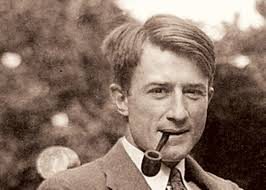
Michael Oakeshott (1901 - 1990)
Open Oakeshott's interactive page (graphs of influences, similar and opposing positions, and quotes)
Background
Michael Joseph Oakeshott
Born: 11 December 1901 in Chelsfield, England
Died: 19 December 1990 (aged 89) in Acton,
England
Alma mater: Gonville and Caius College,
Cambridge, London School of Economics
Schools: Conservatism, Liberalism, British
idealism
Main interests: History of philosophy,
Philosophy of religion, Philosophy of history,
Political philosophy
Influences: Plato, Aristotle, Hobbes, Spinoza,
Kant, Burke, Hegel, F. Tönnies, Simmel, Bradley,
Dilthey, Collingwood, Pater, J. M. E. McTaggart,
Bosanquet, Montaigne, Pascal, Tolstoy
Influenced: J. G. A. Pocock, Maurice Cowling,
Gertrude Himmelfarb, Margaret Thatcher,
Andrew Sullivan, John N. Gray, Hayden White,
Richard E. Flathman, Virgil Nemoianu
From Wikipedia
Oakeshott was an English philosopher and political theorist who wrote about philosophy of history, philosophy of religion, aesthetics, philosophy of education, and philosophy of law…. Oakeshott's early work… shows that he was more interested in the philosophical problems that derived from his historical studies than he was in the history, even though he was officially a historian…. [H]is posthumously published and voluminous Notebooks (1919-) show a lifelong preoccupation with religion and questions of mortality.
Introductory Comments
Ask a geologist, a historian, and a property developer to look at the same hillside, and they will see three different hills: ancient strata, the site of a battle, forty-two building lots with a view. Oakeshott thought this was no accident of temperament. Experience, he argued, is never a blank, unmediated encounter with the world. Most of the time it is organized by a governing standpoint, a "mode," that settles in advance what will count as a fact. The scientist measures, the historian reconstructs the past, and the practical person weighs what ought to be done. Each mode runs on its own internal logic, and arguing from one to another is what Oakeshott called irrelevance: something like using a thermometer to measure beauty. Plundering the past for political lessons is perfectly natural, but it isn't history.
For the young Oakeshott, philosophy was the great exception. Carrying no presuppositions of its own, it was less a perspective than a refusal to settle for one: experience pursued without reservation. It was, if you like, the only guest at the party sober enough to describe the room. Later, philosophy grew humbler. It no longer sat in judgment over the other voices in "the conversation of mankind." Instead it reflected on how the conversation goes, adding nothing of its own. Scholars still quarrel over how sharp this demotion was, and whether it was one at all. Either way, the referee had left the field for the stands: still arguing about the rules, but no longer blowing the whistle.
Some of Oakeshott's Key Positions
Experience is a single, unified whole. A mode of experience is an "arrest" within that whole: a way of viewing all of experience from one limited standpoint, governed by its own postulates. Each mode is a coherent world of ideas with its own standard of truth.
History, science, and practice are the principal modes. History views the world as past. It explains an event by tracing, in continuous detail, the events that led up to it. Science views the world quantitatively, as a system of measurable and general relations. Practice views the world as something to be changed. It is the realm of will, action, and morality, where "what is" must be brought into line with "what ought to be." Poetry, the contemplative enjoyment of images for their own sake, is a further mode with its own character.
Because every mode is abstract and partial, none grasps reality whole, and none has authority over the others. The modes are mutually irrelevant. Philosophy is not another mode. It is experience pursued without presuppositions, and from its standpoint the limits of each mode become visible.
The modes, or "voices," relate to one another not as rival arguments but as participants in a conversation. The conversation aims at no conclusion, and no voice should dominate it. In the modern world, though, the voices of practice and science increasingly have.
Place in the History of Ideas
Oakeshott's Place in History of Ideas
André Munro: Oakeshott criticizes rationalism for reducing human practices such as politics to pragmatic enterprises that can be analyzed, conveyed, and organized according to a rational model. From the rationalist’s perspective, for instance, politics consists of designing institutions according to abstract principles, without any regard for culture and tradition. By rejecting all authority besides reason, Oakeshott argues, rationalism loses sight of the practical knowledge that is embedded in these human practices.
Terry Nardin: Michael Oakeshott is often described as a conservative thinker. But this description notices only one aspect of his thought.... A recurrent theme in his writings on moral and political life is the tension between individuality, which implies plurality, and its denial, which he calls barbarism. Individual freedom is threatened when politics is conceived as the pursuit of ideals.
J. S. McClelland: Oakeshott calls himself a conservative but it is not easy to determine what kind of conservative he is. We look in vain in Oakeshott’s political writings for a specific political doctrine, and there is nothing there that would help us to decide which side to come down on on any particular political issue. Oakeshott believes... political philosophy… has got nothing to do with... political practice….
Random Thoughts on Oakeshott
Most political programs come with a destination: the classless society, the racially pure nation, the perfectly planned economy. Oakeshott distrusted them all, and not only the murderous ones. Having watched the 20th century's ideologies promise paradise and deliver prison, he concluded that freedom is most at risk when politics turns ambitious. A state bent on realizing a grand vision of the good life must enlist its citizens in the project, and enlistment is no less coercive for being dressed in the language of liberation. Such a state treats its people as an "enterprise association," a body united by a shared goal. Oakeshott preferred "civil association": a society bound only by common rules, which govern how people pursue their ends rather than which ends they pursue.
Critics, especially on the left, have doubted that the rulebook is as innocent as it looks. A framework that protects property and prizes individuality, they argue, has already taken sides. Oakeshott might have shrugged, since he defended both openly. The sharper charge is that some ideals are not utopian luxuries but elementary demands of justice, and that a politics of non-interference ends up protecting the freedom of the powerful at everyone else's expense. Here the picture gets more interesting. A law forbidding racial discrimination is just the sort of general rule civil association allows; a program to abolish racial discrimination looks much more like an enterprise. But what good is a law if it is not enforced?
Influences
Oakeshott was influenced by: Aristotle, Bosanquet, Bradley, Burke, Collingwood, Dilthey, Hegel, Hobbes, Kant, McTaggart, Montaigne, Pascal, Pater, Plato, Simmel, Spinoza, Tonnies, F.
Oakeshott influenced: Cowling, M., Flathman, R.E., Gray, John N., Himmelfarb, Nemoianu, Pocock, J.G.A., Sullivan, A., Thatcher, White, Hayden
Similar and opposing positions
Thinkers with similar positions:
- Adorno (Philosophy springs from particular socio-historical conditions.)
- Brentano (We inevitably think and speak as part of cultural traditions.)
- Burke (Radical changes in govt. are dangerous & undermine social stability.)
- Collingwood (Methods of the humanities are not like those of science.)
- Dilthey (Our understanding depends on past worldviews and interpretations.)
- MacIntyre (Rationality is inevitably subordinate to & part of cultural traditions.)
- Nagel (We can't view reality devoid of assumptions, perspectives, and biases.)
- Ortega (In order to understand a reality we must understand its history.)
- Vico (Society relies on narratives that give coherence and meaning to life.)
- Weber (Cultural, not just economic, forces drive history and shape society.)
Thinkers with opposing positions:
- Brentano (Philosophy should use methods as rigorous and exact as science.)
- Carnap (Many philosophical questions abuse language and are meaningless.)
- Comte (All valid knowledge is scientific: Knowledge requires verification.)
- Frege (Logical & philosophical problems can be solved by perfecting language.)
- Leibniz (Reason enables us to pass beyond the relative and subjective.)
- Lyotard (Post-modern society has no grand narratives - & doesn't need them.)
- Philo (The purely contemplative part of the Soul is its higher & eternal part.)
- Russell (Language that is not verifiable is not true or untrue but meaningless.)
What others said about Oakeshott
- Alberto Mingardi: He calls himself a conservative but, for him, conservatism is a "disposition," an inclination, and not a particular creed.
- John Gray: He was able to disparage ideology because he believed tradition contained all that was needed for politics; he could not conceive of a situation in which a traditional way of doing politics was no longer possible.
- Perry Anderson: Strauss's ideal remained what Oakeshott abjured: the deliberate forethought for a well-governed city that had been the aim of the line from Socrates to Cicero which he described and admired as "classical political rationalism".... Oakeshott could dismiss the polis as irrelevant to modern government: Strauss [could not].
- Terry Nardin: The task of the philosophy of history, as Oakeshott sees it, is to clarify what distinguishes historical from other kinds of inquiry.
- E. Corey: Oakeshott is keenly aware of the limits of politics, repeatedly warning against letting politics overtake all other realms of human experience.
- Perry Anderson: The peculiar vehemence of Oakeshott's refusal of any idea of "political engineering," no matter how piecemeal,... came from the ordeal of Labour rule and (talk of) Labour planning.
- Terry Nardin: [Oakeshott believed that when] a body of ideas has achieved a substantial degree of integrity and differentiation, a mode of thought can be said to have emerged…. A mode constitutes a distinct and self-consistent "whole of interlocking meanings," a world of ideas resting on its own criteria of truth, factuality, and reality.
- J. Droysen: the data for historical investigation are [for Oakeshott] not past things, for these have disappeared, but things which are still present..., whether recollections of what was done, or remnants of things that have existed….
Schools: Common Sense Realism, Communitarianism, Conservatism, Liberalism, Metaphysical Idealism
Main interests: History, History of Philosophy, Political Philosophy, Political Theory, Politics, Property, Religion, Social Philosophy
Oakeshott's answers to philosophical questions
Economics
"Economics is not an attempt to generalize human desires or human behavior; but to generalize the phenomena of price."
Education
"Every human being is born an heir to an inheritance to which he can succeed only in a process of learning."
"Education… is learning to look, to listen, to think, to feel, to imagine, to believe, to understand, to choose and to wish."
Epistemology
In social and political matters, we are too prone to think we can use logic to engineer new and improved institutions.
No mode of thought - historical, scientific, practical, aesthetic - is inherently better than any other mode of thought.
Different modes of thought, such as history and science, use different criteria and have distinct ways of seeing the world.
Ethics
We should not so much aim to attain happiness, but to avoid "the misery to which the pursuit of happiness exposes us."
Law
"The rule of law… remains the most civilized and least burdensome conception of a state yet to be devised."
Political Philosophy
Our institutions "are the product of innumerable human choices, over long stretches of time, but not of any human design."
Governments should try to prevent bad things from happening, rather than pursue vague or ambiguous notions of the good.
Political change in general is never justified. We conservatives "prefer the familiar to the unknown,... the tried to the untried."
A true conservative prefers "the tried to the untried..., the actual to the possible, the convenient to the perfect...."
Society
A great state is "one which achieves a great intensity of social unity. And… unity [here] means unity of purpose and will…."
Stable human institutions emerge gradually, through long periods of trial and error - not through sudden rational inventions.