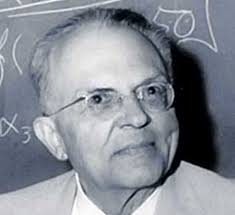
Carnap was a German-language philosopher who was active in Europe before 1935 and in the United States thereafter. He was a major member of the Vienna Circle and an advocate of logical positivism.… Carnap believes that every logical language is correct only if this language is sup- ported by exact definitions and not by philosophi- cal presumptions. Carnap embraces a formal con- ventionalism. That implies that formal languages are constructed and that everyone is free to choose the language [best] suited to his purpose.
Introductory Comments
Old maps sometimes show islands that were never there: phantom coastlines, sketched in by one mapmaker and dutifully copied by the next for centuries. Carnap thought much of philosophy had gone the same way. Metaphysicians, in his view, had spent two thousand years charting territories that did not exist, such as the essence of reality, the nature of pure Being, and the curious behavior of Nothing. Their disputes were not hard problems awaiting a clever solution. They were pseudo-problems, strings of words that looked like questions about the world but never touched it. Ask whether universals exist apart from particular things, and you have not posed a deep riddle. You have, Carnap thought, said nothing at all.
The culprit was language. Philosophers had trusted ordinary words to carry metaphysical freight without asking what observation could ever show their claims true or false. The result was grand systems built on fog. The cure, worked out with his colleagues in the Vienna Circle, was logical analysis: test every statement, and keep only those that logic or experience could settle. The verdict was severe. Metaphysics failed the test, and so did ethics and aesthetics, whose judgments Carnap took to express attitudes rather than state facts. Yet "meaningless" did not mean "worthless." The mapmaker's fantasy islands were worthless as geography but could still stir the imagination. Likewise, metaphysics was worthless as science, yet expressive, at times even stirring, as poetry.
Some of Carnap's Key Positions
A statement has meaning only if it is analytic, meaning true or false by virtue of logic and the meanings of its terms, or empirically testable, at least in principle. Metaphysical statements are neither. "The Nothing itself nothings" cannot be checked against any possible experience, so it asserts nothing. At best it expresses an attitude toward life, as poetry or music does, but without the poet's or composer's talent.
The trouble reaches beyond metaphysics. Philosophers routinely mistake tangles in language for problems in the world. Many traditional disputes, such as whether the external world is "real," are pseudo-problems. Philosophy's first task, therefore, is the careful analysis of language.
Ordinary language is poorly suited to this work, because its grammar lets nonsense pass for sense. "Caesar is a prime number" is impeccably formed and utterly meaningless. Artificial languages, built with explicit rules and governed by logic and mathematics, can reach far greater precision. Yet no single artificial language is the correct one. Choosing a framework is a matter of convention, judged by usefulness rather than truth.
The model throughout is science. Philosophy should not try to do science's work. Instead it should become the logic of science, clarifying the concepts and conventions of scientific language so that its rigor can be made explicit and extended.
Place in the History of Ideas
Carnap's Place in History of Ideas
Karl Popper: Put in a nut-shell, my thesis amounts to this. The repeated attempts made by Rudolf Carnap to show that the demarcation between science and metaphysics coincides with that between sense and nonsense have failed. The reason is that the positivistic con- cept of "meaning" or "sense" (or of verifiability, or of inductive confirmability, etc.) is inappro- priate for achieving this demarcation - simply because metaphysics need not be meaningless even though it is not science. In all its variations demarcation by meaninglessness has tended to be at the same time too narrow and too wide: as against all intentions and all claims, it has tended to exclude scientific theories as meaningless, while failing to exclude even that part of metaphysics which is known as "rational theology."
Edward Skidelsky: The issue between Cassirer and Carnap is at root whether we can find freedom and objectivity within the realm of feeling, or only by escaping from this realm. For Carnap, all emotional expression, from the lowest to the highest, belongs to the disenchanted world of cause and effect. Our only freedom from this world lies in pure theory. Only by stepping outside our emotions and submitting them to the cool, objectifying gaze of science - a process exemplified, in Carnap's view, by Freudian psycholanalysis - do we gain some measure of control over them.
Random Thoughts on Carnap
Every reformer needs a model citizen, and for Carnap it was the scientist. Science, as he idealized it, kept its books in order. Its claims could be checked, its terms could be traced back to observation (however indirectly), and its concepts earned their keep through testable consequences. Carnap never asked philosophers to trade their armchairs for lab benches. He asked them to borrow science's logical discipline, a kind of semantic hygiene, and to become, in effect, the logicians of science. Do that, and the swamp of pseudo-problems that had swallowed generations of thinkers might finally be drained.
Still, one may wonder whether the drained swamp left anything worth farming. The questions that have kept philosophy alive for millennia include what is just, what makes a life good, and what we owe one another. Science cannot answer them, and Carnap agreed. He held that a judgment such as "this act is unjust" states no fact. Yet even philosophers who agree with him on that point may insist that moral reasoning involves more than expressing attitudes. It can weigh competing principles, expose inconsistencies, interpret traditions, and challenge inherited assumptions. It can, in short, be done well or badly. The real quarrel is whether the absence of empirical verification means the absence of proof. Strictly speaking, yes. As Hume said, you cannot derive an "ought " from an "is." But, still, without an "is," the "ought" would be completely up for grabs.
Ayer (Metaphysics should play no role in responsible human discourse.)
Brentano (Philosophy should use methods as rigorous and exact as science.)
Comte (All valid knowledge is scientific: Knowledge requires verification.)
Peirce (The truth about an event or thing is the totality of its consequences.)
Russell (Language that is not verifiable is not true or untrue but meaningless.)
Tarski (The meaning of a sentence is equivalent to its truth conditions.)
Wittgenstein (Many philosophical questions are simply abuses of language.)
Thinkers with opposing positions:
Brandom (Much of the meaning of words springs from their inferences and uses.)
Davidson (Though mind springs from matter, it can't be reduced to matter.)
Feyerabend (Scientific pursuits should be subjected to democratic control.)
Green (The entire mental structure we call knowledge is a product of our mind.)
Hamann (Intuition and personal genius are best tools for understanding nature.)
Lewis, C.I. (Value statements are not merely expressive. They have meaning.)
Popper (Observations can't confirm scientific hypotheses. They can only falsify)
Quine (Scientific knowledge can't be reduced to a series of sense-data claims.)
Sorel (Science & technology threaten to destroy the mystery & value of being.)
What others said about Carnap
Ryle: [Carnap's "Meaning and Necessity" is] an astonishing blend of technical sophistication and philosophical naivete.
Mauro Murz: He asserted that many philosophical problems are indeed pseudo-problems, the outcome of a misuse of language. Some of them can be resolved when we [see them in the context of] different linguistic frameworks.
Hannes Leitgeb: Notorious as one of the founders, and perhaps the leading philosophical representative, of the movement known as logical positivism or logical empiricism, [Carnap] was one of the originators of the new field of philosophy of science and later a leading contributor to semantics and inductive logic.
Putnam: It was Rudolf Carnap’s dream for the last three decades of his life to show that science proceeds by a formal syntactic method; today no one to my knowledge holds out any hope for that project.
Ayer: Carnap was persuaded by members of the Gestalt shool of psychology that experience comes in undifferentiated wholes.
A. MacFarlane: Carnap never abandoned his belief that science and philosophy should be founded on a bedrock of logic…. His unshakeable support of the primacy… of logic made his position an increasingly isolated philosophy….
André Carus: Language choice, for Carnap, was not an end in itself but was rather in the service of freeing ourselves from the distorted perspective on the world imposed on us by our inherited natural languages…. For the pursuit of knowledge, and insight into the human condition in the light of that knowledge, better languages are needed.
Carl Hempel: He held that philosophical perplexities often arise from a misunderstanding or misuse of language and that the way to resolve them is by "logical analysis of language."