Alfred Ayer (1910 - 1989)
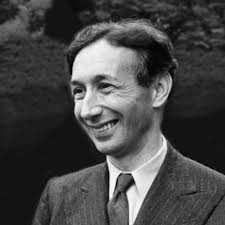
Open Ayer's interactive page (graphs of influences, similar and opposing positions, and quotes)
Background
Alfred Jules Ayer
Born: 29 October 1910 in London, England
Died: 27 June 1989 (aged 78) in London, England
Education: Eton College
Alma mater: Christ Church, Oxford
Era: 20th-century philosophy
Region: Western philosophy
Schools: Analytic philosophy, Logical positivism
Main interests: Language, Epistemology,
Ethics, Meaning, Science
Notable ideas: Verification principle, Emotivist
ethics
Influences: Hume, Vienna Circle, Popper,
Russell, Wittgenstein, Kant, Voltaire, Rudolf
Carnap, Gilbert Ryle, Berkeley, Charlie Broad,
G. E. Moore
Influenced: R. M. Hare, Strawson, Honderich,
Marković, P. Unger
From Wikipedia
Ayer was an English philosopher known for his promotion of logical positivism, particularly in his books Language, Truth, and Logic and The Problem of Knowledge…. He was known for his advocacy of humanism, and was the second President of the British Humanist Association (now known as Humanists UK). Professor A. J. Ayer was President of the Homosexual Law Reform Society for a time; he remarked that "as a notorious heterosexual I could never be accused of feathering my own nest."
Introductory Comments
A. J. Ayer's Language, Truth and Logic arrived in 1936 like a philosophical wrecking ball swung with a polite British accent. Its central weapon was the verification principle: a statement is meaningful only if it is analytically true (a tau- tology of logic or math) or empirically verifia- ble. Anything else is, quite literally, nonsense - not false, mind you, but meaningless, which is arguably worse, since at least falsehood pays language the compliment of taking it seriously. Metaphysics and theology were marched to the guillotine with equal efficiency. "God exists" and "the soul is immortal" - such statements can't be tested in a laboratory or derived from logic alone, so Ayer swept them off the table of philosophy like so many crumbs after dinner.
Ayer's treatment of moral language was no less severe. Moral judgments, he argued, add no factual content to the world; they merely ex- press approval or disapproval. Saying "Stealing is wrong" is, in effect, saying "Stealing - boo!" (ethics as mere punctuation). He agrees with intuitionists that moral claims resist reduction to empirical facts, but rejects their appeal to "moral intuition" as epistemically flimsy: when intuitions clash, who adjudicates? Ethical lan- guage, then, functions to express and influence feelings, not to state truths - persuasion, not proposition. When two people argue morality, the dual is not fought with heavy swords, but with weightless exclamation marks.
Some of Ayer's Key Positions
As the logical positivists have shown us, the verification principle is the only valid basis for philosophy. That is to say: Unless one has logical proof or empirical evidence to back up such claims as “God exists” or “honesty is good,” such claims remain not only unsupported, but also, meaningless.
Such statements may indicate something about you as an individual - your likes, beliefs, insecurities, etc. - but they say nothing about the objective world outside the self. If such claims allow for neither logical nor empirical comprehension, they remain incomprehesnible.
Metaphysical and religious literature is particularly prone to such meaningless state- ments. Moral claims, though, do belong to the realm of science - for example, "propositions describing the phenomena of moral experience, and their causes." However, "exhortations to moral virtue" are mere commands, and "actual ethical judgments" usually lack the rigorous discipline that is to be expected of philosophy.
But of course life itself usually lacks the rigorous discipline associated with philosophy. As living creatures, we must act according to our best understanding of the world. And as moral creatures, humans have a perfect right to re- make their societies and economies in a way that's more consistent with their human values.
Place in the History of Ideas
Ayer's Place in History of Ideas
Ben Rogers: In seeking to refound philosophy as an analytic discipline, Ayer was not just trying to separate philosophy from life but to liberate life from philosophy. As he saw it, philosophers had traditionally set out to establish themselves as authorities on the fundamental nature of the universe and the character of right and wrong. They posited immutable laws of nature, claimed to show that the world was one, or pretended to demonstrate the existence of supersensible realms of being; they invented gods, divine commands and human ends, and sought in that way to tell people how to live. To Ayer all this was not only unjustified… but also reactionary. In narrowing the possibilities of experience, in placing limits on the findings of science and in dictating what was right and wrong, philosophy had become a cramping distorting discipline
Julian Baggini: Ayer’s central mistake was to think that his principle could distinguish between the meaningful and meaningless. This error has two parts. First, a better distinction would be between the objective and subjec- tive.… The second part of the mistake is to make the distinction binary where it should be spectral.… Ayer found himself caught in a classic philosophical predicament. If an idea is too vague it will be dismissed as woolly and hand-waving. Too precise, however, and the logic-choppers will be out to unpick its contradic- tions and inconsistencies.
Random Thoughts on Ayer
How should one respond to Ayer's reduction of morality to mere howling? Peter Geach offered a sharp logical challenge. Consider: "If stealing is wrong, then encouraging others to steal is wrong." Here, "stealing is wrong" functions as the antecedent of a conditional - it is supposed, not asserted. Now try the emotivist translation: "If boo to stealing!, then boo to encouraging oth- ers to steal!" The result is gibberish. Emotional outbursts simply cannot serve as premises in valid inferences, yet moral statements plainly do so every day. Moreover, moral disputes exhibit a rational structure - we give reasons, weigh evidence, and change our minds - that emotivism cannot begin to explain.
Ayer might respond that the logical appearance of moral statements in conditionals is merely a grammatical illusion - emotions borrowing the suit of propositional logic and looking rather dashing in it. But here Ayer faces a ghost he cannot exorcise: the verification principle is it- self self-defeating. It is neither empirically verifi- able nor analytically true - a philosophical the- sis that fails its own test. And if the verification principle crumbles, the dismissal of moral state-ments based on that principle collapses with it. Or does it? After all, a doctor who misdiagnoses your illness hasn't thereby proved you healthy. The reader is left, as philosophy so often leaves us, holding two sharp swords and invited to choose which one cuts deeper.
Influences
Ayer was influenced by: Berkeley, Broad, C.D., Carnap, Hume, Kant, Mill, Moore, Popper, Russell, Ryle, Voltaire, Wittgenstein
Ayer influenced: Hare, Honderich, Markovic, McGinn, Strawson, Unger, P
Similar and opposing positions
Thinkers with similar positions:
- Hume ("Causal necessity" is nothing more than the association of events.)
- Peirce (The truth about an event or thing is the totality of its consequences.)
- Russell (Language that is not verifiable is not true or untrue but meaningless.)
- Schlick (Outside logic & math, the truth of statements must rest on evidence.)
- Singer, Peter (There's no evidence that God exists nor that belief in Him is good)
- Stevenson (Moral statements do not express propositions but mere emotions.)
Thinkers with opposing positions:
- Austin, J.L. (The validity of knowledge claims depends on their aim & context.)
- C. A. Mace (Metaphysics is a form of intellectual poetry.)
- Foot (Moral judgments, though linked to human nature, can be true and rational.)
- Husserl (Positivism imports common assumptions into its "pure" experience.)
- Lacan (To survive one must be taken in by signs and be the dupe of language.)
- Lewis, C.I. (Value statements are not merely expressive. They have meaning.)
- Pinker (Language evolved as a practical tool, not as a purely logical instrument.)
- Putnam (Objects have certain essential properties making them what they are.)
- Searle (Words not only assert things, but also do or perform things.)
- Strawson (Ordinary language analysis can shed light on metaphysical issues.)
What others said about Ayer
- Ryle: [Ayer was] the best student I have yet been taught by.
- Ben Rogers: Above all else, Ayer hoped, men and women would realize that this life was the only life they have, and would thus become more appreciative of what it had to offer. Which is where [football & love affairs] come in.
- Ted Honderich: He was the antithesis of the philosopher of mystery and intimation, and he was not tempted to technicality. He lived assertively and was vain and cocksure - at some cost to his philosophical reputation, since other philosophers were as human in their judgements on him. He was also honest, humane, and more or less on the Left in politics.
- Anthony Quinton: Perhaps his greatest intellectual virtue was his unremitting adherence to clarity and to rational argument. His work is without allusions, undeveloped suggestions, obscurity, and mannerism.
- Colin Wilson: A colleague of the... philosopher A. J. Ayer once remarked wryly "I wish I was as certain of anything as he seems to be about everything."
- Dee Wells: Freddie became so much nicer after he died. He was not nearly so boastful. He took an interest in other people. [Ayer's widow is commenting here on his changed dispositions after his near-death experience in June 1988.]
- Graham Macdonald: The major portion of his work was devoted to exploring different facets of our claims to knowledge, particularly perceptual knowledge and knowledge that depended on inductive inference.... Along the way he defended... a Humean account of causation, [a] compatibilism with respect to freedom [and an] an emotivist theory of ethics….
- Anthony Quinton: He was not a highly original thinker. His impact was due to the brilliance with which he arranged and expressed the ideas he had acquired from others.
Schools: Analytic Philosophy, Atheism, Behaviorism, Empiricism, Ethical Hedonism, Humanism, Linguistic Philosophy philosophy, Logical Positivism, Positivism, Secular Humanism, Skepticism, Vienna Circle
Main interests: Epistemology, Ethics, Fact–value distinction, Free/Unfree Will, History of Philosophy, Language, Religion, Science
Ayer's answers to philosophical questions
Epistemology
Empirical verification is essential. "By mere deduction from what is immediately given we cannot advance a single step...."
"The truths of logic and mathematics are analytic propositions or tautologies." They tell us nothing about the world we live in.
"It seems that I have spent my entire time trying to make life more rational and that it was all wasted effort."
A true statement is one that is either purely logical or has somehow been verified through empirical evidence.
"The criterion which we use to test the genuineness of apparent statements of fact is the criterion of verifiability."
Ethics
Moral statements do not communicate information: They are merely emotional noise we occasionally blurt out.
Ethics does not deal with facts. "If now I… say 'Stealing money is wrong,' I produce a sentence which has no factual meaning."
Language
A statement only has meaning if it is purely logical or empirically verifiable. If neither, the statement is meaningless.
Philosophy
"I see philosophy as a fairly abstract activity, as concerned mainly with the analysis of criticism and concepts…."
Philosophers should always "establish beyond question what should be the purpose and method of a philosophical enquiry."
"... if there is any progress in philosophy, it does not take the linear form which characterizes the progress of... science."
Religion and Theology
It can't be proven that God's existence is even probable, since such proof would entail certain hypotheses that could be tested.
"No morality can be founded on authority, even if the authority were divine."
The claim "there is something imperceptible inside of a man [that] goes on living after he is dead" is groundless metaphysics.
Science
"For since the religious utterances... are not genuine propositions at all, they cannot [contradict the findings of science.]"