Karl Jaspers (1883 - 1969)
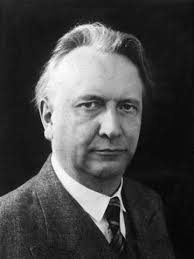
Open Jaspers's interactive page (graphs of influences, similar and opposing positions, and quotes)
Background
Karl Jaspers
Born: 23 February 1883 in Oldenburg, Germany
Died: 26 February 1969 (aged 86) in Basel,
Switzerland
Alma mater: University of Heidelberg (MD, 1908)
Schools: Neo-Kantianism, Existentialism,
Existential phenomenology
Main interests: Psychiatry, psychology, religion,
theology, philosophy of history, epistemology,
political theory, politics, social criticism
Notable ideas: Axial Age; Dasein and Existenz
as the two states of being, subject–object split
Influences: Meister Eckhart, Spinoza, Kant,
Hegel, Weber, Kierkegaard, Nietzsche, Dilthey,
Schelling, Heidegger, Nicholas of Cusa
Influenced: Ricoeur, Gadamer, William A. Earle,
Heidegger, Hannah Arendt, Alexandre Kojève,
Martin Luther King Jr., Franco Basaglia, Jakob
Klaesi, Sartre, Camus
From Wikipedia
Jaspers was a German-Swiss psychiatrist and philosopher who had a strong influence on modern theology, psychiatry, and philosophy. His 1913 work General Psychopathology influenced many later diagnostic criteria, and argued for a distinction between "primary" and "secondary" delusions. After being trained in and practicing psychiatry, Jaspers turned to philosophical inquiry and attempted to discover an innovative philosophical system. He was often viewed as a major exponent of existentialism in Germany....
Introductory Comments
Around 1900, German psychiatry ran on a confident slogan: mental illnesses are brain illnesses. Find the lesion, and the madness is explained. The trouble was that almost nobody had found any lesions, so theorists filled the gap with speculative wiring diagrams of the brain. A young physician at the Heidelberg clinic, Karl Jaspers, gave this habit a deflating name: "brain mythology." He didn’t think the brain was irrelevant, and he never doubted that biology mattered. His complaint was that psychiatrists were busy explaining experiences they had never troubled to describe, let alone understand.
This critique produced General Psychopathology, soon recognized as a founding text of modern psychiatry. From Husserl he borrowed phenomenology, the careful description of experience as it presents itself, and he set physicians to record how patients themselves described their inner lives. From Dilthey and Weber he took a distinction between explaining causes and understanding meaning. Much of mental life can be understood: anyone can see how grief darkens a mood or how jealousy breeds suspicion. This is empathy. But Jaspers was just as firm that the honest physician must admit when he has reached the edge of empathy and understaning. Within a few years the psychiatrist had turned philosopher, absorbed in a question his clinical work had left open: what is it in a human being that escapes every science, psychiatry included?”
Some of Jaspers's Key Positions
Mental disorders should be divided into subtypes using clearly stated criteria. The key division is between secondary "delusion-like ideas" which can be understood as growing out of a person's mood or experiences, and primary delusions which can't be traced to anything else and resist empathic understanding altogether.
This rests on a broader distinction between two ways of knowing a mind. Explanation traces causes, as the natural sciences do with brain processes. Understanding grasps meaning from the inside, as when one sees how jealousy might breed suspicion. Psychiatry needs both, and confusing the two produces error.
No patient, and no person, is merely the sum of symptoms or behaviors. Science can study a human being as an object, but something always escapes it: the self as free, choosing existence (Existenz). Philosophy can illuminate that self but never capture it in a theory.
That freedom comes into focus in "limit situations," such as death, suffering, struggle, and guilt, which can be neither escaped nor solved. Faced with them, a person may evade, despair, or embrace them and so become authentically oneself. Embracing them brings an awareness of transcendence that no proof can secure. This is not a leap into religious doctrine. It is a "philosophical faith" that remains open to reason.
Place in the History of Ideas
Jaspers's Place in History of Ideas
Chris Thornhill: For him, philosophy is a way of thought, which uses expert knowledge while going beyond it. He believed that by means of devoting oneself to philosophy, individuals do not cognize objects but explicate and actualize their being as thinkers and thus become themselves. Consequently, he did not attract a cohort of apostles, and, outside Germany at least, his works are not often the subject of high philosophical discussion.... Nonetheless, Jaspers’s work set the parameters for a number of different philosophical debates, the consequences of which remain deeply influential in contemporary philosophy...."
H. J. Blackham: [For Jaspers, the] unconditioned I, freed from determinations, standing in liber- ty, knows that I am autonomous but not self-sufficient, that I am doubly dependent, given to myself from a transcendental ground and in need of the limitations and determinations by which I choose myself, realize myself in the world. My authenticity is in this autonomy, doubly dependent. There is no place in philoso- phy for mysticism, for... direct communication with God.... One might perhaps say that the condition of looking steadfastly upon [God's] face is continually to lose sight of it. Life is like that: its vitality withers unless it is perpetually renewed, and so soon as it is seized in one form it slips into another, even the opposite; so that paradox is the least inadequate formulation.
Random Thoughts on Jaspers
Most of life’s problems, however maddening, come with handles. A leaky roof can be patched, a bad job quit, a quarrel (with luck) mended. But some situations have no handles at all. We will die. We will suffer, and we will cause suffering. We will struggle against others, and simply by acting we will incur guilt. Jaspers called these "limit situations," and he thought they were where philosophy really begins. They cannot be solved, and no one can step outside them to look them over. They can only be met: by distraction, by despair, or by courageously taking them up as one’s own. For Jaspers, that last response is the moment a person becomes most fully a self.
Yet Jaspers did not stop at courage. At the limits of objective knowledge, he argued, a person may become aware of Transcendence - a reality that can be neither demonstrated nor defined, but that can be embraced in what he called "philosophical faith." It is an interesting move, and a slippery one. If Transcendence cannot be known or described, what separates this faith from wishful thinking? Camus called that kind of move "philosophical suicide." Far better, he thought, to stand at the edge of the unknown and refuse the consolation. Jaspers's own writings suggest a reply. What he called philosophical faith offers no guarantees and no fixed doctrine; it is less a belief than a refusal to treat the edge as the end. Whether that is a real distinction or merely a more dignified form of wishful thinking is the question we are left with.
Influences
Jaspers was influenced by: Dilthey, Eckhart, Hegel, Heidegger, Heinrich Blücher, Kant, Kierkegaard, Nicholas of C., Nietzsche, Plato, Schelling, Spinoza, Weber
Jaspers influenced: Arendt, Basaglia, F., Camus, Earle, William, Gadamer, King, Klaesi, Jakob, Kojève, Lacan, Ricoeur, Sartre
Similar and opposing positions
Thinkers with similar positions:
- Eckhart (Personal detachment allows us to sense God's presence within us.)
- Grotius (International disagreements should be settled via law, not via war.)
- Kierkegaard (Philosophy must embrace subjectivity as an essential resource.)
- Kierkegaard (Belief in God cannot be based on reason. Faith requires a leap.)
- Nicholas of C. (God or ultimate reality transcends all rational categories.)
- Nietzsche (Philosophical claims are expressions of our mental dispositions.)
- Ockham (Faith, not reason, provides the foundation for Christian beliefs.)
- Ortega (Philosophy must focus on lived experience - the life of each individual.)
- Sartre (Our freedom is absolute & an authentic life requires that we embrace it.)
- Weber (Democracy needs to be guided by an intellectual elite.)
Thinkers with opposing positions:
- Bultmann (We must demythologize Scripture to make God relevant today.)
- Hegel (Freedom springs not from within, but from our belonging to a state.)
- Hobbes (Our ultimate motive is always to experience pleasure and avoid pain.)
- Levi-Strauss (Despite our inventiveness, universal laws govern all our thinking.)
- Luther (Because sin incapacitates human beings, free will is impossible.)
- Luther (Given God's sovereignty & our own sinfulness, there is no free will.)
What others said about Jaspers
- Peter-Paul Verbeek: [Jaspers'] early conception of technology... revolved around the transformation of human society into a mass, mechanized culture.
- Hans Saner: [Jaspers was] one of the most important Existentialists in Germany, who approached the subject from man’s direct concern with his own existence.
- Chris Thornhill: Jaspers borrowed from Nietzsche a psychologistic approach to philosophical perspectives, and, like Nietzsche, he tended to view philosophical claims... as expressions of underlying mental dispositions. For this reason, he also borrowed from Nietzsche a dismissive approach to absolutized claims to truthful knowledge....
- Kurt Salamun: ... Jaspers never wanted to construct a metaphysical system of Being. He rejected such "ontological" systems as rigid cages which... ignore transcendent (that is, higher and ineffable) dimensions of Being.
- Peter-Paul Verbeek: Jaspers's later perspective allowed him to discern... ways in which [technology] opened up new existential possibilities.
- Leszek Kolakowski: Myths, according to Jaspers, are the means by which people gain access to ultimate reality, and although they have no empirical reference, they are an indispensable part of culture.
- H. J. Blackham: For Jaspers, Transcendence is a total view of the world, not from the station of Sirius as a spectator of all time and all existence, but by glimpses gained through participation in the life of the world by one who is eager to see and trained to look. Anything approaching separation from the world... is peremptorily rejected.
- Walter Kaufmann: ... Jaspers values Nietzsche in large measure because he thinks that Nietzsche did away with knowledge, thus making room for Jaspers' "philosophic faith."
Schools: Continental Philosophy, Existential Phenomenology, Existentialism, Fideism, Humanism, Personalism, Phenomenology, Voluntarism
Main interests: Epistemology, History, History of Philosophy, Mind, Political Theory, Politics, Psychology, Religion, Social Criticism, Theology, Tragedy, War, Wisdom
Jaspers's answers to philosophical questions
Education
"All democracies demand common public education because nothing makes people so much alike as the same education."
"The Socratic teacher turns his students away from himself and back onto themselves; he… makes himself inaccessible."
Epistemology
"Reason is like an open secret...; it is the quiet space into which everyone can enter through his own thought."
"There is no absolute truth; truth is always relative, dependent on perspective."
Ethics
"Authenticity lies in the willingness to confront our own shortcomings and face them honestly."
"The pursuit of happiness should not be an end in itself, but a byproduct of meaningful existence."
"Love is the ultimate expression of human connectedness and transcendence."
"The only way to overcome the fear of death is to live a life filled with purpose and meaning."
"What makes us afraid is our great freedom in the face of the emptiness that has still to be filled."
History
"That which has happened is a warning.... It must be... remembered…. Only in knowledge can [mistakes] be prevented."
"That which has happened is a warning…. It was possible for this to happen, and it remains possible for it to happen again…."
Metaphysics
We behave in way that gives meaning to life or resign ourselves to a life without meaning. Either way, we have made a choice.
Mind
"One's identity is not fixed; it is constantly shaped and reshaped through our interactions with others."
Nature
"The soul of a landscape, the spirits of the elements, the genius of every place will be revealed to a loving view of nature."
"Man is always something more than what he knows of himself. He is not what he is simply once and for all, but is a process."
Philosophy
"... the essence of philosophy is not the possession of the truth but the search for truth." Questions, not answers, are its core.
"I discovered that the study of past philosophers is of little use unless our own reality enters into it."
"[In] philosophic meditation… I attain Being & my own self, not impartial thinking which studies a subject with indifference."
Psychology
Within us is a drive to destroy reason or at least subordinate it to whatever impulse or passion currently holds sway over us.
Science
With the colossal growth of science & technoloogy, we're now at risk of their mastering us, rather than our mastering them.
Society
"We must learn to talk with each other, and ... accept one another in our extraordinary differences."
Man's "existence has become dependent on [the masses], so that the thought of them must control his doings, his cares...."
"The mass-man has very little spare time, does not live a life that appertains to a whole, [seeks only] immediate gratification..."