Bernard Bosanquet (1848 - 1923)
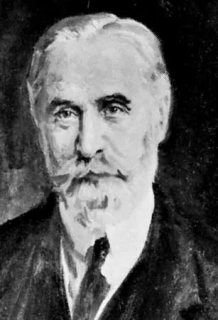
Open Bosanquet's interactive page (graphs of influences, similar and opposing positions, and quotes)
Background
Bernard Bosanquet
Born: 14 June 1848 in Rock Hall (near Alnwick),
England
Died: 8 February 1923 (aged 74) in London,
England
Alma mater: Balliol College, Oxford
School: British idealism
Main interests: Political philosophy, politics,
aesthetics, metaphysics, logic, ethics, religion
Influences: Christoph von Sigwart, William
Stanley Jevons, Hermann Lotze, Georg Wilhelm
Friedrich Hegel, F. H. Bradley, Herbert Spencer,
John Stuart Mill, Plato, Aristotle, Immanuel
Kant, Thomas Hill Green, Baruch Spinoza, Jean-
Jacques Rousseau, David Strauss, Ferdinand
Baur, Edward Caird, Benjamin Jowett
Influenced: Bertrand Russell, John Dewey,
William James, Michael Joseph Oakeshott,
Helen Bosanquet
From Wikipedia
Bosanquet was... an influential figure on matters of political and social policy in the late 19th and early 20th centuries. His work influenced but was later subject to criticism by many thinkers, notably Bertrand Russell, John Dewey, [and] William James…. The relation of the finite individual to the whole state in which he or she lives was investi- gated in Bosanquet's Philosophical Theory of the State. In this book, he "argued that the state is the real individual and that individual persons are unreal by comparison with it."
Introductory Comments
As with politics, philosophy can make for some strange bedfellows. Bosanquet drew deeply on two such fellows who seem to have little in common: Aristotle, the tireless classifier of the natural world, and Hegel, the grand architect of absolute idealism. But the pairing is less odd than it looks. Hegel himself revered Aristotle, and Bosanquet, trained as a classicist at Oxford, came to Hegel by way of the Greeks. Still, the larger debt was to Hegel. From him Bosanquet took the conviction that reality is a single, organic whole. He also took the idea that contradiction drives thought beyond partial views toward fuller ones, and that individuals find their completion not in isolation but in the shared life of family, society, and state. And like Hegel, he treated logic not as a toolkit for checking arguments but as an account of how thought takes hold of reality.
Aristotle's influence was quieter but just as real. Bosanquet's state, an organism with a rational purpose, owes much to Aristotle's polis, which exists not merely so that people may live, but so that they may live well. His attention to character and practical judgment has a Greek accent too. And Bosanquet had ballast of a more literal kind. For years he worked with London's Charity Organisation Society, where abstract theories had to survive contact with the hard particulars of poverty. Between Aristotle's earthiness and the streets of London, Bosanquet's Hegelian balloon was kept from drifting entirely into the clouds.
Some of Bosanquet's Key Positions
Reality is a single, coherent whole, and only that whole is fully real. Everything finite is a fragment of it, and the mark of a fragment is that it points beyond itself. Persons are no exception. Made of flesh and blood, bound to one time and place, each of us still lives in and for things larger than ourselves: other people, shared purposes, ideals. The self is most fully itself not when it guards its private borders but when it reaches past them. .
In politics, this means distinguishing two wills. The "actual will" is the jumble of wants we happen to have at any moment, many of them at odds with one another. The "real will" is what those wants would become if made consistent with each other and with the wants of others. Institutions such as family, property, vocation, and above all the state give this real will lasting form. And by taking their purposes as our own, we enlarge our wills and become freer, not less free.
None of this licenses the state to do as it pleases. The state works through force, and force cannot make anyone good. Its proper task is to "hinder hindrances" to the best life: to clear obstacles, not to dictate conduct. But within those limits the state expresses more of the real will than any single citizen can. Moroever, rights belong to persons as members of a community, not as isolated atoms. Such shared realities exist only in and through minds, yet in them a person finds rights, duties, and something to live for.
Place in the History of Ideas
Bosanquet's Place in History of Ideas
William Sweet: [L]ike Hegel, [Bosanquet] argued that the state, like all other "social institutions" was best understood as an "ethical idea" and as existing at the level of consciousness. Again, it is in terms of the "common good" that one's "station" or "function" in society was defined, and it is conscientiously carrying out of the duties attached to one's "station" that constitutes ethical behavior. Thus, Bosanquet rejects a "false particularization" of individuals which emphasizes them as "isolated" beings, independent of a "relation to the end." In fact, it is primarily in light of one's service in the social order that a person has the basis for speaking of his or her particular identity. Even if people cannot be "reduced" to their special service or "function," they clearly cannot be separated from it.
H. B. Acton: Bosanquet rejects both psycho- physical interactionism and the view that mind is an effect of matter. He holds that mind is a perfection of the organism and that an organism possesses more or less of it as the organism selects from, and adapts itself to, the circumstances of its world. He rejects the possibility of a mind independent of matter, and draws ethical conclusions from this. Without things, he says, there would be no problems for men. If there were nothing but disembodied persons, there would be nothing to do.
Random Thoughts on Bosanquet
Sports fans say they live and die with their team. Parents feel a child's triumph as their own. Nobody thinks them mad. We identify with things outside ourselves all the time, and the experience is so ordinary that its strangeness slips by unnoticed. Stated baldly, though, it sounds like a riddle: how can a self become one with what it is not? When Bosanquet asks us to identify with the state, the riddle comes due. His own answer was that it is a riddle only if the self is a sealed container with fixed borders. Drop that picture, and treat the self as more verb than noun, an activity rather than a possession, and the paradox loosens. The self grows as we takes in the purposes and goals of others; it shrinks when we retreat into private worry and appetite.
But solving the puzzle doesn't settle the worry. Bosanquet died in 1923, before the century's great tyrannies showed what wholehearted identification with the state could look like. Citizens who merged their wills with totalitarian regimes found not freedom but complicity, and the harmony they felt was terror for everyone outside it. Bosanquet would have protested that he meant a rational state dedicated to the common good. But then who gets to decide what constitutes reason and the common good? Bosanquet's vision may be philosophically intelligible, even inspiring. But intelligibility is no guarantee of sanity. And a perfectly coherent idea can still lead to perfectly dreadful consequences.
Influences
Bosanquet was influenced by: Aristotle, Baur, F., Bradley, Caird, Edward, Green, Hegel, Jevons, W.S., Jowett, B., Kant, Lotze, Mill, Plato, Rousseau, Sigwart, C. von, Spencer, Spinoza, Strauss, David
Bosanquet influenced: Bosanquet, H., Dewey, James, Oakeshott, Russell
Similar and opposing positions
Thinkers with similar positions:
- Bradley (Reality is ideal, whole and one. There are no real separate things.)
- Gentile (Mind is the Absolute and thinking creates the phenomenal world.)
- Hegel (Beauty exists when the Idea is embodied in sensuous form.)
- Hegel (The finite world is a reflection of mind, which alone is truly real.)
- Parmenides (Reality is one and changeless. Existence is timeless and uniform.)
- Plato (Material things correspond to universal forms in the heavenly realm.)
- Rousseau (We all owe allegiance to the general will in a democratic state.)
- Royce (Our ideas ultimately refer to a universal whole in which they belong.)
Thinkers with opposing positions:
- Bentham (Our ultimate motive is always to experience pleasure and avoid pain.)
- Dawkins (One can be moral without having any religious beliefs.)
- Hobbes (All things, including humans and their minds, are entirely material.)
- Kierkegaard (Most Christian beliefs are irrational and require a leap of faith.)
- Mill (Political freedom is negative in that it's the absence of restraint.)
- Mill (Thought consists of disconnected, discrete data of the senses.)
- Moore (Objects exists & are defined in part by their relations to other objects.)
- Putnam (How we conceive the world is all we mean by how world "really is.")
What others said about Bosanquet
- Huw Morris-Jones: [For Bosanquet the] purpose of the state is the self-perfection or self-realization of the individual.
- Brian Duignan: ... Bosanquet revealed his distaste for the materialism of his day and favored the neo-Hegelian antidote, which held that everything considered to be real is a manifestation of a spiritual absolute.
- Randall Collins: ... Bradley's follower Bosanquet defended Absolute Idealism by blending it with the aesthetics and the moralistic do-gooding of the liberal intellectuals; art, science, and religion, he held, are the higher aspects of Reality which we may touch through our own activities.
- William Sweet: While he states that there is much in Christianity that is no longer intelligible, he insists that religion... is needed for morality, and that an ethics cut off from religion is "without sap or life."
- H. B. Acton: ... although Bosanquet minimizes and even denies the reality of individual men, he does not advocate totalitarian or... socialistic measures.
- Josipa Petrunic: The individual, he said, is a microcosmic version of the macrocosmic state. For Bosanquet, the "state" is akin to an organism; it is a holistic entity - not merely an aggregate of individuals....
- Brian Duignan: Bosanquet’s ethical and social philosophy... shows a... desire to view reality coherently, as a concrete unity in which pleasure and duty, egoism and altruism are reconciled.... Social life requires a communal will that both grows out of individual cooperation and maintains the individual in a state of freedom and social satisfaction.
- William Sweet: For Bosanquet, art is revelatory of the "spiritual" character of the world, and aesthetics is important because it is a disciplined attempt to understand how artists and artworks contribute to this.
Schools: British Idealism, Liberalism, Metaphysical Idealism, Objective Idealism, Rationalism, Social Liberalism
Main interests: Art and Aesthetics, Ethics, Logic, Metaphysics, Political Philosophy, Political Theory, Politics, Religion, Social Philosophy
Bosanquet's answers to philosophical questions
Art and Aesthetics
"Man's mind possesses a magic by which it can extract the soul of [a] thing or event & confer it on any [convenient] medium."
In turning an emotional experience into some form of art, it takes "on permanence, order, harmony, meaning, in short value."
History
History is an odd mix of the concrete and universal - "a hybrid form of experience," "the doubtful story of successive events."
Metaphysics
The ideal or universal is always more real than the particular. We live in and for ideals that rise above our physical being.
Mind is “a perfection and cooperation of the adaptations and acquisitions stored in the body” and not a separate thing.
Only what is ideal and universal is ultimately real. Finite individuals may recognize ultimate realities, but can never be them.
Nature
"I cannot believe that the supreme end of the Absolute is to give rise to beings such as I experience myself to be."
Since a dog may make your life better, it may "be right to treat it in a certain way, but it cannot be a subject of rights."
Political Philosophy
"For us, then, the ultimate end of Society and the State as of the individual is the realization of the best life."
By expanding our wills to encompass the institutions, laws & principles of the state, we at the same time expand our freedom.
Society
As ancient Greeks believed, "the human mind can only attain its full & proper life in a community… pervaded by a single mind."