Lucretius (c. 99 BC - c. 55 BC)
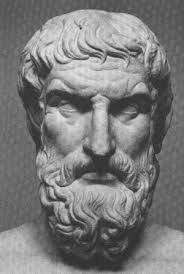
Open Lucretius's interactive page (graphs of influences, similar and opposing positions, and quotes)
Background
Lucretius
Born: c. 99 BC
Died: c. 55 BC (aged around 44)
Era: Hellenistic philosophy
Region: Western philosophy
School: Epicureanism
Main interests: Ethics, metaphysics, poetry,
psychology, cosmogony, physics, evolution,
nature, religion
Influences: Gaius Memmius, Epicurus,
Democritus, Empedocles
Influenced: Cicero, Virgil, Horace, Ovid, Pierre
Gassendi, Stephen Greenblatt, Karl Marx,
Gilles Deleuze, George Santayana, Baruch
Spinoza, John Milton, Henri Bergson, Herbert
Spencer, Alfred North Whitehead, Teilhard
de Chardin, Michel de Montaigne, Thomas
Jefferson, Diderot
From Wikipedia
Lucretius was a Roman poet and philosopher. His only known work is the philosophical poem De rerum natura, a didactic work about the tenets and philosophy of Epicureanism, and which usually is translated into English as On the Nature of Things…. The work was almost lost during the Middle Ages, but [when it] was rediscovered in 1417..., it played an important role both in the development of atomism... and the efforts of various figures of the Enlightenment era to construct a new Christian humanism.
Introductory Comments
About the life of Lucretius we know embarrassingly little. He lived in the first century BCE, give or take, and he wrote one staggering poem, "On the Nature of Things." Beyond that, the record thins to vapor. We have a dedication to a Roman aristocrat, a passing mention by Cicero, and a lurid tale, told centuries later by St. Jerome, that a love potion drove the poet mad and to suicide. That last story is almost certainly slander, the sort of thing one invents about a man who denied the gods. So we are left guessing.
And yet the poem lets us guess rather well. Its author was plainly a man of formidable learning and fierce conviction, who treated Epicurus not as a philosopher to be footnoted but as a savior to be hailed. He wrote with the zeal of someone personally rescued from fear - fear of the gods, fear of death - which may hint at a temperament that knew those terrors from the inside. He seems, too, to have heeded his master's advice to live quietly and out of the public eye, content to watch the world rather than scramble within it.
The aptness is almost poetic. Here was a man who argued that the self is nothing but a fleeting arrangement of atoms, destined one day to scatter without remainder - and who has himself all but scattered from the historical record. The particles that were Lucretius dispersed long ago; so, very nearly, did the facts of his life. What survives is that most ephemeral of things: his words.
Some of Lucretius's Key Positions
Reality is wholly material. The most basic form of matter is the atom - a particle so small it cannot be divided or destroyed. Atoms moving through empty space combine to form everything that exists, living and nonliving alike. Even mind and soul are arrangements of these particles, and so they perish when the body does.
It follows that every event arises from the interaction of material things - objects, creatures, and, at the smallest scale, atoms. Yet atoms occasionally swerve from their paths without cause. This tiny, unpredictable swerve breaks the chain of strict determinism and leaves room for free will.
On the vast scale of Nature, change unfolds across ages. Nature is fertile and prolific, throwing up countless life forms at random. Most perish; a few survive, favored by traits that let them flourish in their surroundings.
We therefore need no religious myths to account for Nature's richness. Storms, waterspouts, earthquakes, and the rest all admit of natural explanation - and are the more wondrous for it. Freed from superstition, we can also live well. Happiness, as Epicurus taught, springs from self-sufficiency and serene, detached observation: needing nothing beyond ourselves and fearing nothing to come, not even death.
Place in the History of Ideas
Lucretius's Place in History of Ideas
Stephen Greenblatt: On the Nature of Things is not an easy read. Totaling 7,400 lines, it is writ- ten in hexameters, the standard unrhymed six- beat lines in which Latin poets like Virgil and Ovid, imitating Homer's Greek, cast their epic poetry. Divided into six untitled books, the po- em yokes together moments of intense lyrical beauty, philosophical meditations on religion, pleasure, and death, and complex theories of the physical world, the evolution of human societies, the perils and joys of sex, and the nature of disease. The language is often knotty and difficult, the syntax complex, and the overall intellectual ambition astoundingly high.
Santayana: Lucretius, a poet of universal nature, studied everything in its truth. Even moral life, though he felt it much more narrowly and coldly than Wordsworth did, was better understood and better sung by him for being seen in its natural setting. It is a fault of idealists to misrepresent idealism, because they do not view it as a part of the world. Idealism is a part of the world, a small and dependent part of it. It is a small and dependent part even in the life of men. This fact is nothing against idealism taken as a moral energy, as a faculty of idealization and a habit of living in the familiar presence of an image of what would, in everything, be best. But it is the ruin of idealism taken as a view of the central and universal power in the world.
Random Thoughts on Lucretius
However wrong many of his scientific claims turned out to be, Lucretius held a strikingly modern conviction: the physical world can be explained in wholly physical terms. For him those terms were atoms and the void, dressed up with guesses - all mistaken - about how atoms behave according to their various sizes and shapes. We too take the world to be made of atoms. But we now see that new qualities emerge as atoms combine into ever more complex arrangements: molecules, compounds, biochemicals, organs, and at last sentient beings like us.
Modern physical science, in other words, is far more layered and emergent than anything Lucretius imagined. And yet he enjoyed one advantage over us: the very simplicity of his physics made for better poetry. Consider the poetry of restless atoms. Though the atoms themselves are eternal, they never rest - forever moving, combining, dissolving, building up all things and tearing them down again. A few have lately gathered to form you and me, but they are already itching to move on.
It's the same vision Shakespeare reached for, sixteen hundred years later, singing of a drowned sailor: "Full fathom five thy father lies; / Of his bones are coral made; / Those are pearls that were his eyes: / Nothing of him that doth fade, / But doth suffer a sea-change / Into something rich and strange." Lucretius would have approved.
Influences
Lucretius was influenced by: Democritus, Empedocles, Epicurus, Memmius
Lucretius influenced: Bergson, Bruno, Cicero, Deleuze, Diderot, Ficino, Gassendi, Holbach, Horace, Jefferson, Marx, Milton, Montaigne, Ovid, Santayana, Spencer, Spinoza, Teilhard, Vico, Virgil, Voltaire, Whitehead
Similar and opposing positions
Thinkers with similar positions:
- Boethius (Happiness is attained through sufficiency, virtue and wisdom.)
- Cousin (A spontaneity in us allows for free will, even after determination.)
- Democritus (Everything is composed entirely of various imperishable atoms.)
- Emerson (No radical metaphysical split exists between realms of mind & matter)
- Empedocles (All things are a mixture of various imperishable parts or particles.)
- Epicurus (Our ultimate motive is always to experience pleasure and avoid pain.)
- Goethe (Happiness is an inner, tranquil superiority over the troubles of life.)
- Peirce (Both mechanical necessity & absolute chance are at work in the world.)
- Santayana (All human values, including those of ethics, have a natural basis.)
Thinkers with opposing positions:
- Bataille (To be free means to be unrestrained by any chains of morality.)
- Chalmers (A radical metaphysical split exists between realms of mind & matter)
- Collingwood (Metaphysics is just heuristic principles helping us grasp reality.)
- Einstein (Free will isn't compatible with determinism. Our wills are determined.)
- Ibn Tufail (Preoccupation with the physical world can never lead to happiness.)
- Moore (The notion of "good" and indeed all human values are indefinable.)
- Pinker (Uncaused or random events do not support the concept of free will.)
What others said about Lucretius
- Ovid: When a single day brings the world to destruction, only then will the poetry of the sublime Lucretius pass away.
- Virgil: Happy is he who [like Lucretius] has discovered the causes of things and has cast beneath his feet all fears, unavoidable fate, and the din of the devouring Underworld.
- Dryden: From this sublime and daring genius of [Lucretius], it must of necessity come to pass, that his thoughts must be masculine, full of argumentation, and that sufficiently warm. From the same fiery temper proceeds the loftiness of his expressions, and the perpetual torrent of his verse....
- Jerome: [Lucretius] was... driven mad by a love philtre and, having composed between bouts of insanity several books (which Cicero afterwards corrected), committed suicide at the age of 44.
- Cicero: The poems of Lucretius... exhibit many flashes of genius, and yet show great mastership.
- Byron: If Lucretius had not been spoiled by the Epicurean system, we should have had a far superior poem to any now in existence. As mere poetry, it is the first of Latin poems.
- Santayana: The greatest thing about [Lucretius's] genius is its power of losing itself in its object, its impersonality. We seem to be reading not the poetry of a poet about things, but the poetry of things themselves. That things have their poetry, not because of what we make them symbols of, but because of their own movement and life, is what Lucretius proves....
- John Aikin: ... no writer has in stronger terms controverted all the popular notions of heathenism, and even those fundamental points in all religions, the existence of a creative power, a providence, and the immortality of the soul.
Schools: Atheism, Atomism, Epicureanism, Naturalism, Physicalism
Main interests: Botany, Cosmology, Desire, Ethics, Evolution, Fate, Free/Unfree Will, Geology, Happiness, Literature, Metaphysics, Meteorology, Nature, Perception, Physics, Poetry, Psychology, Religion, Sexuality, Sublime Nature, Will
Lucretius's answers to philosophical questions
Epistemology
Perception occurs when external particles hit our sense organs and thereby stimulate the even finer particles of sense.
Ethics
Our primary objective is not to gain pleasure, but to avoid pain. And the best pleasures are those unmixed with pain.
Love is the force that brings all beings into the world and that in turn makes these beings love the world around them.
Why fear death? "Why… not, like a thankful guest, rise cheerfully from life's feast, and with a quiet mind go take your rest."
Unlike pleasures of the mind, like that of knowledge and truth, pleasures of the body are usually mixed with pain.
History
The golden age of man was in the past when the world was young and all things were in abundance and easily acquired.
Language
"Nature impelled men to make sounds with their tongues / And they found it useful to give names to things."
Law
In surrendering primitive freedom for civilized life, we agree to substitute unlimited revenge with equitable retribution.
Metaphysics
"The whole of Nature is of two things built, Atoms and Void." This is just as true of living things as it is of nonliving things.
Atoms are the "first beginnings." From them all thing come into existence. Through their fluctuations all things change.
All change and becoming is due to the motion of changeless atoms coming together and separating.
Time is change: "Time changes the nature of the whole world; everything passes from one state to another."
Empty space is spread out evenly in all directions. Moreover, space is infinite, since it must make room for the infinite atoms.
Though atoms are fundamental and permanent, change represents how the atoms are constantly being rearranged.
Atoms sometimes spontaneously swerve, which allows for free will in this otherwise deterministic world.
Atoms themselves are not sentient, but when they come together to form animals, these animals somehow become sentient.
Mind
The soul and thoughts of man consists of very fine atoms, all rapidly swirling about and bumping into one another.
The soul and the body are one and the same thing: a set of fine particles that occasionally interact with one another.
Intellect relies heavily on the senses. In fact, thinking is merely a reworking of the images received by the senses.
Nature
All of nature is a machine of sorts. Even our spirits are made up of atoms and behave according to mechanical laws.
"Nature does all things spontaneously, by herself, without the meddling of the gods."
All living things have souls, but, unlike other living things, man's soul includes a special part called "intellect."
Like physical objects, living beings are entirely material, but are animated or enlivened by a special type of soul-atom.
Philosophy
I agree with Epicurus that, as medicine should banish diseases of the body, so philosophy should banish diseases of the mind.
By teaching both the nature & the cause of things, philosophy quiets unruly passions & frees us from needless worries.
Psychology
We're often obsessed with desires, but once they're satisfied, we're overcome with ennui - and then with new desires.
In terms of psychology, "love" and "desire" are interchangeable terms. To love something is to desire it.
Happiness springs from self-sufficiency and detached, tranquil observation - where we fear nothing, not even death.
Religion and Theology
Religion is merely a collection of myths. It has nothing to offer us except a needless fear of a hell that does not exist.
"Fear was the first thing on Earth to create gods."
"True piety lies rather in the power to contemplate the universe with a quiet mind."
The gods neither created the world nor govern it. They exist above our worldly fray and are indifferent towards us.
"Too often in time past, religion has brought forth criminal and shameful actions…. How many evils has religion caused?"
We do not need the myths of religion to explain the richness of Nature. This richness can be explained naturalistically.
Body & spirit are necessarily coupled. "[W]hen then body has perished, there is an end also of the spirit diffused through it."
"All religions are equally sublime to the ignorant, useful to the politician, and ridiculous to the philosopher."
Science
Fertile Nature sprouts many random life forms. A few survive thanks to their ability to thrive in their environment.