George Moore (1873 - 1958)
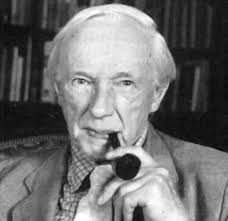
Open Moore's interactive page (graphs of influences, similar and opposing positions, and quotes)
Background
G. E. Moore
Born: 4 November 1873 in London, England
Died: 24 October 1958 (aged 84) in Cambridge,
England
Alma mater: Trinity College, Cambridge (BA)
School: Analytic philosophy
Main interests: Ethics, Epistemology, Language,
Metaphysics
Notable ideas: Naturalistic fallacy, Moore's
paradox, Paradox of analysis, "Here is one hand"
Influences: Gottlob Frege, John McTaggart,
Bertrand Russell, Henry Sidgwick, Leonard
Woolf, George Stout, Herbert Spencer, René
Descartes, Thomas Reid, F. H. Bradley, David
Hume
Influenced: Bertrand Russell, W. D. Ross, Ludwig
Wittgenstein, J. L. Austin, John Maynard
Keynes, Max Black, Susan Stebbing, A. J. Ayer
From Wikipedia
Moore was an English philosopher, who with Russell, Wittgenstein and earlier Frege was among the initiators of analytic philosophy. He and Russell began de-emphasising the idealism which was then prevalent among British philosophers and became known for advocating common-sense concepts and contributing to ethics, epistemology and metaphysics. He was said to have had an "exceptional personality and moral character." Ray Monk dubbed him "the most revered philosopher of his era."
Introductory Comments
When Moore insists that "good" names a simple, indefinable property, he reaches for an analogy: it is like "yellow." No one can explain yellow to someone who has never seen it; you can only point. Yes, science can describe the light vibrations that accompany our seeing yellow, but those vibrations are not the yellow we see. So far, so good. Here, though, the analogy breaks down. Yellow is a natural property, taken in through the eyes. Goodness, Moore holds, is non-natural: it belongs to states of affairs whether anyone notices or not, and we grasp it by intuition rather than sight. "Affection is good," on this view, reports a fact as objective as "water is wet," yet the fact floats serenely above the empirical world, refusing translation into physics, biology, or psychology.
Why so strange a position? Moore wanted to rescue ethics from two threats at once. Reductionism dissolves value into pleasure or evolutionary fitness; subjectivism shrinks morality to a matter of taste. His weapon was what later came to be called the "open-question argument." Tell Moore that "good" means "pleasant," and he will ask: granted this is pleasant, is it good? Since the question still makes sense, the two cannot mean the same thing. Mistaking goodness for any other property is what he called the "naturalistic fallacy." Yet, a deeper puzzle remains. How can a quality belong to an act or a state of affairs while being neither measurable by science nor reducible to anyone’s feelings? (See Random Thoughts.)
Some of Moore's Key Positions
Philosophers have a curious habit of denying what everyone knows: that here is a hand, that other people have minds. Yet such truths are known with certainty, and an argument that denies them has surely gone wrong in its premises. The task is not to doubt common sense but to analyze it. Knowing that a proposition is true is one thing; knowing its correct analysis is quite another.
Analysis clears away confusions of philosophy's own making. Many disputes persist only because the disputants never ask precisely what question they are trying to answer. The idealist slogan "to be is to be perceived," for instance, blurs the act of perceiving with the thing perceived.
Consider "good." Some identify it with what evolution favors, others with the will of God or with pleasure. Each fails the same test. Of any proposed property, it remains an open question whether that property is itself good, which would be absurd if the two were identical. "Good" is therefore a simple, non-natural quality. Like "yellow," it can be recognized but not defined, and it is grasped by intuition.
Other ethical terms are defined through "good." The right action produces the most good possible, and beauty is that whose admiring contemplation is good in itself. What, then, is good in itself? Above all, the pleasures of human affection and the enjoyment of beautiful things.
Place in the History of Ideas
Moore's Place in History of Ideas
A. J. Ayer: The principal theses of Principia Ethica are that the primary business of ethics is to enquire into the extensions of the properties "good" and "bad"; that "good" is a simple, un- analyzable non-natural quality; that philoso- phers who have identified good with pleasure, or progress in evolution, or any other natural property, have committed what Moore calls "the naturalistic fallacy"; that a similar fallacy has been committed by those philosophers who have identified the good with some metaphys- ical entity, or in general attempted to derive ethics from metaphysics; that egoism is irra- tional, since it cannot be the case that each person's interest are the sole good...; that there is, however, a probability that we act rightly when we follow generally accepted rules; that the good or evil of a whole is organic, in the sense that it is not necessarily equal to the sum of the good, or evil, of its parts....
Geoffrey Warnock: [Moore's] defence of com- mon sense was very important too - I mean his insistence that there are vastly many things which as a matter of fact we all know for cer- tain to be true, and that there must be some- thing seriously wrong if philosophers seem to be denying or questioning these.... This... has since Moore become a very generally held view, at any rate among English-speaking philoso- phers.... This is an important change [and one] largely attributable to Moore's influence.
Random Thoughts on Moore
Moore's "naturalistic fallacy."argument shows, at most, that "good" can't be defined in other terms. It doesn’t settle what kind of thing goodness is. From "goodness cannot be reduced to anything natural," Moore moves briskly to "goodness must be an objective property of a non-natural kind," and something goes missing in the middle: An irreducible property might be irreducibly subjective rather than mysteriously objective. Consider pain. Many philosophers doubt that the hurt of a stubbed toe can be fully captured by talk of tissue damage or firing nerves. Pain looks simple and indefinable in just Moore’s sense, and he said much the same of pleasure. Yet no one concludes that pain drifts about the universe waiting to be noticed. It exists only in creatures that feel it.
Perhaps goodness works the same way. When we call something good, we may not be detecting a ghostly property hovering over it. We may be voicing a response shaped by our needs, our culture, and our our evolutionary inheritance. The irreducibility Moore found is real, since moral language never translates into non-moral language without loss. But that may reflect the peculiarity of evaluating rather than the existence of spooky facts "out there." Goodness and badness may be perfectly real features of human experience without being intrinsic properties of the universe. The stars, after all, have no apparent interest in kindness, cruelty, pleasure, or pain. They can afford to be indifferent. Living creatures cannot.
Influences
Moore was influenced by: Bradley, Butler, Joseph, Descartes, Frege, Hume, Lotze, McTaggart, Reid, Sidgwick, Spencer, Stout, George, Woolf, L.
Moore influenced: Austin, J.L., Ayer, Black, Max, Keynes, Ross, W.D., Russell, Ryle, Stebbing, S., Wittgenstein
Similar and opposing positions
Thinkers with similar positions:
- Adorno (Morality cannot be based only on formal procedural rules or maxims.)
- Anscombe (Moral absolutes do exist. Some things are inherently good or evil.)
- Foot (Moral judgments, though linked to human nature, can be true and rational.)
- Huxley (Evolution can't account for the origin of morality in our species.)
- James (Metaphyscial monism, in whatever guise it takes, is pure nonsense.)
- Putnam (Objects have certain essential properties making them what they are.)
- Reid (Common sense proves existence of an external world & an abiding self.)
Thinkers with opposing positions:
- Berkeley (Essentially the world does not consist of things, but of mental events.)
- Bradley (Reality is ideal, whole and one. There are no real separate things.)
- Darwin (Our moral instincts are innate and evolved with our social instincts.)
- Epictetus (Nothing is good or bad independent of human desires & beliefs.)
- Hare (Morals are a type of rational, universal command - not mere emotion.)
- Kant (Morality should be based on formal procedural rules or maxims.)
- Nagel (As limited creatures, we will never achieve a unified worldview.)
- Williams, B. (Moral statements express attitudes or feelings, not empirical facts)
- Zeno (The more we understand the world, the more paradoxical it becomes.)
What others said about Moore
- Bryan Magee: ... it was with Moore that the task of philosophy first came to be seen as talk about talk.
- Ayer: Moore's chief philosophical interests were the defence of what he called the common-sense view of the world, and the analysis of the propositions which were comprised in it.
- Geoffrey Warnock: ... people came to adpot [Moore's] cool, cautious manner of philosophical argument. Then, secondly, his example led many philosophers to think that philosophy is entirely analytic - that the philsopher does not, so to speak, assert propositions on his own account, but only analyses the propositions asserted by others.
- Thomas Baldwin: [Moore] explicitly disavows any aspiration to provide a systematic account of the good. Hence... Moore's legacy is primarily a collection of arguments, puzzles and challenges.
- Sidgwick: More's Intuitionism is one for which what is good in itself is self-evident, not dependent upon any reason beyond itself.
- Russell: Moore's whole approach to philosophy was based on the unshakable belief that everything that had been said to him before the age of six must be true.
- Leonard Woolf: There was in him an element which can, I think, be accurately called greatness, a combination of mind and character and behavior, of thought and feeling, which made him qualitatively different from anyone else I have ever known. I recognize it in only one or two of the many famous dead men whom... others enjoin us to praise....
- Thomas Baldwin: An important aspect of Moore's rejection of idealism was his affirmation of a "common sense" realist position, according to which our ordinary common-sense view of the world is largely correct.
Schools: Analytic Philosophy, Common Sense Realism, Consequentialism, Intuitionism, Linguistic Philosophy philosophy, Ordinary Language Philosophy, Quietism, Rationalism
Main interests: Desire, Epistemology, Ethics, Fact–value distinction, Language, Metaphysics, Virtue
Moore's answers to philosophical questions
Art and Aesthetics
Beauty & love are precious but fragile: "Beauty has wings, & too hastily flies, & love, unrewarded, soon sickens & dies."
Epistemology
We don't need to prove the existence of the material world. We intuit it. It's a fundamental part of our innate underatanding.
The sensed object alone exists: Since our world consists of sense data, it's meaningless to questions their veracity.
Ethics
As with many philosophical matters, we can rely on common sense to make moral decisions and to answer moral questions.
"All moral laws are merely statements that certain kinds of actions will have good effects."
The good is a simple, unanalyzable and non-natural quality - something that can't be further reduced to something else.
Values can be intuited but not proven. To argue for a value on the basis on what is natural is to commit a fallacy.
Metaphysics
The existence of free will is obvious: "I am free in performing an action if I could have done otherwise if I had chosen to."
Philosophy
The role of philosophy is not to reveal hidden truths, but rather to clarify the meaning of what people already believe.
Psychology
"There is nothing so consoling as to find one’s neighbor’s troubles are at least as great as one’s own."