Ibn Tufail (1105 - 1185)
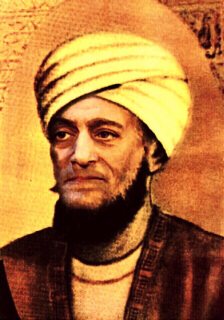
Open Ibn Tufail's interactive page (graphs of influences, similar and opposing positions, and quotes)
Background
Ibn Tufail
Born: 1105 in Guadix, Andalusia, Spain
Died: 1185 (aged 79–80) in Marrakesh, Morocco
Schools: Avicennism, Sufism, Neoplatonism
Main interests: religion, literature, kalam,
medicine, science, mysticism, epistemology
Influences: Plato, Aristotle, Al-Farabi, Avicenna,
Avicennism, Al-Ghazali, Ash'ari, Sufism, Ibn
Tumart, Avempace, Abu Yaqub Yusuf,
Muhammad, Al-Jahiz
Influenced: Averroes, Alpetragius, Ibn al-Nafis,
Edward Pococke, Robert Boyle, Hobbes, Locke,
William Molyneux, Hume, Cotton Mather,
Berkeley, Spinoza, Leibniz, Simon Ockley, Daniel
Defoe, Melchisédech Thévenot, John Wallis,
Christiaan Huygens, George Keith, Robert
Barclay, Quakers, Samuel Hartlib, Newton, Kant,
Rousseau, Voltaire, Marx, Kipling, Edgar Rice
Burroughs
From Wikipedia
Ibn Tufail was an Arab Andalusian Muslim polymath: a writer, Islamic philosopher, Islamic theologian, physician, astronomer, and vizier. As a philosopher and novelist, he is most famous for writing the first philosophical novel, Hayy ibn Yaqdhan (The Living Son of the Vigilant), considered a major work of Arabic literature emerging from Al-Andalus. As a physician, he was an early supporter of dissection and autopsy, which was expressed in his novel.
Introductory Comments
Ibn Tufail created a new literary genre: the philosophical or allegorical novel. To make his long tale short: an infant named Hayy turns up alone on a desert island, either spontaneously generated from the earth or set adrift by a mother across the sea (Ibn Tufail offers both origins and declines to choose). The boy proves extraordinarily bright. He masters not only the arts of survival but, in time, ever deeper insights into the workings of his island world. As he matures, those insights outgrow the island and embrace the whole of things, until at last he attains a mystical union with all that is. With no scripture, no teacher, and no religious training whatever, he reaches the summit of the Sufi path by reason and contemplation alone.
Then, at fifty, Hayy encounters Absal, a devout seeker from a neighboring island who has come to his shore craving solitude. The two learn each other's ways, and Hayy discovers that his hard-won philosophical insights square neatly with Absal's inherited faith. Delighted, he travels back with Absal, hoping to lead the islanders toward the same higher understanding. The hope curdles. Hayy finds that these people can neither grasp his insights nor much wish to. Most, he concludes, are perfectly content with their unexamined beliefs and seek nothing beyond them. So, Ibn Tufail's novel is an allegory about allegories: about the many who insist on religion's stories rather than philosophy's explanations, and about the few who reach straight for the truth.
Some of Ibn Tufail's Key Positions
Though certain physical items, like images and ceremonial objects, help most people live religious lives, they are only symbolic garments wrapped around the truth. For those able to reason, the same truths can be reached directly, stripped of symbol. If you are able, let your reason lead you, for truth won through one's own effort is more meaningful than truth merely received.
This applies not only to religious matters, but also to scientific ones. Through careful observation, experiment, and analysis, one can discover many truths about the world we live in and even about the heavens above us. And some discoveries, like those of medicine, not only enlighten us but also serve our needs.
A thought experiment illustrates the power of reason. Imagine an intelligent child growing up alone on a deserted island, without teachers, books, or society. Through observation and experiment he could master useful crafts and gradually attain every kind of knowledge - physical, biological, astronomical, and at last divine - arriving unaided at contemplation of God.
Yet were he to bring such unveiled truths to society, he would find most people cannot bear them: the philosopher's wisdom is for the few, while the many are better served by their images, rituals, and law. But if you are able, let your reason lead you to both practical and religious truth.
Place in the History of Ideas
Ibn Tufail's Place in History of Ideas
Randall Collins: [Ibn Tufayl's novel, in] a setting foreshadowing Robinson Crusoe,... depicts a boy growing up in solitude on an uninhabited island, who by sheer reason arrives at a philosophical conception of the universe. This consists largely of the Neoplatonic hierarchy: the Forms of things, the soul, the world spirit, finally culminating in an ecstatic vision of God beyond words and concepts. Later he meets a Muslim from an inhabited island, and they discover that the truths of faith and reason are the same. But... when the two friends... try to explain their discovery [to others], they are attacked by the literalist theologians.
Lenn Evan Goodman: In place of the confine- ment of the infinitesimal, beneath the weight of the Infinite is found the limitlessness or a humanly bearable share in the limitlessness which is the freedom of God. For Ibn Tufayl, at least, this was the meaning of Islam: the progressive assimilation of self to God (so far as lies in human power). This entails acceptance of the divine will, but not as something alien. The transmuting of selfish purpose to the will of God need not imply a surrender of will because the assimilation of self to God does not imply a surrender of self. On the contrary, as Plato and Ibn Tufayl are agreed, this assimilation is the meaning of man's fulfillment qua man, the substance of Plato's answer to the cryptic challenge of the oracle, "Know thyself!"
Random Thoughts on Ibn Tufail
Ibn Tufail's philosophical novel (See Introductory Comments) helped inaugurate an important literary genre, one later explored by such writers as More, Voltaire, Rousseau, Goethe, Carlyle, Kierkegaard, Unamuno, Sartre, Camus, Rand, de Beauvoir, and Murdoch - a guest list quarrelsome enough to make any dinner party interesting. Each adapted the form to his or her own ends, pressing it into the service of a very different philosophy. Here a rude cynic might interrupt to say that all philosophy is storytelling - that Ibn Tufail's innovation merely dropped the disguise.
How seriously should we take this rude cynic? If he means only that philosophy is nonsense dressed up in fancy language, we can send him on his way. But perhaps he is being neither rude nor cynical. Perhaps he simply wants to broaden our idea of what a story can be. Stories usually feature characters in conflict, yet abstract ideas can collide just as fiercely and clamor just as loudly for resolution. Rival theories compete, and new concepts emerge from the wreckage. In that sense, philosophy itself often unfolds as narrative. We see it plainly in Hegel's dialectic, which sends concepts marching toward destiny like characters in a cosmic drama, and in Marx's tale of class struggle, complete with victims and villains. Even thinkers who seem entirely bloodless rely on the oldest storyteller's devise: conflict and resolution. The main difference is that the thinker, unlike the novelist, insists his story is true.
Influences
Ibn Tufail was influenced by: Al-Farabi, Al-Ghazali, Al-Jahiz, Aristotle, Avempace, Avicenna, Ibn Tumart, Muhammad, Plato
Ibn Tufail influenced: Alpetragius, Averroes, Berkeley, Boyle, Defoe, Daniel, Hobbes, Hume, Huygens, Ibn al-Nafis, Kant, Leibniz, Locke, Mather, Cotton, Newton, Rousseau, Spinoza, Voltaire
Similar and opposing positions
Thinkers with similar positions:
- Al-Kindi (The purely contemplative part of the Soul is its higher & eternal part.)
- Aristotle (God is the First Cause, whose main activity is self-contemplation.)
- Augustine (Soul and body are distinct substances and soul is superior to body.)
- Averroes (Philosophy and revelation are different means of reaching same truth.)
- Bosanquet (The truth of religion is entirely consistent with reason.)
- Camus (Writing fiction can be an engaging & effective way to do philosophy.)
- Dostoyevsky (Religion is for the masses, but philosophy is a privilege of the few.)
- Locke (The mind at birth is a blank slate that experience will write upon.)
- Petrarch (Despite its pagan beliefs, we can learn much from classical antiquity.)
Thinkers with opposing positions:
- Diderot (Even if God created laws of nature, he isn't now at work in nature.)
- Hobbes (All things, including humans and their minds, are entirely material.)
- Holbach (The universe is simply matter in motion, bound by laws of nature.)
- Kierkegaard (Revealed truth is beyond reason and human understanding.)
- Paine (The only religion that's at all defensible is pure and simple deism.)
- Pinker (Mental instincts help shape us. The mind at birth is not a blank slate.)
- Rorty (The philosophic search for some objective basis of truth is fruitless.)
What others said about Ibn Tufail
- Étienne Gilson: [Ibn Tufai] was a man of encyclopaedic knowledge whose learning far exceeded the knowledge of the Christians of his times.
- Lenn Evan Goodman: [T]he book [Ibn Tufayl] left behind was his invitation to others... to join him on the flights [of imagination] that took him beyond the realm Plotinus so tellingly had called “this blood-drenched life.”
- Copleston: Ibn Tufayl composed a philosophical story or allegory designed to convey the idea that religious doctrine is the symbolic expression of a truth which is known to the philosopher in a higher and purer form but which cannot be grasped in its esoteric form by ordinary man.
- Bakhtyar Husain Siddiqi: The harmony of experience with reason (Kant), on the one hand, and that of reason with intuition (Bergson and Iqbal), on the other, constitutes the very essence of Ibn Tufail's epistemology.
- Z. A. Sidoiqi: By influencing the Jewish and Christian philosophy of Medieval Europe he prepared the way for [the] Renaissance.
- Lenn Evan Goodman: ... Ibn Tufayl’s book [is also related to] problems of educational philosophy: "What is education?" "What is personal development?" "How does human growth take place?" "How can a man attain fulfillment?”
- Muhammad Mojlum Khan: The philosophical synthesis he formulated between the [Aristotelian] thought of al-Farabi and Ibn Sina on the one hand, and al-Ghazali’s mystical philosophy on the other, found it’s most profound and enduring expression in his world famous novel "Risalah Hayy ibn Yaqdhan" ("The Tale of Living Son of Vigilant").
- Bakhtyar H. Siddiqi: Al-Ghazali, true to his theologico-mystical position, takes ecstasy as the means to see God, but to Ibn Tufail, the philosopher, the beatific vision reveals the active intellect and the Neo-Platonic chain of causes….
Schools: Islamic Theology, Mysticism, Neoplatonism, Platonism
Main interests: Epistemology, Immortality, Literature, Medicine, Poetry, Religion, Science, Spirituality
Ibn Tufail's answers to philosophical questions
Art and Aesthetics
Novels & other forms of literature can pose interesting thought experiments that help us understand important truths.
Epistemology
Ultimately all knowledge must rely on careful observation of the world, followed by rational experiment and analysis.
Language
"Don't set your heart on a description of [a] human heart. For many things that are articulate in the heart can't be described."
Religion and Theology
Spirituality requires acceptance of the divine will - not as a surrender of self, but as a fulfillment of one's true self.
Though some need tangible items for religious devotion, it's best to abandon such distractions & rely on reason alone.
Science
Scientific truths can be found through a disciplined self-reliance combined with observation, experiment and reason.
Since religion & science are both rational disciplines and reason is not contradictory, religion & science are compatible.