Samuel Coleridge (1772 - 1834)
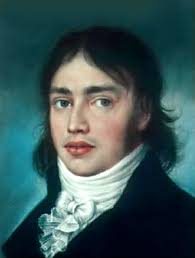
Open Coleridge's interactive page (graphs of influences, similar and opposing positions, and quotes)
Background
Samuel Taylor Coleridge
Born: 21 October 1772 in Ottery St Mary, Devon,
England
Died: 25 July 1834 (aged 61) in Highgate,
Middlesex, England
Occupation: Poet, critic, philosopher
Alma mater: Jesus College, Cambridge
Literary movement: Romanticism
Notable works: Kubla Khan, The Rime of the
Ancient Mariner
Main interests: Literature, poetry
Influences: Shakespeare, Milton, Kant, Robert
Burns, Schelling, Spinoza, Richard Hooker,
Thomas Browne, Swedenborg, Vico, Plato,
Schiller, Herder
Influenced: Swinburne, Emerson, Wordsworth,
Matthew Arnold, Walt Whitman, Shelley, Keats,
Wallace Stevens, W. H. Auden, Thoreau,
Wollstonecraft, Tennyson, Browning, Rossetti
From Wikipedia
Coleridge was an English poet, literary critic, philosopher, and theologian who was a founder of the Romantic Movement in England and a member of the Lake Poets with his friend William Wordsworth…. He [helped introduce German idealist philosophy to English-speaking cultures and] had a major influence on Ralph Waldo Emerson and American transcendentalism…. Coleridge had a turbulent career and personal life with a variety of highs and lows, but his public esteem grew after his death….
Introductory Comments
Can mental disorder produce philosophical insight, or are the supposed insights merely symptoms of the disorder? Few lives press the question harder than Coleridge's.
Most readers meet him as the poet of "Kubla Khan" and "The Rime of the Ancient Mariner." Fewer know the Coleridge who carried German philosophy across the Channel into England and thought about the imagination more searchingly than any Englishman before him. Both are the same man - and that man was, by most measures, a wreck. He was never diagnosed with bipolar disorder, since the term postdates him, but his mood swings fit the pattern well enough to have made him a stock case. Grandiosity and racing thoughts, then depression and self-doubt. Then up again. Then down again. The swings, compounded by his addiction to laudanum, damaged his health, his marriage, and his friendship with Wordsworth.
Yet the same temperament may have fed his best ideas - above all his sense of "the one Life within us and abroad," the conviction that self and cosmos are continuous. In exhilarated periods he held that a strong imagination could dissolve the self's boundaries altogether. It's tempting to dismiss such "insight" as manic noise from an overheated brain. Coleridge could reply that the dismissal is merely the verdict of a tired one. Perhaps both are right. As Anaïs Nin put it: "We don't see things as they are, we see them as we are."
Some of Coleridge's Key Positions
Recent mechanical theories of mind go wrong at the root. Their chief error is to make God appear irrelevant to the mind's workings - a spare part in a machine that runs well enough without him. In fact God is central. Those alienated from him, and they are many, are also blind to the moral and spiritual significance of the world around them.
The point comes clear once reason is distinguished from understanding. Understanding is "the faculty of judging according to sense": the everyday capacity for sorting and comparing whatever experience delivers. Reason is far more profound. It awakens the mind not only to certain practical insights, but to the ultimate ends of life.
Kant had already shown how the ideas of moral good, freedom, immortality, and God lean upon one another. Reason discloses those connections, and with them all that is most precious in human life. But where Kant left these ideas as postulates that reason must assume yet can never know, reason here actually apprehends spiritual truth.
Reason is bound up with Nature as well. Nature is, in a sense, reason not yet conscious of itself - mind presented under the form of matter, in space and time. The distinction between Mind and Nature thus mirrors the distinction between Creator and creation. The mirror is not an identity, however. God remains a personal Creator, distinct from the world and not merely the life indwelling it.
Place in the History of Ideas
Coleridge's Place in History of Ideas
Michael Moran: [For Coleridge,] "Understand- ing" is a pejorative blanket term for the nega- tive aspects of eighteenth-century logic and science, while "Reason" is an approbatory label for those personal ideals and religious beliefs that are psychologically foreign to, or at least not logically entailed by, scientific empiricism. "Reason" thus is clearly allied with Christian faith. Coleridge is not, then, doing a piece of straight conceptual analysis in making this dist- inction, even though he often writes as if he thinks he is. Instead, he is persuasively psychol- ogizing in an attempt to reorient contemporary philosophical attitudes into unison with con- temporary Christian ideals. The barely disguised function of Coleridge's distinction is to give metaphysical respectability to those Ideas of God, freedom, and immortality that Kant had rightly regarded as merely regulative rather than constitutive elements of knowledge.
Peter Cheyne: Drawing from neo-Platonism, the ingenious but difficult transcendental idealism of Immanuel Kant, and the even obscurer intricacies of post-Kantians such as J. G. Fichte and F. W. J. Schelling, his philosophy was undoubtedly of the difficult metaphysical kind, very much at odds with practically minded British empiricism.... Yet the British empiricism of John Locke, David Hume and David Hartley was itself at odds, Coleridge pointed out, with a deeper heritage of British thought.
Random Thoughts on Coleridge
Coleridge met German thought first in his reading and then decisively in Germany itself, where he spent ten months in 1798–99. He traveled out with Wordsworth, went his own way almost at once, and settled at Göttingen to learn the language, attend Eichhorn's lectures on the New Testament, and read his way through German literature. Germany opened intellectual doors he had scarcely known existed. The philosophy, though, largely came home with him rather than meeting him there: back in England he plunged into Kant and, somewhat later, into Schelling, whose account of nature and imagination shaped his own more than any other. He returned, in effect, carrying a suitcase full of German ideas.
Those ideas soon acquired a proper British accent. Coleridge admired Kant for showing that the mind does more than passively receive sensations from the world outside it. He admired Schelling even more for refusing to treat nature as dead matter, seeing mind and nature instead as expressions of a deeper unity. But he would not follow either man where he believed Christianity forbade him to go. (Coleridge's last book was a defense of the established Church of England.) Nor did he have the German appetite for the long march. Where a German philosopher might spend six hundred pages climbing toward the Absolute, Coleridge thought that Reason could at times reveal Truth directly, through intuition - when, say, the wind rustles through the trees just right.
Influences
Coleridge was influenced by: Berkeley, Burns, Robert, Godwin, Herder, Kant, Lessing, Milton, Plato, Schelling, Schiller, Shakespeare, Spinoza, Swedenborg, Vico
Coleridge influenced: Arnold, Browning, R., Emerson, Keats, Shelley, Stevens, W., Swinburne, Tennyson, Thoreau, Whitman, Wollstonecraft, Wordsworth
Similar and opposing positions
Thinkers with similar positions:
- Bergson (Dynamic religion springs from creative emotion & mystical experience)
- Chrysippus (The universe itself is God or the universal outpouring of His soul.)
- Emerson (No radical metaphysical split exists between realms of mind & matter)
- Fichte (Intuition gives our minds direct access to the ground & nature of reality.)
- Goethe (The true artist strives after a higher truth, not a mere naturalness.)
- Hamann (Intuition and personal genius are best tools for understanding nature.)
- Herder (Sentiment is in harmony with reason since both arise from the soul.)
- Humboldt, W. (Mind and body form a vital unity as seen in man's sensuality.)
- Schlegel (Philosophy should reawaken us to our relationship with God.)
- Spinoza (God is not transcendent. Everything in Nature is part of God.)
Thinkers with opposing positions:
- Bentham (Greatest happiness of greatest number is measure of right & wrong.)
- Berkeley (We only really know the immediate impressions of our senses.)
- Descartes (A radical metaphysical split exists between realms of mind & matter)
- Kierkegaard (Christianity must be accepted on faith alone, never on reason.)
- Maimonides (Poetry is of little value, since it was founded on pure invention.)
- Seneca (We should be free of unruly emotions, as they disturb judgment.)
What others said about Coleridge
- Mill: He has been the great awakener in this country of the spirit of philosophy, within the bounds of traditional opinions.
- Peter Cheyne: Without denigrating commercial and industrial success, Coleridge argued that the haste for economic improvement led to a decline in culture, tradition and spiritual wellbeing.
- Carlyle: The conversation of the man is much as I anticipated - a forest of thoughts, some true, many false, more part dubious, all of them ingenious in some degree, often in a high degree. But there is no method in his talk; he wanders like a man sailing among many currents, whithersoever his lazy mind directs him....
- Hazlitt: He was the first poet I ever knew. His genius at that time had angelic wings, and fed on manna. He talked on for ever; and you wished him to talk on for ever.
- Carlyle: I reckon him a man of great and useless genius: a strange, not at all a great man.
- Michael Moran: Coleridge and his German contemporaries undoubtedly brought to social consciousness [some] deeper insights into the nature of the individual and the organic complexities of human associations....
- Peter Cheyne: Seeing polarized debates as revealing an interdependent whole, he tried to embrace the views of his philosophical opponents, rather than simply dismiss them. He saw dichotomous or binary thinking (B versus C) as merely disputative, whereas a broader trichotomy (B versus C within a broader unity of A) presented a unified whole as the higher ideal....
- Byron: And Coleridge, too, has lately taken wing, But, like a hawk encumber'd with his hood, Explaining metaphysics to the nation – I wish he would explain his Explanation.
Schools: Counter-Enlightenment, Romanticism
Main interests: Desire, Fate, Friendship, Habits, Immortality, Literary criticism, Literary theory, Literature, Poetry, Sublime Nature, Tragedy, Universals
Coleridge's answers to philosophical questions
Art and Aesthetics
"Now Art, used collectively for painting, sculpture, [etc.], is the mediatress between, and reconciler of, nature and man."
Art humanizes nature by "infusing the thoughts and passions of man into everything which is the object of his contemplation."
"The Beautiful arises from the perceived harmony of an object... with the inborn... rules of the judgment and imagination...."
Art requires more than representation: "That willing suspension of disbelief for the moment, which constitutes poetic faith."
As God infuses himself into the material world, so, in microcosm, the artist's mind infuses itself into its material creation.
Art crtitics are failed artists: "They have tried their talents at one thing or another and have failed; therefore they turn critic."
Epistemology
"The primary Imagination I hold to be the living power and prime agent of all human perception…."
"[M]y mind had been habituated to the Vast - and I never regarded my senses in any way as the criteria of my belief."
"Veracity does not consist in saying, but in the intention of communicating truth."
Intuition & the Big Picture: "[Empiricist] contemplate nothing but parts... & the Universe to them is but a mass of little things."
Ethics
Since moral behavior is by nature conscious behavior, it must be linked to conscious principles, not material results.
As all societies distinguish between what's pleasurable & what's good, it's clear that the two can't be reduced to one another.
"Love is flower like; Friendship is like a sheltering tree."
History
Learning from history: "The light which experience gives is a lantern on the stern, which shines only on the waves behind us!"
Language
"Language is the armory of the human mind, [& contains both] the trophies of its past & the weapons of its future conquests."
"The best part of human language, properly so called, is derived from reflection on the acts of the mind itself."
"An idea, in the highest sense of that word, cannot be conveyed but by a symbol."
Metaphysics
"Our quaint metaphysical opinions, in an hour of anguish, are like playthings by the bedside of a child deathly sick."
Nature
Both better and worse: "If a man is not rising upwards to be an angel, depend upon it, he is sinking downwards to be a devil."
"He prayeth best, who loveth best/ All things both great and small;/ For the dear God who loveth us,/ He made and loveth all."
Political Philosophy
"The three great ends [of government] are: (1) security to possessors; (2) facility to acquirers; and (3) hope to all."
Psychology
"[Poetry] has given me the habit of wishing to discover the good and beautiful in all that meets and surrounds me."
Wisdom needs emotion: "Deep thinking is attainable only by a man of deep feeling, and all truth is a species of revelation."
"The happiness of life is made up of minute fractions - the little, soon forgotten charities of a kiss or a smile, a kind look...."
Religion and Theology
"Not one man in a thousand has the strength of mind or the goodness of heart to be an atheist."
Sex and Gender
"The man's desire is for the woman; but the woman's desire is rarely other than for the desire of the man."
"The surest friend of chastity is love: it leads us, not to sink the mind in the body, but to draw up the body to the mind...."
Women "have, taken universally, weaker appetites and... intellects, but they have much stronger [and purer] affections."
"Sympathy constitutes friendship; but in love there is a sort of antipathy, or opposing passion. Each strives to be the other…."
"The most happy marriage I can picture or imagine to myself would be the union of a deaf man to a blind woman."