Wilhelm von Humboldt, W. (1767 - 1835)
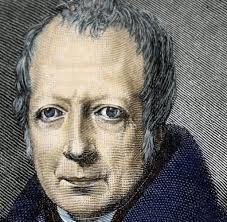
Open Humboldt, W.'s interactive page (graphs of influences, similar and opposing positions, and quotes)
Background
Wilhelm von Humboldt
Born: 22 June 1767 in Potsdam, Prussia
Died: 8 April 1835 (aged 67) in Tegel, Prussia
Schools: Berlin Romanticism, Romantic
linguistics
Main interests: Philosophy of language, Political
philosophy, Politics, Education, Linguistics,
Literature, Anthropology, Aesthetics
Notable ideas: Language as a rule-governed
system, Humboldtian model of higher education
Influences: J. G. Fichte, Christian Jakob Kraus,
Johann Gottfried Herder, Friedrich von Schiller,
Johann Pestalozzi, Goethe, Kant, Rousseau
Influenced: August Schleicher, Valentin
Voloshinov, Alexander Potebnja, Joxe
Azurmendi, John Stuart Mill, Noam Chomsky,
Hans-Georg Gadamer, Edward Sapir, Benjamin
Whorf, Matthew Arnold, Ernst Cassirer, Bruno
Liebrucks, Jürgen Habermas
From Wikipedia
Wilhelm von Humboldt was a linguist who made contributions to the philosophy of language, ethnolinguistics, and to the theory and practice of education. He made a major contribution to the development of liberalism by envisioning educa- tion as a means of realizing individual possibility rather than a way of drilling traditional ideas into youth to suit them for an already established occupation or social role. In particular, he was the architect of the Humboldtian education ideal [that influenced] public education [in Prussia].
Introductory Comments
The two Humboldt brothers grew up in the same house at Tegel, sat under the same Enlightenment tutors, and emerged with the same outsized ambition: to take an entire field of knowledge and see it whole. After that, the resemblance takes some work to spot. Alexander, the younger, spent five years in the Americas, climbed higher up Chimborazo than any European had gone, crawled into a cave full of shrieking oilbirds, and had horses driven into a pond to provoke its electric eels so he could study the shocks - several of which he took himself. Wilhelm stayed nearer home. He was a diplomat, an education minister, and Prussia's man at the Congress of Vienna, but his real work waited for his retirement, when he settled in among grammars of Basque, Sanskrit, and Old Javanese.
Their temperaments diverged as widely as their itineraries. Alexander was voluble to the point of legend - he talked brilliantly and nearly without pause, and his listeners learned to settle in. Wilhelm preferred solitude, contemplation, and the slower company of the mail; his and Schiller's correspondence alone would furnish a small library. Yet the family likeness runs deep. Both mixed Enlightenment method with a Romantic trust in direct experience. Both were compulsive hoarders of data who nonetheless wanted a grand unifying theory to put it in. And the two projects even touched at times: some of the American vocabularies Wilhelm pored over in his study had been collected by his brother in the field.
Some of W. von Humboldt's Key Positions
Language is not a tool humans happen to pick up, like a hammer or an abacus. It is the formative organ of thought - not so much a finished product as an ongoing activity, remade in every act of speech. And it repays study on its own account: to trace the structures of the world's languages is to trace the intellectual development of humankind.
Because each language carves up experience in its own way, each carries a distinct worldview. Speakers of different tongues do not merely hang different labels on identical thoughts; to some degree they think differently. No nation, then, can be understood apart from its language, and the sheer variety of languages is not a nuisance to be tidied away but a record of how many ways the human mind has found to work.
Beneath the variety, though, lies a common humanity, and every human being possesses an inherent dignity that no state or custom may override. The highest end of a person is the fullest and most harmonious development of his or her powers into a whole - what the Germans call Bildung. This requires both freedom and a rich variety of situations to grow in.
From which follows a strikingly modest view of government. The state's proper business is security - protecting citizens from one another and from foreign enemies - and it may interfere with an individual only when his actions threaten others.
Place in the History of Ideas
W. von Humboldt's Place in History of Ideas
Kurt Mueller-Vollmer: Although there has al- ways been strong interest in Humboldt ex- pressed by political and cultural historians and educationists in Germany, it is only in recent decades that his contributions to the formation of modern linguistics, to semiotics, hermeneu- tics and philosophy of language have given rise to renewed attention to his pioneering achieve- ments in these areas, even though much of his work in linguistics has remained unknown or unexplored until recently. Yet numerous lin- guists beginning with Pott and Steinthal in Germany and the American Brinton in the nineteenth century to Boas, Sapir, Bühler, Weisgerber, and Chomsky in the twentieth century derived or claimed to have derived important insights from Humboldt. But their interest in Humboldt was partial at best and limited to those aspects of his work that could be utilized to reinforce... their own projects....
Vincent Barnett: Wilhelm [specialized] in the philosophy of language, political theory, and the philosophy of history. The encouragement and analysis of wide-ranging creative activity was a key theme running through much of his work. His most enduring contribution to the social sciences was to pioneer a modern ap- proach to linguistic theory that conceived of language as a rule-governed system of commu- nication, an approach that would receive renewed attention... in the work of... Chomsky.
Random Thoughts on W. von Humboldt
Herder, Fichte, and Humboldt breathed the same air: Enlightenment reason crossed with a Romantic hunger for the particular. Each asked what matters most, and each answered differently. For Herder it was the Volk - every people with its own language and spirit, none a rough draft of any other. For Fichte it was the self: first the philosophical I that posits its own world, and then - in the addresses he delivered in French-occupied Berlin - that self written large as a nation summoned to regenerate itself. For Humboldt it was the individual, whose development into a harmonious whole is the point of everything, government included.
Then comes the afterlife, where the history of ideas develops a mind of its own. Herder and Fichte were conscripted into causes they never enlisted in - a state paternalism, and later a nationalism, hot and racial, that neither would have recognized. Herder had insisted that no people stands above another. And Fichte would have failed his admirers' racial test, since his nation took in anyone who spoke its language The line from these lecture halls to the trenches and then the camps has been drawn many times, usually too straight; ideas get cut to fit by people who already know what they want. Humboldt's afterlife was gentler: his small book on the limits of state action crossed the Channel and reached John Stuart Mill, who set a sentence from it at the head of On Liberty. A thinker's fate, it seems, depends less on what he wrote than on who turns out to need him.
Influences
Humboldt, W. was influenced by: Fichte, Goethe, Herder, Kant, Kraus, C.J., Pestalozzi, Rousseau, Schiller
Humboldt, W. influenced: Arnold, Azurmendi, Cassirer, Chomsky, Gadamer, Habermas, Liebrucks, Mill, Potebnja, Sapir, Schleicher, Voloshinov, Whorf
Similar and opposing positions
Thinkers with similar positions:
- Chomsky (Language is a rule-governed system, not just a collection of words.)
- Condorcet (Education is crucial to the emancipation of all individuals.)
- Diderot (Governments should guarantee freedom of religion & expression.)
- Hamann (Language does not spring from reason. Reason springs from language.)
- Herder (Language helps shape the unique thinking & feelings of a people.)
- Mann (A vibrant, liberal democracy requires universal public education.)
- Merleau-Ponty (Mind & body unite in a consciousness that is itself embodied.)
- Mill (Actions of individuals should only be limited to prevent harm to others.)
- Saussure (Our understanding of the world is shaped thru symbolic systems.)
Thinkers with opposing positions:
- Adorno (Civilization does not inevitably lead to progress in morality and justice.)
- Arendt (Only rights granted by the state matter, not "inalienable human rights.")
- Descartes (A radical metaphysical split exists between realms of mind & matter)
- Fichte (Freedom springs from submerging individuality into a larger group.)
- Hegel (Freedom springs not from within, but from our belonging to a state.)
- Malebranche (Mind & body are not causally linked. All causuality is due to God.)
- Pinker (The structure of a language does not affect its speakers' worldview.)
What others said about Humboldt, W.
- Richard A. Shweder: He pictured the university as an academic oasis where scholars were free to be intellectually innovative and skeptical of dogma…
- Pinker: The secoond trick behind the language instinct is captured in a phrase from Wilhelm Von Humboldt that presaged Chomsky: language "makes infinite use of finite media."
- Kurt Mueller-Vollmer: It is quite misleading to associate the term "Humboldtian linguistics" ... with any one specific direction, for example with the Whorfian thesis of “linguistic relativity” or with Chomsky’s opposite notion of a universalist "generative grammar" because these tend to ignore other equally or more important dimensions of Humboldt’s work.
- S. Hareven: What do we mean when we speak of a normative system? As von Humboldt put it, "Man lives in a world presented to him by his language," meaning that the characteristics of a language lay down the categories of thought.
- Mueller-Vollmer: Humboldt’s writings consists of a wide spectrum of... types and genres of texts of which [little] was ever published during his lifetime.
- Chomsky: ... Humboldt's precapitalist liberalism [emphasized] the basic human need for free creation under conditions of voluntary association....
- Cassirer: Again and again Humboldt emphasized that the difference between particular languages is no mere difference in "sounds and markings." Instead, for him, a unique "world view," a definite and fundamental direction of thought and representation, is expressed in each language-type.
- Kurt Mueller-Vollmer: [I]t is only in recent decades that his contributions to the formation of modern linguistics, to semiotics, hermeneutics and philosophy of language have given rise to renewed attention to his pioneering [efforts].
Schools: Classical Liberalism, German Romanticism, Romanticism, Weimar Classicism
Main interests: Anthropology, Art and Aesthetics, Education, Language, Literature, Philology, Political Philosophy, Politics
Humboldt, W.'s answers to philosophical questions
Economics
"Work is as much a necessity to man as eating and sleeping. Even those who do nothing… imagine they are doing something."
Education
A good educational system provides "a certain cultivation of the mind and character that nobody can afford to be without."
Ethics
"Man is naturally more disposed to beneficent than selfish actions. This we learn even from the history of savages."
"When we… devote ourselves to the strict and unsparing performance of duty, then happiness comes of itself...."
"Happiness is so nonsynonymous with joy or pleasure that it is not infrequently sought and felt in grief and deprivation."
"The true end of Man... is the highest and most harmonious development of his powers to a complete and consistent whole."
"Freedom exalts power and... tends to induce a spirit of liberality. Coercion stifles power, and engenders all selfish desires...."
"Basically, it is always the connections with people that give life its value."
Language
"Thought & language are... inseparable. [Without language] thought cannot... achieve clarity, nor the idea become a concept."
Language is more than communication: "[It is] an indispensable factor for the development of human intellectual powers."
The elements of language are words, but it's the system of rules underlying language that gives meaning to a set of words.
Each language shapes thought in different ways. The differences in language correspond to the differences in their users.
Mind
Sense of self is fundamental: "We have not the remotest realistic inkling of a consciousness which is not self-consciousness."
Intellect is central: "To inquire and to create; these are the grand centers around which all human pursuits revolve…."
Nature
"Nature pleases, attracts, delights, merely because it is nature. We recognize in it an Infinite Power."
Political Philosophy
"Govt. regulations all carry coercion to some degree, & even where they don't, they habituate man to expect [guidance]."
"The state... should not proceed a step further [on the rights of men] than is necessary for their mutual security...."
"The state should avoid all solicitude for the positive welfare of its citizens, and not proceed a step further than is necessary."
Psychology
"True enjoyment comes from activity of the mind and exercise of the body; the two are ever united."
Religion and Theology
"The sensual and spiritual are linked together by a mysterious bond, sensed by our emotions, though hidden from our eyes."