William Godwin (1756 - 1836)
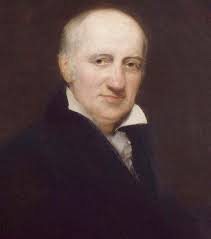
Open Godwin's interactive page (graphs of influences, similar and opposing positions, and quotes)
Background
William Godwin
Born: 3 March 1756 in Wisbech, Cambridgeshire,
England
Died: 7 April 1836 (aged 80) in London, England
Spouses: Mary Wollstonecraft, Mary Jane
Clairmont
Children: Mary Shelley, William Godwin the
Younger
Schools: Utilitarianism, anarchism
Main interests: Journalism, political philosophy,
literature, ethics, history
Influences: Shakespeare, Burke, Cicero, Thomas
Paine, Mary Wollstonecraft, Baron d'Holbach
Influenced: Wollstonecraft, Mary Shelley, Robert
Owen, Kropotkin, Herbert Read, Oscar Wilde,
Percy Bysshe Shelley, William Thompson, Leo
Tolstoy, Karl Marx, Friedrich Engels, Coleridge,
Charles Lamb, Robert Southey, Thomas De
Quincey, William Wordsworth, John Thelwall
From Wikipedia
Godwin was an English journalist, political philosopher and novelist. He is considered one of the first exponents of utilitarianism and the first modern proponent of anarchism. Godwin is most famous for two books that he published within the space of a year: An Enquiry Concerning Political Justice, an attack on political institutions, and Things as They Are; or, The Adventures of Caleb Williams, an early mystery novel which attacks aristocratic privilege.
Introductory Comments
Tangled up in blue. In December 1792, her Vindication of the Rights of Woman freshly published, Mary Wollstonecraft crosses to Paris to breathe the heady air of revolution. Within weeks France declares war on Britain, and British subjects there become enemy aliens, liable to arrest. Stranded and frightened, she falls in love anyway - with Gilbert Imlay, American adventurer and blockade-running speculator. As the Terror closes in, he registers her at the American embassy as his wife. They are not married. The lie makes her an American citizen, and it very likely saves her.
In May 1794 she bears a daughter, Fanny. Back in London the next spring, she finds Imlay installed with a young actress. She swallows laudanum and survives, then throws herself off Putney Bridge, where boatmen pull her out. Then, in 1796, she calls on Godwin, a man she had met once and did not particularly like. This time is different. In March 1797, both having denounced marriage in print, they marry, because she is pregnant. On August 30 their daughter Mary is born, the future author of Frankenstein. Eleven days later Wollstonecraft is dead of childbed fever. Four months on, Godwin writes in his Memoirs all of it: Imlay, Fanny's illegitimacy, the laudanum, the bridge. He seems to have expected admiration. Instead, both were condemned. Then came more catastrophes - a bankrupt shop, a runaway daughter, another dead girl, and another bottle of laudanum. Different characters tangled up in the same blue song.
Some of Godwin's Key Positions
The principles of the French philosophes put every existing institution on trial. Political, social, and religious establishments must justify themselves before the bar of reason and impartial utility, or be dismantled.
Monarchy fails most spectacularly, since hereditary privilege breeds flattery and corruption as reliably as damp breeds mold. But no form escapes. Every government asks one person to surrender private judgment to another, and every government perpetuates the errors that produced it. It is at best a necessary evil, and the necessity shrinks as understanding grows.
The ideal is a society with as little government as possible and in time none: no coercion, no permanent officers, no standing law - only occasional neighborhood juries relying on persuasion and public opinion. Moral responsibility then rests where it belongs, with individuals, who cannot delegate conscience to a magistrate.
But abolition settles nothing by itself, since people are largely made by their circumstances. Vice is not innate; it is the yield of bad institutions, above all the inequality of accumulated property, which corrupts the rich with luxury and the poor with servility. Reduce that pressure - voluntarily, according to need, never by confiscation - and the temptation toward vice diminishes with it. Reason and responsibility, not authority, is the answer.
Place in the History of Ideas
Godwin's Place in History of Ideas
Mark Philp: [Godwin] argued that government is a corrupting force in society, perpetuating dependence and ignorance, but that it will be rendered increasingly unnecessary and power- less by the gradual spread of knowledge and the expansion of the human understanding. Politics will be displaced by an enlarged person- al morality as truth conquers error and mind subordinates matter. In this development the rigorous exercise of private judgment, and its candid expression in public discussion, plays a central role, motivating his rejection of a wide range of co-operative and rule-governed practices which he regards as tending to mental enslavement, such as law, private property, marriage and concerts.
Malthus: Let us imagine for a moment Mr. Godwin's beautiful system of equality realized in its utmost purity, and see how soon this difficulty [of survival] might be expected to press under so perfect a form of society.... Let us suppose all the causes of misery and vice in this island removed. War and contention cease. Unwholesome trades and manufactories do not exist.... With [such] extraordinary encourage- ments to population, and every cause of depop- ulation... removed, the numbers [of people] would necessarily increase faster than in any society that has ever yet been known [ - so much so that the struggle for survival would be as difficult and as desperate as it is now.]
Random Thoughts on Godwin
Godwin's freedom is the strangest kind: it is scarcely a freedom to. Nothing in Political Justice suggests that a person's wants deserve attention. What must be protected is private judgment - the mind's unobstructed access to truth - and everything standing in the way has to go: the king, the magistrate, the schoolmaster, the priest, and, in the famous burning-building case, your own mother. ("What magic is there in the pronoun 'my'?" Godwin asks. None, Godwin answers.) The result is an individualism with remarkably little individuality left in it. And since he also held that truth is single, his liberated society arrives at a curious destination: a whole population of minds, each perfectly free, each reasoning without interference, all agreeing. Liberty pushed to its limit turns out to look a great deal like conformity.
The second irony is that he abolishes the constable and hands the job to the neighbors. With no laws and no police, what keeps an anarchic society decent is candor: nobody conceals anything, and every life lies open to the inspection and censure of everyone else - a world without police in which there is also nowhere to hide. Godwin's perfected republic of agreeing rationalists would also be a world without privacy. What finally cracked Godwin's system, though, was neither too much conformity nor too little privacy. It was Wollstonecraft - and the discovery, eleven days after his daughter was born, that the pronoun "my" has magic in it after all.
Influences
Godwin was influenced by: Burke, Cicero, Holbach, Paine, Shakespeare, Voltaire, Wollstonecraft
Godwin influenced: Coleridge, De Quincey, T., Engels, Kropotkin, Lamb, Charles, Marx, Owen, Robert, Place, Francis, Read, Herbert, Shelley, Shelley, Mary, Southey, R., Thelwall, John, Thompson, W., Thoreau, Tolstoy, Wilde, Wollstonecraft, Wordsworth
Similar and opposing positions
Thinkers with similar positions:
- Bakunin (To be free, every form of hierarchical authority must be rejected.)
- Engels (Marriage is a capitalist institution created to protect property.)
- Fourier (What's needed to fix social injustice isn't revolution, but cooperation)
- Goldman (Anarchism is the liberation from oppression of govt. & religion.)
- Kropotkin (A communist republic based on a strongly centralized state will fail.)
- Proudhon (As we seek justice in equality, so society seeks order in anarchy.)
- Tolstoy (Though anarchism is a noble cause, violent revolution is terrible.)
- Wollstonecraft (As rational beings, women must have same rights as men.)
Thinkers with opposing positions:
- Agamben (The law is always the best guarantor of human freedom & rights.)
- Arendt (Only rights granted by the state matter, not "inalienable human rights.")
- Burke (Laws of commerce are laws of Nature & therefore the laws of God.)
- Carlyle (The history of the world is but the biography of great men.)
- Cicero (Liberty is the power to do that which is permitted by law.)
- Fichte (Active citizenship and civic freedom should be withheld from women.)
- Hegel (Freedom springs not from within, but from our belonging to a state.)
- Voltaire (If God did not exist, it would be necessary to invent Him.)
What others said about Godwin
- Kropotkin: [Godwin] was the first to formulate the political and economical conceptions of anarchism....
- Heilbroner: [Political Justice was] highly subversive, for Godwin’s utopia called for complete equality and for the most thoroughgoing anarchic communism: even the property contract of marriage would be abolished.
- Herbert Read: An increasing number of people... are turning away... from the dreary world [of] State socialism, and [turning toward] another and more revolutionary concept of socialism, libertarian socialism.... Godwin was the first and most eloquent prophet of this social philosophy, and in the years... ahead of us, his name and his message will be reanimated.
- Tim S. Gray: He claimed that the ills of society were due to the bad influences exerted on people, largely by governments, and that the path to improvement lay in the power of reason, not coercion.
- William Hazlitt: Five-and-twenty years ago he was in the very zenith of a sultry and unwholesome popularity.... Now he has sunk below the horizon....
- William St. Clair: He represents a rare example of a creative writer whose thinking has the rigor of a philosopher and a philosophical writer with a creative imagination and a feeling for language.
- William Hazlitt: No work gave such a blow to the philosophical mind of the country as the celebrated [Enquiry Concerning Political Justice by Godwin].… Tom Paine was considered for a time as Tom Fool to him, Paley and old woman, Edmund Burke a flashy sophist. Truth, moral truth, it was supposed had here taken up its abode; and these were the oracles of thought.
- Shelley: [Two years ago] I saw your inestimable book of Political Justice. It opened to my mind fresh and more extensive views; it materially influenced my character, and I rose from its perusal a wiser and a better man.
Schools: Anarchism, Atheism, Consequentialism, Utilitarianism
Main interests: Equality, Ethics, Freedom, Freedom of the press, Government, History, Journalism, Law, Literature, Political Activism, Political Philosophy, Utopia
Godwin's answers to philosophical questions
Education
"All education is despotism.... Go there; do that; read; write… - will perhaps forever be the language addressed to youth...."
Epistemology
"[An apprehended truth] unaccompanied by [supporting evidence]… cannot properly be said to be apprehended at all."
Ethics
"All systems of morality are relative to the prevailing sentiments of the community wherein they are established."
Values and principles endure: "Invisible things are the only realities; invisible things alone are the things that shall remain."
Since moral improvement leads to social improvement, no conflict exists between moral principles & social consequences.
"There is a class of persons… whose minds seem to be filled with their own... purposes to the exclusion of everything else."
"Every man is useful and valuable in proportion only to the power he has acquired to promote the happiness of others."
"Innocence is not virtue. Virtue demands the active employment of an ardent mind in the promotion of the general good."
"The virtue of a human being is the application of his capacity to the general good."
Though we cannot help all those in need, "[t]here is reverence that we owe to everything in human shape."
"Love conquers all difficulties, surmounts all obstacles, and effects what to any other power would be impossible."
"The love of independence and dislike of unjust treatment is the source of a thousand virtues."
Law
When laws no longer represent the values and interests of the nation, they should be changed or eliminated.
"Government was intended to suppress injustice, but its effect has been to embody and perpetuate it."
"To conceive that compulsion and punishment are the proper means of reformation is the sentiment of a barbarian."
Metaphysics
"[V]oluntary actions [depend] not upon the... immediate impulses of sense, but upon the decisions of the understanding."
Mind
"The mind is the most capacious of all things, and freely entertains within itself all that is offered to it."
Nature
"Man is the only creature... that, when the term of his natural life is ended, leaves the memory of himself behind him."
Political Philosophy
"Government can have no more than two legitimate purposes - the suppression of injustice [and] defense against... invasion."
Anarchy is the ideal: "[G]overnment is an evil, an usurpation upon the private judgment & individual conscience of mankind."
"Government is not reason; it is not eloquent; it is force. Like fire, it is a dangerous servant and a fearful master."
"Since government, even in its best state, is an evil,... we should have as little of it as the general peace... will permit."
"Revolution is engendered by an indignation with tyranny, yet is itself pregnant with tyranny."
"... the press ought to be unrestrained... because society... has no right to assume the prerogative of an infallible judge...."
Psychology
"We are so curiously made that one atom put in the wrong place in our original structure will often make us unhappy for life."
"The great model of the affection of love in human beings is the sentiment which subsists between parents and children."
"Occupation - pressing occupation that will not be said nay - is a sovereign remedy for grief."
Science
Progress in science & technology will reduce the labors of man & thereby encourage "their intellectual and moral faculties."
Sex and Gender
"It is absurd to expect the inclinations and wishes of two human beings to coincide, through any long period of time."
Women have all the intellectual powers & all the inherent worth of man. They therefore should be given all the rights of man.
Society
Solidarity is instinctive: "The cord of sympathy that binds man to his fellow is neither material nor intellectual."
"Perfectibility is one of the most unequivocal characteristics of the human species."
Society is a mixed blessing: "How different a creature is man in society and man in solitude!"
"The proper method for hastening the decay of error is not by brute force..., [but] by teaching every man to think for himself."