George Berkeley (1685 - 1753)
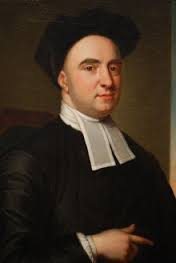
Open Berkeley's interactive page (graphs of influences, similar and opposing positions, and quotes)
Background
George Berkeley
Born: 12 March 1685 in County Kilkenny, Ireland
Died: 14 January 1753 (aged 67) in Oxford,
England
Nationality: Irish
Alma mater: Trinity College, Dublin (BA 1704;
MA 1707)
Schools: Idealism, Empiricism
Main interests: Christianity, metaphysics,
epistemology, language, mathematics, physics,
perception, ethics, economics, medicine
Influences: Locke, Newton, Malebranche,
Descartes, Ibn Tufail, Pierre Bayle, Hobbes
Influenced: Hume, Burke, Kant, Thomas Reid,
Schopenhauer, Mill, Ernst Mach, A. J. Ayer,
Jorge Luis Borges, Samuel Beckett, Francis
Bowen, Borden Parker Bowne, Emerson, Keith
Ward, William Hazlitt, Pierre Louis Maupertuis,
Johann Georg Hamann
From Wikipedia
Berkeley was an Anglo-Irish philosopher whose primary achievement was the advancement of a theory he called "immaterialism" (later referred to as "subjective idealism" by others). This theory denies the existence of material substance and instead contends that familiar objects like tables and chairs are ideas perceived by the mind and, as a result, cannot exist without being perceived. Berkeley is also known for his critique of abstrac- tion, an important premise in his argument for immaterialism.
Introductory Comments
For a man who denied the existence of the material world, Berkeley moved through it with remarkable energy. The bundle of perceptions called Mrs. Berkeley gave birth to the bundle of perceptions called George Berkeley near the bundle of perceptions called Dysart Castle, County Kilkenny, in 1685. (The phrase will be dropped from here on. But bear in mind that everything below refers to sensory experiences orchestrated by God - not to the material beings and things we foolishly imagine.) Berkeley entered Trinity College, Dublin, at 15, was elected a fellow at 22, and took orders in the Church of Ireland soon after. The philosophy came early and fast: a new theory of vision at 24, the Principles of Human Knowledge at 25, the Three Dialogues at 28. Then he put the pen down and proposed a college in Bermuda to train ministers for the American colonies, worked his political connections, and secured a royal charter and a promised £20,000 from Parliament. In 1728 he sailed - not to Bermuda, but to Newport, Rhode Island, where he bought a farm, preached, argued philosophy with the local clergy, and waited for the money. It never came. After three years he sailed home, and in 1734 became Bishop of Cloyne. There he spent two decades tending a poor Irish diocese and championing tar-water as a cure for nearly everything. That book outsold all the others.
Not bad for a nonexistent being in a nonexistent world.
Some of Berkeley's Key Positions
Locke was right that all knowledge begins in perception, but wrong to think perception can carry us past itself. His distinction between primary and secondary qualities is where he went astray.
Locke granted that color, sound, and taste exist only in the perceiving. But he held that extension, shape, solidity, and motion belong to bodies themselves, and that our ideas of them are faithful copies. That last step fails. Primary qualities shift with the perceiver exactly as secondary ones do: a mite's foot is enormous to the mite. And try conceiving extension stripped of every color - it can't be done. Both alike are ideas.
Two kinds of things exist, then: ideas, and the spirits that perceive them. For an idea, to be is to be perceived; for a spirit, to be is to perceive. Apples and hammers remain as real as ever - an apple simply is a collection of ideas reliably found together. What is denied is not bodies but matter: an inert, unperceivable something-we-know-not-what, invented by philosophers and the parent of skepticism and atheism both.
Yet if no material floor lies beneath the world, why is experience so orderly and so stubborn? The answer is both disarmingly simple and breathtaking in its implications: It is God who sustains our perceptions in a coherent, orderly, and predictable pattern - making the universe, in effect, a continuous act of divine communication.
Place in the History of Ideas
Berkeley's Place in History of Ideas
Russell: George Berkeley... is important in philosophy through his denial of the existence of matter - a denial which he supported by a number of ingenious arguments. He maintained that material objects only exist through being perceived. To the objection that, in that case, a tree, for instance, would cease to exist if no one was looking at it, he replied that God always perceives everything; if there were no God, what we take to be material objects would have a jerky life, suddenly leaping into being when we look at them....
Hume: When men follow this blind and power- ful instinct of nature, they always suppose the very images, presented by the senses, to be the external objects, and never entertain any suspi- cion, that the one are nothing but representa- tions of the other.... This argument is drawn from Dr. Berkeley; and indeed most of the writ- ings of that very ingenious author form the best lessons of skepticism which are to be found....
Karl Popper: A general practical result - which I propose to call "Berkeley's razor" - of [Berke- ley's] analysis of physics allows us a priori to eliminate from physical science all essentialist explanations. If they have a mathematical and predictive content they may be admitted qua mathematical hypotheses (while their essential- ist interpretation is eliminated). If not they may be ruled out altogether.
Random Thoughts on Berkeley
Berkeley was an empiricist with a vengeance - a divine vengeance. He started where the empiricists started: all we know, and all we can know, are ideas of sense. Then he refused to blink. Esse est percipi. To be is to be perceived. Whatever is supposed to lie beyond sense impressions is in fact an an abstraction from them, and abstractions are mental too. The physical world is not out there behind the show. The show is all there is.
But calling it a figment or a children's story goes too far, and Berkeley would have objected. A figment is something a mind makes up, and no one makes up the shattering of a glass. The ideas of sense arrive unbidden, vivid, and lawful, and they arrive the same way for everyone at once. That is precisely the argument: they must come from a mind, and not from any of ours. God is telling the story - orchestrating the whole immense, interlocking traffic of impressions so that they mesh. Drop the impressions called a drinking glass, and two minds see it shatter in the same instant.
Two minds, note, not two bodies. Berkeley leaves us as spirits, and spirits are the one thing in his world that are not ideas - no one perceives a mind, not even one's own. Which yields a strange picture. We are souls listening in on a few of the innumerable stories God is telling, and God, who tells all of them and misses nothing, is the only one in the audience who never has to guess what happens next.
Influences
Berkeley was influenced by: Bayle, Descartes, Hobbes, Ibn Tufail, Locke, Malebranche, Newton
Berkeley influenced: Ayer, Beckett, Borges, Bowen, Francis, Bowne, B.P., Burke, Emerson, Hamann, Hazlitt, Hume, Kant, Mach, Maupertuis, Mill, Reid, Schopenhauer, Ward, Keith
Similar and opposing positions
Thinkers with similar positions:
- Al-Ghazali (Causation is due to God, not to the interactions of matter.)
- Ayer (We only really know the immediate impressions of our senses.)
- Bayle (Locke fails in his distinction between primary & secondary qualities.)
- Edwards (God alone is the only real cause at work in the world - not matter.)
- Ibn Tufail (The mind at birth is a blank slate that experience will write upon.)
- Malebranche (What's immediately perceived are ideas in the mind, not things.)
Thinkers with opposing positions:
- Austin, J.L. (The validity of knowledge claims depends on their aim & context.)
- Democritus (Everything is the result of natural laws related to matter & motion)
- Einstein (Epistemology without contact with science is an empty scheme.)
- Fichte (The living moral order is itself God. There is no other God.)
- Gassendi (The senses can be taken as signs of what's beyond the senses.)
- Hume (The mind is simply a bundle of perceptions without autonomy or unity.)
- Locke (Unlike secondary qualities, primary qualities belong to sensed objects.)
- Newton (Absolute space and time exist independent of all that's in this world.)
- Paine (The only religion that's at all defensible is pure and simple deism.)
- Reid (When philosophy contradicts common sense, it should be dismissed.)
What others said about Berkeley
- Lord Byron: When Bishop Berkeley said "there was no matter," / And proved it - 'twas no matter what he said.
- Schopenhauer: Berkeley was... the first to treat the subjective starting-point really seriously and to demonstrate irrefutably its absolute necessity. He is the father of idealism....
- Berlin: The world is for [Berkeley] a spectacle of continuous spiritual life, in the first place, in the mind of God, and secondarily in the minds of His creatures, men. This is not for him a philosophical theory or hypothesis, but a direct vision. [He denies] that there exists something called matter..., independent of minds either divine of human….
- Sydney Smith: Bishop Berkeley destroyed this world in one volume octavo; and nothing remained after his time, but mind - which experienced a similar fate from the hand of Mr. Hume, in 1737.
- Whitehead: [Berkeley's] thought made possible the work of Hume and thus Kant.
- James Boswell: When discussing how Berkeley's philosophy appeared to be self-evidently false, but impossible to refute, Dr. Johnson kicked out at a nearby stone, exclaiming "I refute it thus!"
- Russell: Berkeley advances valid arguments in favor of a certain important conclusion, though not quite in favor of the conclusion that he thinks he is proving. He thinks he is proving that all reality is mental; what he is proving is that we perceive qualities, not things, and that qualities are relative to the percipient.
- Hume: But that all his arguments, though otherwise intended, are, in reality, merely skeptical, appears from this, that they admit of no answer and produce no conviction.
Schools: Christian Theology, Divine Illumination, Empiricism, Fictionalism, Metaphysical Idealism, Skepticism
Main interests: Causality, Consciousness, Economics, Epistemology, Ethics, Immortality, Language, Mathematics, Medicine, Metaphysics, Mind, Perception, Physics, Religion, Universals
Berkeley's answers to philosophical questions
Epistemology
All knowledge is of ideas - either imprinted on our senses or perceived through memory & the operations of our mind.
We can only know our own ideas. We can never know anything about the supposed material world. Indeed, it doesn't exist.
"The same principles which at first view lead to skepticism, pursued to a certain point, bring men back to common sense."
Ethics
We must always follow the moral laws, even when it seems that breaking a moral law will result in the greatest happiness.
The first principal over our action is self-love, but reason also reveals to us certain natural moral laws.
Language
Words not only communicate ideas. They also arouse emotions that excite people to action or deter them from action.
"[H]e that knows names do not always stand for ideas will spare himself the labor of looking for ideas where there are none."
Most words, like "triangle," don't in themselve point to particular things, but rather recognize & deal with general concepts.
Law
We need the laws of nature - God's laws - because they are "the only thing that stands between us and total disorder."
Metaphysics
To be is to be perceived. Primary properties have no existence outside the perceptions of our minds.
All things spring from God. God is the creator of all spirits or minds and the ongoing source of all all our perceptions.
Being is not some remote thing understood through perception. Rather, being is perception.
Universals do not exist. Each idea or sensation stands alone and has no relationships outside the Mind of God.
"[W]henever I attempt to frame a simple idea of time, abstracted from the [uniform] succession of ideas..., I am lost...."
"When I speak of pure or empty space, it is not to be supposed that [space is] conceivable without body or motion."
Physical causation is an illusion. God, who creates and orders all our ideas, is the only force at work in the world.
Matter is a meaningless category. Whatever properties "matter" has can be reduced to perceptible qualities.
Mind and matter do not interact for the simple reason that matter does not exist. Only mind exists.
Mind
The mind is completely spiritual or immaterial, but so are the objects of the mind - the innumerable sense impressions.
We can't conceive how a body can act upon a spirit - nor need we, since what is called body is just a set of perceptions.
Our ideas or perceptions derive from God, not from the supposed material world.
Abstract thinking does not exist in man. All our thoughts are merely elaborations or reworkings of sense impressions.
Other than God Himself, the perceiving mind is the only thing that exists as more than merely a perception.
Nature
If Locke is right that brutes abstract not, many of those who pass for men must be reckoned brutes.
Religion and Theology
The congruity of our ideas or sensations prove God's existence, since it must spring from a universal and powerful Mind.
God is the Infinite Spirit or Mind from which all finite spirits and their perceptions are maintained in perfect harmony.
"[T]hings which,... in themselves, appear to be evil, have the nature of good when... linked with the whole system of beings."
God is not only the creator or first cause of everything, he remains the ongoing creator & sole cause at work in nature.
God is seen in the exquisite aptness of all the small parts of nature, combined with the beautiful harmony of the whole.
Science
A scientific theory is merely a useful fiction - a convenient tool for explaining facts, but without any objective truth.