Johann Hamann (1730 - 1788)
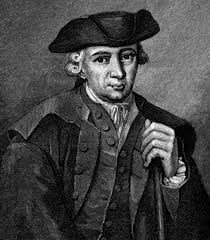
Open Hamann's interactive page (graphs of influences, similar and opposing positions, and quotes)
Background
Johann Georg Hamann
Born: 27 August 1730 in Königsberg, Kingdom of
Prussia
Died: 21 June 1788 (aged 57) in Münster, Prince-
Bishopric of Münster
Alma mater: University of Königsberg
(1746–1751/52; no degree)
Schools: Counter-Enlightenment, Sturm und
Drang
Main interests: Philosophy of language,
epistemology, philosophy of mind, aesthetics,
philosophy of history, political philosophy,
theology, religion, sexaulity, gender
Influences: Immanuel Kant, David Hume, Martin
Knutzen, George Berkeley
Influenced: Goethe, Hegel, Herder, F.H. Jacobi,
Kierkegaard, Schelling, Christian Jakob Kraus,
Isaiah Berlin, Lessing, Mendelssohn, Oswald
Bayer, John Milbank, David Bentley Hart
From Wikipedia
Hamann was a German Lutheran philosopher from Königsberg known as "the Wizard of the North" who was one of the leading figures of post-Kantian philosophy. His work was used by his student J. G. Herder as the main support of the Sturm und Drang movement, and is associated with the Counter-Enlightenment and Romanticism. He introduced Kant... to the works of both Hume... and Rousseau. Hamann was influenced by Hume, but he used his views to argue for rather than against Christianity.
Introductory Comments
Paul had his road to Damascus, and philosophers have had their own sudden U-turns. Descartes had three dreams on a November night in 1619 and set about rebuilding from scratch everything he thought he knew. Pascal had his "Night of Fire" in 1654 - a "forgetfulness of the world and of everything, except GOD" - and spent much of his remaining life urging that truth on others. Kant, sometime in the 1760s, was roused from what he called his "dogmatic slumber" by reading Hume.
Hamann's own Damascus was London, 1758. He had been sent there on a commercial errand for his employers, and it went badly. Adrift, in debt, and out of friends, he shut himself in his rented room and read the Bible straight through. Somewhere in Deuteronomy he found himself transformwed. He later wrote, he heard his own heart's blood crying out. He rose from the experience feeling reborn in the presence of God.
The spiritual rebirth became an intellectual one. Hamann had been a child of the Enlightenment. Now he turned against what he saw as its great mistake: the attempt to separate reason from faith, history, the senses, and the messy business of being human. That insight led Hamann straight to language. Language is not logic dressed up in words. At its deepest, it is poetry - divine poetry. God gave man language so that man might read what God had written - not just in the Bible, but in everything that exists.
Some of Hamann's Key Positions
Philosophers have fallen in love with a phantom. "Pure reason" - reason scrubbed clean of tradition, experience, and above all language - does not exist. Reason can never be purified of words, and words always come to us secondhand: inherited, historical, soaked in custom.
Abstract concepts therefore carry whatever weight they do through usage and habit, not through some inherent rational quality. Hume himself admits as much: If no proof compels belief even in the existence of our own bodies, then belief underlies all knowing, and faith stands in no worse position than anything else we claim to know.
So, If reason is not the key to the world, what is? Language - not as man's clever invention, but as gift and response: God addresses His creature, the creature answers, and language is born.
And because the world itself is God's address to us, it resonates with moral and spiritual meaning. Nature is a book - but a difficult one, its letters scattered and its syntax broken, demanding humility and imagination.
The pattern throughout is divine condescension: God stooping to human scale in Scripture's homely idiom, in the flesh of Christ, in the ordinary stuff of creation. God has embued the world with spiritual and moral meaning, and we explore this meaning through the poetry of language.
Place in the History of Ideas
Hamann's Place in History of Ideas
Ted Kinnaman: Like [his friend] Kant, Hamann... in his early life was a devoted partisan of the Enlightenment.... But during a business trip to London..., Hamann underwent a sort of conver- sion that involved giving up his commitment to the secular Enlightenment in favor of a more orthodox view of Protestant Christianity. As a consequence, he embarked on a career of trenchant and often scathing criticism of the Enlightenment. This change in world-views coincided with his reading of the British empir- icist philosophers George Berkeley and David Hume. Hamann saw the idealism of the former and the skepticism of the latter as constituting a reductio ad absurdum of Enlightenment thought: Scientific reason leads us inevitably either to doubt or to deny the reality of the world around us.
J. H. W. Stuckenberg: Kant made reason the rule of his life and the source of his philosophy; Hamann found the source of both in his heart. While Kant dreaded enthusiasm in religion, and suspected in it superstition and fanaticism, Hamann reveled in enthusiasm; and he believed in revelation, miracles, and worship, differing also in these points from the philosopher. In some respects they complemented each other; but the repelling elements were too strong to make them fully sympathetic. The difference in their stand-points, however, makes Hamann’s views of Kant all the more interesting.
Random Thoughts on Hamann
Newton's third law sometimes seems to describe not only the physical world but the world of ideas: for every action, an equal and opposite reaction. The Enlightenment was an action of the first magnitude. The counteraction came soon enough - first as Sturm und Drang, then as the broader Counter-Enlightenment and Romanticism. And the man who lit the fuse was Hamann. There is something startlingly modern, even postmodern, about the charge he brought. Humans are intellectually vain. We wildly overrate our powers of reason and misconstrue the nature of language, which is not reason's obedient instrument but the medium in which reason lives and moves.
The affinities run in every direction. Goethe, who read him admiringly and thought him the brightest head of his age, shared his feel for the intuitive and symbolic. Schlegel and the Jena Romantics took up his celebration of individuality and creative genius. Kierkegaard, who called him the greatest humorist in Christendom, found in him a precursor of the leap of faith. And his insistence that language precedes and shapes reason anticipates concerns later pursued by Herder, Schleiermacher, Heidegger, Gadamer, and the later Wittgenstein - though these are convergences and echoes as much as direct lines of descent. His mark can be traced across Romanticism, existentialism, hermeneutics, philosophy of language, and theology. Not bad for a customs clerk who wrote in fragments and spent his life on the margins.
Influences
Hamann was influenced by: Berkeley, Hume, Kant, Knutzen, M.
Hamann influenced: Bayer, Oswald, Berlin, Goethe, Hart, David B., Hegel, Herder, Jacobi, Kierkegaard, Kraus, C.J., Lessing, Mendelssohn, Milbank, John, Schelling
Similar and opposing positions
Thinkers with similar positions:
- Bergson (Intuition gives our minds direct access to the nature of reality.)
- Berlin (There is no single criterion of meaningfulness. No absolute certainty.)
- Humboldt, W. (The structure of a language affects its speakers' worldview.)
- Jacobi (Dogmatic systems in philosophy lead thinkers far away from the truth.)
- Kierkegaard (Philosophy must embrace subjectivity as an essential resource.)
- Kierkegaard (Belief in God cannot be based on reason. Faith requires a leap.)
- Montaigne (Be a little skeptical when considering all views, even one's own.)
- Philo (The universe is not just matter in motion. It has a spiritual dimension.)
- Reid (When philosophy contradicts common sense, it should be dismissed.)
- Saussure (Our understanding of the world is shaped thru symbolic systems.)
- Wittgenstein (Much confusion springs from the enchantment of language.)
Thinkers with opposing positions:
- Frege (Logic is the appropriate measure of what can or cannot be.)
- Malebranche (Ethical principles are eternal and universal in application.)
- Piaget (Language develops more from reason than from specialized instincts.)
- Pinker (The structure of a language does not affect its speakers' worldview.)
- Russell (Language is ultimately dependent upon a layer of atomic facts.)
What others said about Hamann
- Hegel: The French have a saying: "The style is the man." Hamann's writings do not have a particular style but rather ARE style through and through.”
- Gwen Griffith-Dickson: His central preoccupations are still pertinent: language, knowledge, the nature of the human person, sexuality and gender and the relationship of humanity to God.
- Copleston: [Hamann] was not content with saying that language is not an artificial invention of the human reason and then assigning some other empirical cause or causes. In his opinion language was in some mysterious way a communication with God, a divine revelation. Again, Hamann was convinced that poetry in particular is not the product of reason.
- Berlin: Hamann's fundamental doctrine… was that God was not a geometer, not a mathematician, but a poet; that there was something blasphemous in attempting to foist upon God our own puny, human, logical schemes.
- Goethe: In order to achieve the impossible [Hamann] stretches his hand to all the elements.
- John Herman Randall Jr.: Hamann, the "Wizard of the North," went through Enlightenment rationalism, saw the collapse of rational religion, and fell back on a version of the Lutheran faith of his childhood.
- Berlin: The most passionate, consistent, extreme and implacable enemy of the Enlightenment and... all forms of rationalism... was Johann Georg Hamann. His influence, direct and indirect, upon the romantic revolt against universalism and scientific method... was considerable and perhaps crucial.
- W. M. Alexander: [Hamann] saw language as the means by which the reason is confused as well as the means by which it expresses itself (the "seducer" as well as the "helpmeet" of man).
Schools: Christian Theology, Counter-Enlightenment, Fideism, Skepticism, Sturm und Drang
Main interests: Art and Aesthetics, Epistemology, History, Language, Mind, Political Philosophy, Religion, Sexuality, Theology
Hamann's answers to philosophical questions
Art and Aesthetics
Aesthetic experience, not reason, is fundamental in our lives. Indeed, reason is just one aspect of our aesthetic experience.
Beauty is part of our individual, aesthetic experience. As such, it can't be reduced to rational principles or abstractions.
The aesthetic experience can't be reduced to rational principles. It's fundamental and, as such, reflects one's unique genius.
Epistemology
"The weakness of ourselves & of our reason makes us see flaws in beauties by making us consider everything piece by piece."
We rely too much on the supposed faculty of reason. Most of our rational claims fall apart when exposed to Socratic scrutiny.
God's gift of language reveals more than does reason: "The farther reason looks the greater is the haze in which it loses itself."
Truth is intuitive: "The philosophers [gave] truth a bill of divorce, by separating what nature has joined together & vice versa."
Language
"Not only the entire ability to think rests on language... but language is also the crux of the misunderstanding of reason...."
"Every phenomenon of nature was a word - the sign [&] pledge of a new, mysterious... union [with] divine energies & ideas."
"Without language we would have no reason, without reason no religion, and without these three... [no] bond of society."
Language is not the product of man's reason, but instead reflects the meaning God suffused into the material world.
Metaphors and similes are at the heart of language: "Poetry is the mother-tongue of the human race."
"Everything the human being heard..., looked upon and touched with its hands was a living word; for God was the word."
Nature
God speaks through nature: "Nature is a book, a letter, a fairy tale (in the philosophical sense) or whatever you want to call it."
Philosophy
"[An] ambition for truth & virtue, & a frenzy to conquer all lies & vices…; herein consists the heroic spirit of the philosopher."
Logic and language can easily seduce us: "I look upon logical proofs the way a well-bred girl looks upon a love letter."
"Hence it happens that one takes words for concepts, and concepts for the things themselves."
Psychology
Passion and excellence: "Do nothing or everything; the mediocre, the moderate, is repellent to me; I prefer an extreme."
Religion and Theology
"What one believes does not… have to be proved, and a proposition can be ever so… proven without… being believed."