Donald Davidson (1917 - 2003)
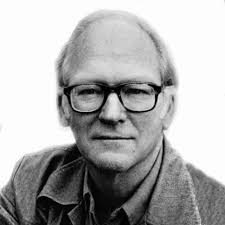
Open Davidson's interactive page (graphs of influences, similar and opposing positions, and quotes)
Background
Donald Davidson
Born: 6 March 1917 in Springfield,
Massachusetts
Died: 30 August 2003 (aged 86) in Berkeley,
California
School: Analytic
Main interests: Philosophy of language,
Philosophy of action, Philosophy of mind,
Epistemology, Events
Notable ideas: Radical interpretation, truth-
conditional semantics, understanding as
translation, anomalous monism
Influences: Quine, Tarski, Wittgenstein, Russell,
Anscombe, Putnam, Spinoza, Saul Kripke, Kant,
Dummett, Carnap, Paul Grice, Whitehead, Frank
Ramsey, C. I. Lewis, Marcia Cavell, N. Goodman
Influenced: Colin McGinn, Ernest Lepore, Kirk
Ludwig, Richard Rorty, John McDowell, Michael
Dummett, Robert Brandom
From Wikipedia
Davidson was known for his charismatic personality and the depth and difficulty of his thought. His work exerted considerable influence in many areas of philosophy from the 1960s onward, particularly in philosophy of mind, philosophy of language, and action theory. While Davidson was an analytic philosopher, and most of his influence lies in that tradition, his work has attracted attention in continental philosophy as well, particularly in literary theory and related areas.
Introductory Comments
For Davidson, language is not a rigid code shared in advance so much as a living practice that speakers and hearers continually negotiate in use. And understanding a particular utter-ance is less like decoding a message and more like making a well-informed guess about what a rational speaker, in a shared world, would mean by thAat utterance. Meaning and belief as intertwined: to interpret someone at all, we must assume a broad background of coherence and truth (the "principle of charity"), or else their words would not come into focus. In this way, language rests not on fixed conventions alone but on a dynamic interplay of intention, context, and mutual adjustment - more jazz improvisation than marching band.
This leads Davidson to a striking conclusion: there is no such thing as a fully determinate, shared language understood in exactly the same way by all its speakers. Rather, successful communication depends on our ability to align, on the fly, our passing theories about one another’s meanings. Misunderstanding is not a breakdown of a perfect system but the normal friction of an imperfect one, and communica- tion succeeds not because meanings are locked in advance, but because we're remarkably good at smoothing those frictions in real time. If that sounds unsettling, it is also liberating: language is not a brittle code easily shattered, but a sup- ple practice that is both forgiving and fecund.
Some of Davidson's Key Positions
Too many philosophers and linguists assume that the meaning of a sentence can be uncov- ered simply by breaking it into its parts and assigning each part an independent meaning. While this approach captures something impor- tant about structure, it can mislead if it treats words as self-contained units whose meanings can be fixed in isolation from the sentences they occur in and the broader practice of interpretation.
The meaning of a sentence depends on both its structure and its parts, but it is not reducible to them taken separately. Rather, we grasp mean- ing holistically - through a systematic under- standing of how words combine within a lan- guage, and how each sentence is interpreted against a wider background of beliefs, assump- tions, and patterns of use that together form an interconnected whole.
Moreover, the meaning of a sentence cannot exist in a vacuum, but depends on its relation to the world beyond language. To understand a sentence is to know the conditions under which it would be true, and these truth conditions are fixed in part by how speakers are causally and socially connected to their environment. In this way, meaning is inseparable from both inter- pretation and the world in which language is used. It involves the intersubjective encounter between speakers and the world they share.
Place in the History of Ideas
Davidson's Place in History of Ideas
Jeff Malpas: Davidson's denial of the existence of any strict "psycho-physical" laws follows from his view of the mental as constrained by quite general principles of rationality that do not apply, at least not in the same way, to physical descriptions: normative considerations of overall consistency and coherence, for instance, constrain our own thinking about events as physically described, but they have no purchase on physical events as such. This does not mean, of course, that there are no correla- tions whatsoever to be discerned between the mental and the physical, but it does mean that the correlations that can be discerned cannot be rendered in the precise... and exceptionless form - in the form, that is, of strict laws - that would be required in order to achieve any reduction of mental to physical descriptions.
Michael Della Rocca: Within contemporary philosophy, Spinoza’s position is very similar to Donald Davidson’s. Davidson also rejects at least certain kinds of explanatory connections between the mental and the physical and, like Spinoza, employs the lack of these connections as part of the basis for the identity between mental things and physical things. Nonetheless, there are significant differences between Spinoza and Davidson: Davidson rejects any strict science of the psychological. For Davidson, there are strict laws governing the physical, but no strict laws governing the psychological.
Random Thoughts on Davidson
When you decide to reach for your coffee, something happens in your brain - and David- son insisted that the decision and the neural event are not two things but one. Every mental event is a physical event, full stop. In this re- spect, Davidson was a committed materialist who left no room for ghostly substances lurking behind the curtain of the skull. But here's where he parted company with the more zeal- ous reductionists: talk about minds and talk about brains answer to fundamentally different masters. Mental descriptions are governed by standards of rationality and coherence that physical descriptions simply do not answer to.
This mismatch means there can be no strict, exceptionless laws bridging mental and physical descriptions - plenty of rough correlations, but never the crisp equations reductionist dreams of. For Davidson, this does not undermine the identity of mental and physical events. It is simply declaring mind and body to be the same thing seen under different, untranslatable de- scriptions. If, say, you try to win the heart of your beloved by sending her a neural diagram of your love, instead of a love letter, you'll soon find out there is a difference. In this sense Da- vidson is certainly right. But if your beloved is a mind-body dualist, she might coolly respond to you (and to Davidson) that just declaring mind and body to be "the same thing seen under different descriptions" don't make it so.
Influences
Davidson was influenced by: Anscombe, Carnap, Cavell, Marcia, Dummett, Goodman, Grice, Paul, Kant, Kripke, Lewis, C.I., Putnam, Quine, Ramsey, F.P., Russell, Spinoza, Tarski, Whitehead, Wittgenstein
Davidson influenced: Brandom, Dummett, Lepore, E., Ludwig, Kirk, McDowell, McGinn, Rorty
Similar and opposing positions
Thinkers with similar positions:
- Broad (From physics to chemistry to biology, irreducible properties emerge.)
- Carnap (Meaning of a sentence is equivalent to stating its truth conditions.)
- Fodor (Though mind springs from matter, it can't be reduced to matter.)
- MacIntyre (Rationality is inevitably linked to cultural traditions.)
- McGinn (Mental events (reasons & desires) can in fact cause physical events.)
- Nagel (We can't view reality devoid of assumptions, perspectives, and biases.)
- Putnam (There are multiple descriptions of reality that are equally true.)
- Quine (There will always be multiple ways to analyze a person's actions.)
- Rorty (The search for the ultimate foundation of knowledge is fruitless.)
Thinkers with opposing positions:
- Ayer (The verification of a scientific statement fixes its meaning.)
- Chalmers (There's an explanatory gap between physical & phenomenal realms)
- Chalmers (There's an explanatory gap between physical & phenomenal realms)
- Collingwood (The distinction between the mental & the material is conceptual.)
- Cousin (Reason enables us to pass beyond the relative and subjective.)
- Holbach (The universe is simply matter in motion, bound by laws of nature.)
- Huxley (States of consciousness don't cause changes in the motion of matter.)
What others said about Davidson
- Jeff Malpas: [Davidson said] the connection between reason and action cannot be described in terms of any strict law.
- Marc A. Joseph: Davidson’s philosophy of language [makes connections] between traditional questions about language and issues... in other fields of philosophy, including... the philosophy of mind..., epistemology, and metaphysics.
- Jeff Malpas: Davidson treats the connection between reason and action (where the reason is indeed the reason for the action) as a connection that obtains between two events (the agent’s believing and desiring on the one hand and her acting on the other) that can be variously described. The connection is both rational… and causal….
- Marc A. Joseph: … Davidson does not endorse the skeptical conclusion that Quine draws from the arguments that since there are no determinate meanings, there are no meanings.
- Vladimir Kalugin: Davidson claims there are no strict deterministic laws on the basis of which mental events can be predicted and explained.
- Jeff Malpas: And while often developed separately, Davidson’s ideas nevertheless combine in such a way as to provide a single integrated approach to the problems of knowledge, action, language and mind.
- Quentin Skinner: I cannot see that this view of radical interpretation possesses the relevance for historians that some of Davidson’s more enthusiastic followers… have supposed. Davidson is merely proposing a general strategy for using assertions to get at underlying beliefs, the strategy of beginning by assuming general agreement.
- Vladimir Kalugin: Following in Quine’s footsteps, Davidson does away with what he considers to be the third and last dogma of empiricism: the dogma of the dualism of scheme and reality.
Schools: Analytic Philosophy, Common Sense Realism, Holism, Linguistic Philosophy philosophy, Naturalism, Neopragmatism, Physicalism, Post-analytic Philosophy
Main interests: Communication, Epistemology, Language, Metaphors, Mind, Semantics
Davidson's answers to philosophical questions
Epistemology
Truth is a construct: "Nothing in the world, no object or event, would be true or false if there were not thinking creatures."
Language
"We must give up the idea of a clearly defined shared structure which language-users acquire and then apply to cases."
All languages share a common worldview. This is seen in the fact that we can interpret and translate other languages.
"... like all dreamwork, [metaphor's] interpretation reflects as much on the interpreter as on the originator."
"… there is no such thing as a language, not if a language is anything like what many philosophers & linguists have supposed."
Metaphysics
Events are unrepeatable individual occurrences that can be described in multiple ways - mental, matterial, as process, etc.
"Mental events such as perceivings, rememberings, decisions, and actions resist capture in the net of physical theory."
Though mental events are physical events, there are no strict laws linking mental and physical descriptions.
Mind
Attitides & beliefs do not exist in isolation: They have content only in relation to a whole network of other attitudes & beliefs.
An action is intentional when it is caused (in the right way) by the agent's beliefs and desires.
Philosophy
Philosophy should be lucid, but,"as so often in philosophy, it is hard to improve intelligibility while retaining the excitement."