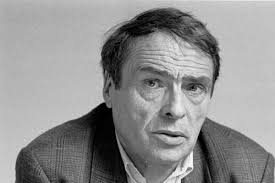
Bourdieu's contributions to the sociology of education, the theory of sociology, and sociology of aesthetics have achieved wide influence in several related academic fields (e.g. anthropol- ogy, media and cultural studies, education, popular culture, and the arts)…. Bourdieu's work was primarily concerned with the dynamics of power in society, especially the diverse and subtle ways in which power is transferred and social order is maintained within and across generations.
Introductory Comments
Bourdieu agreed that to have capital is to have power, but he added that capital comes in more forms than money. Alongside cold eco- nomic capital sits cultural capital - the elite de- gree, the fine wine, the unforced familiarity with Mahler or Nemerov. And there is social capital: helpful family, well-placed friends, loyal patrons. These forms of capital flirt, convert, and sometimes clash: a Harvard degree (cultu- ral) can open doors to elite clubs (social), which in turn protect wealth (economic). But, at the same time, the prized asset in one arena may be a liability in another: in a courtroom, pedigree may count for less than precedent, while in a dinner party, wealth without polish can feel like a rented tuxedo on a farmhand.
This is not to say Marx was wrong to spotlight the raw economic showdown between employ- ee and employer, proletariat and bourgeoisie. That class divide remains a brutal engine of history. Yet money does not explain everything. A struggling poet may have little wealth but great prestige; a judge commands deference that exceeds salary; a priest may shape minds more than markets. But the real power at work in all this, Bourdieu insists, is habitus - the deep-set dispositions we acquire through upbringing and life experience. Habitus operates largely beneath conscious awareness, shaping choices that feel entirely free. We think we are playing the game, but mostly the game is playing us.
Some of Bourdieu's Key Positions
To have capital is to have power, but there are more types of capital than hard cash. Economic, cultural, and social capital all shape one's posi- tion, and any of them can be seen as power or capital. These capitals are partially convertible into one another, and which one dominates depends on the arena: in some settings, cultural or social capital can outweigh money.
Marx was right to emphasize economic class, but thisa alone cannot explain how societies reproduce themselves across generations. Each person also carries a habitus - a set of deeply internalized dispositions, tastes, and ways of seeing the world, acquired through one's upbringing and social trajectory, that shapes behavior often without conscious choice.
Nor can economic class, in and of itself, explain the appeal and prestige of institutions - educa-tional, artistic, scientific, legal, political, reli-gious. Each of these constitutes a relatively autonomous field: a structured arena with its own rules, its own stakes, and its own logic.
For each field, there is a corresponding form of capital being accumulated. Understanding how fields, habitus, and capital interact is what al-lows sociology to explain not just social struc-ture, but how these structures perpetuate themselves - and how they produce inequality through symbolic violence.
Place in the History of Ideas
Bourdieu's Place in History of Ideas
Dylan Riley: Capital refers to resources. Bourdieu identifies three main varieties: economic (understood basically as income and ownership), social (basically understood as connections), and cultural (informal education, cultural objects, and credentials). These can be measured in two dimensions: quantity and
structure. Thus, particular agents may possess more or less total amounts of capital, and this capital may be structured in different propor- tions. Accordingly, although two "agents" may have the same total overall amount of capital, one might have a greater proportion of cultural capital and the other of economic capital. Generally, the volume and structure of capital determines one’s "position in social space" or class position.
Nicolas Truong and Nicolas Weill: [H]is sociology of education… influenced generations of teachers…. But Bourdieu's legacy reaches far beyond education. For one thing, his scientific contribution still irrigates many branches of social science. Bourdieusian categories exert increasing influence in the sociology of intel- lectuals and writers, witness the work of Charle or the sociologist Gisèle Sapiro. His mark is apparent in the application of sociological analysis to justice, to working-class neighbor- hoods and youth..., to elites..., the family..., and of course the media, the focus of his last publications.
Random Thoughts on Bourdieu
Though economic class is important. Bourdieu argued that it can't, on its own, explain the pe-culiar prestige of the other arenas in which hu- man beings exhaust themselves: the university, the gallery, the laboratory, the courtroom, the parish, the parliament, the literary supplement. Bourdieu treats each as a field - a relatively autonomous game with its own stakes, its own pecking order, and its own gatekeepers and heretics. The art world crowns the painter who refuses to sell; the academic field rewards the scholar whose book no one outside the field can read. To grasp any of this, sociology has to stop treating culture as a thin glaze on the e-conomy and start mapping each field on its own terms, with its own compass and weather.
Within each field, agents compete using the capital it prizes, guided by the feel for the game their habitus provides. But Bourdieu's most uncomfortable insight is that these fields do not merely reflect inequality - they actively produce it. This depressing phenomenon is what Bour- dieu called symbolic violence: domination so well-tailored that the dominated mistake it for the natural order, and tip the bouncer on their way out. The child who leaves school convinced he "just isn't smart enough" mistakes a social verdict for a personal one. And because of this internalization of social verdicts, institutions need no sticks - they just need their victims to pick one up and hold it against themselves.
Bourdieu influenced: Giddens, A., Louis, Edouard, Mockus, A., Wacquant, L.
Similar and opposing positions
Thinkers with similar positions:
Adler (The social realm plays a large role in shaping human psychology.)
Althusser (Self-consciousness springs from social ideology and practices.)
Fanon (The black person's use of a colonizer's language is self-destructive.)
Foucault (All life, including science and other inquiry into truth, seeks power.)
Gadamer (We inevitably think and speak as part of cultural traditions.)
Levi-Strauss (Social structures spring in large part from symbolic structures.)
Merleau-Ponty (The body is our site of knowing the world. It's how we know.)
Spinoza (Liberty comes not from casting off determinism, but understanding it.)
Strawson (Mind and body are united in the primitive concept of personhood.)
Weber (Domination & symbolic systems both play important roles in social life.)
Thinkers with opposing positions:
Freud (The social realm plays a minimal role in shaping human psychology.)
Marx (Economic, rather than cultural, forces drive history and shape society.)
Rousseau (The aim of education is not to socialize, but to liberate the man within)
Sartre (Human consciousness is innately & absolutely free. We are freedom.)
Schopenhauer (Art exists in a realm free of the forces at work on & within us.)
Smith, Adam (Humans are consistently rational & narrowly self-interested.)
What others said about Bourdieu
Tristan Claridge: For Bourdieu, social capital... is based on the notion of "power over" as opposed to "power to."
Michèle Lamon: The place of Bourdieu in the small pantheon of individuals who have determined the shape of the social sciences at the beginning of the 21st century is beyond question.
Gillian Tett: [Bourdieu] observed that elites in a society typically maintain their power not simply by controlling the means of production (i.e., money), but by dominating the cultural discourse too (i.e., a society’s intellectual map). And what is most important in relation to that cognitive map is not what is overtly stated and discussed - but what is left unstated, or ignored.
Alan Riding: Pierre Bourdieu [was] a leading French sociologist and maverick intellectual who emerged as a public figure here in the 1990's by championing the antiglobalization movement and other anti-establishment causes.
Loïc Wacquant: Bourdieu has become the name of a collective research undertaking which disregards borders between disciplines and countries.
Jean-Claude Passeron: People who were even vaguely familiar with Bourdieu know he was capable of suffering intensely because of the hardness of the human condition, the arrogance or hypocrisy of social domination.
Tristan Claridge: Bourdieu’s social capital is more like a zero-sum than a positive-sum game; where some... enjoy access to social capital by virtue of social stratification and others do not. This is... different to most current conceptualizations of social capital that either treat it as a universal resource or consider it available to anyone who invests in its creation.
Pat Bauer: ... Bourdieu argued that those with high social and cultural capital (or status) are the arbiters of taste and that one’s own particular taste comes from the milieu and social class in which one lives - that is, one’s field.
Main interests: Anthropology, Art and Aesthetics, Class Struggle, Communication, Cultural Criticism, Cultural Studies, Desire, Education, Habits, Ideology, Labor, Language, Literary theory, Politics, Power, Social Criticism, Social Theory