Alfred Adler (1870 - 1937)
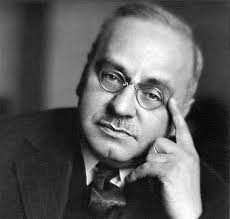
Open Adler's interactive page (graphs of influences, similar and opposing positions, and quotes)
Background
Alfred Adler
Born: February 7, 1870 in Rudolfsheim near
Vienna, Austria-Hungary (now Rudolfsheim-
Fünfhaus, Vienna, Austria)
Died: May 28, 1937 (aged 67) in Aberdeen,
Scotland
Main interests: Psychology, psychotherapy,
birth order, dreams, inferiority complex,
personality, community, education, family,
childhood
Influences: Sigmund Freud, Hans Vaihinger,
Friedrich Nietzsche, Pierre Janet, Immanuel
Kant, Rudolf Virchow, Jan Smuts
Influenced: Rollo May, Viktor Frankl, Abraham
Maslow, Albert Ellis, Frantz Fanon, Carl Rogers,
Lev Vygotsky, Julian Rotter, Jakob Klaesi, Rudolf
Dreikurs, Erich Fromm, Karen Horney, E. C.
Tolman, Aaron T. Beck, Harry Stack Sullivan,
Franz Alexander, Ian Suttie
From Wikipedia
Adler was an Austrian medical doctor, psycho- therapist, and founder of the school of individual psychology. His emphasis on the importance of feelings of belonging, relationships within the family, and birth order set him apart from Freud and other…. His earlier work focused on inferiori- ty, coining the term inferiority complex, an isolat- ing element which he argued plays a key role in personality development. Adler [approached each patient] as an individual whole, and thus he called his school of psychology "individual psychology."
Introductory Comments
For nearly a decade, Adler was a regular at Freud’s Wednesday-evening gatherings in Vienna, and in 1910 he became president of the Vienna Psychoanalytic Society. A year later he walked out, taking a band of followers with him, and the two men never reconciled. Both had placed childhood at the center of psychological development, but they might as well have been observing different species. Freud saw the child as a battleground of sexual drives seeking outlet. Those drives were channeled through the Oedipal drama, in which the little boy longs to possess his mother and eyes his father as a rival. Adler saw something simpler and far more recognizable: a small, vulnerable creature in a world of giants, troubled less by desire than by two painfully familiar questions: "How do I measure up?" and "Where do I belong?"
The therapeutic implications were striking. For Freud, adult neurosis grew from repressed childhood wishes, so treatment meant excavating the unconscious through long stretches of free association on the couch. Adler, who called his approach "individual psychology," was more pragmatic. He sat face to face with his patients and helped them see the mistaken goals behind their style of life. He then set about replacing their sense of inferiority with a sense of connection to and concern for others. Behind it all lay a simple observation: the child who feels inadequate often grows into an adult who feels the same. No mythological scaffolding required.
Some of Adler's Key Positions
Feelings of inferiority are universal and, in themselves, healthy. Every human being begins life small, weak, and dependent among people bigger and more capable, and the sense of falling short never quite fades. It is the engine of development, driving the effort to compensate, master difficulties, and grow.
Trouble begins when the feeling becomes overwhelming. It then hardens into an inferiority complex, a settled conviction of inadequacy that breeds timidity and dependence, or into its mirror image, a superiority complex of bluster and domination.
Three childhood circumstances especially invite this: physical weakness or illness, pampering, which robs a child of competence, and neglect, which teaches a child that he or she is unwanted. Discouragement does the rest, and the resulting "style of life" can persist well into adulthood.
Healthy striving is guided by social interest, a sense of belonging to and caring for the human community. Unhealthy striving seeks personal superiority at others' expense.
Neurosis, crime, addiction, and failed marriages stem from deficient social interest. Prevention therefore depends on encouragement: parents and teachers should be trained to foster cooperation and a concern for others in children.
Place in the History of Ideas
Adler's Place in History of Ideas
C. George Boeree: Alfred Adler postulates a single "drive" or motivating force behind all our behavior and experience. By the time his theory had gelled into its most mature form, he called that motivating force the striving for perfec- tion. It is the desire we all have to fulfill our potentials, to come closer and closer to our ideal. It is... very similar to the more popular idea of self-actualization. "Perfection" and "ideal" are troublesome words, though. On the one hand, they are very positive goals. Shouldn't we all be striving for the ideal? And yet, in psychology, they are often given a rather negative connotation. Perfection and ideals are, practically by definition, things you can't reach. Many people, in fact, live very sad and painful lives trying to be perfect!
Karl Popper: [Psychoanalysis] is an interesting psychological metaphysics..., but it never was a science. There may be lots of people who are Freudian or Adlerian cases: Freud himself was clearly a Freudian case, and Adler an Adlerian case. But what prevents their theories from being scientific in the sense here described is, very simply, that they do not exclude any... possible human behavior. Whatever anybody may do is, in principle, explicable in Freudian or Adlerian terms.... In contrast, most physical theories are... free of immunizing tactics and highly falsifiable to start with. As a rule, they exclude an infinity of conceivable possibilities.
Random Thoughts on Adler
Most of us assume, without much thought, that a situation "is what it is," and that our job is simply to absorb its blows. Adler thought otherwise. People, in his view, are less like cameras than like film critics: they don’t merely record events, they interpret them. The same rainy Saturday can be gloomy weather that wrecks the picnic, or perfect weather for a novel and a pot of tea. The same demanding boss can be a tyrant or a taskmaster worth learning from. Nor is this mere positive thinking. Adler's claim was more pointed. Experiences arrive as raw material, and each of us decides what they mean, usually without noticing the decision.
Adler pushed this further than many readers find comfortable. He denied that trauma, by itself, causes anything, and he held that people make of their experiences whatever suits their purposes. Here one may want to step off the train. A grim diagnosis, the death of someone we love, a genuine injustice: these carry a weight no reinterpretation can dissolve. The rain may be open to interpretation; the flood is not. Still, even a flood leaves a choice about the story told afterward. Losing a job may not be optional, but deciding whether it means "I am a failure" or "that chapter is closed" may be. And here Adler's sharpest insight returns. A tragic script often survives because it is useful, excusing its author from trying again. Rewriting it takes not a sunnier disposition but courage.
Influences
Adler was influenced by: Dostoyevsky, Freud, Janet, P., Kant, Nietzsche, Smuts, Jan, Vaihinger, Virchow, R.
Adler influenced: Alexander, F., Beck, Aaron T., Dreikurs, R., Ellis, Albert, Fanon, Frankl, Viktor, Fromm, Horney, K., Klaesi, Jakob, Maslow, A., May, Rollo, Rogers, Carl, Rotter, Julian, Sullivan, H.S., Suttie, Ian, Tolman, E.C., Vygotsky, Lev
Similar and opposing positions
Thinkers with similar positions:
- A. Maslow (People have an instinctive need to fulfill their innate potential.)
- Albert Ellis (Psychotherapy must change how people view their circumstances.)
- Carl Rogers (A positive self-concept is crucial in realizing one's full potential.)
- Freud (Interpreting dreams can be useful in understanding the psyche.)
- Fromm (Freud overstated role of sexual impulses and motives in psychology.)
- Irigaray (The power dynamics between men & women can be harmful to both.)
- Nietzsche (Striving for superiority is a fundamental part of human nature.)
- Vaihinger (Though fictions are untrue, they have great practical importance.)
Thinkers with opposing positions:
- Borges (Attempting to explain the self is a self-defeating quest for integration.)
- Brentano (There is no such thing as an unconscious mental act.)
- Freud (The social realm plays a minimal role in shaping human psychology.)
- Jung (The collective, not personal, unconscious is most determinant.)
- Marcuse (The realization of man's erotic nature is liberation for humanity.)
- Rand (An Individual should exist for her own sake, not for the community.)
- Skinner (Behavior is a matter of stimuli & responses, not psyche or inner states.)
- Viktor Frankl (To find meaning in one's life is one's primary motivation.)
What others said about Adler
- C. George Boeree: His consideration of the effects of siblings and the order in which they were born is probably what Adler is best-known for.
- Mary C. McCluskey: Adler’s work was, in part, an educational movement geared towards bringing people together with its emphasis on the healing power of connection.
- W. A. White: Adler thought that the basic psychological element of neurosis was a sense of inferiority and that individuals suffering with the symptoms of this phenomenon spent their lives trying to overcome the feelings without ever being in touch with reality.
- C. George Boeree: [Adler believed the] superiority complex involves covering up your inferiority by pretending to be superior. If you feel small, one way to feel big is to make everyone else feel even smaller!
- Albert Ellis: [Adler is] the true father of modern psychotherapy.
- Henri Ellenberger: It would not be easy to find another author from which so much has been borrowed on all sides without acknowledgement than Alfred Adler.
- Russell Jacoby: Adler’s later thought succumbs to the worst of his earlier banalization. It is conventional, practical, and moralistic. “Our science... is based on common sense.” Common sense, the half-truths of a deceitful society, is honored as the honest truths of a frank world.
- Viktor Frankl: [I believe] the striving to find a meaning in one's life is the primary motivational force in man. That is why I speak of a will to meaning in contrast to... the will to power on which Adlerian psychology... is focused.
Schools: Holism
Main interests: Childhood, Community, Desire, Dreams, Education, Family, Free/Unfree Will, Happiness, Health, Human Will, Power, Psychoanalysis, Psychology, Will
Adler's answers to philosophical questions
Education
"The educator must believe in the potential power of his pupil, and he must [try to help] his pupil experience this power."
Ethics
"Meanings are not determined by situations, but we determine ourselves by the meanings we give to situations."
Language
"Speech [exists] only in a community; it is a product of communal life, a bond between the individuals of the community."
Metaphysics
Neither environment nor heredity are determining factors. Each of us has a creative power that adapts to these influences.
Psychology
We often remain largely unconscious of the central goals and fictions that motivate our behavior throughout our lives.
We all have a "will to power" that serves as a creative force in our lives and that encourages us to change for the better.
"... psychological compensation [requires] that the stronger the feeling of inferiority, the higher the goal for personal power."
"But the concept that character and personality are inherited... hinders the educator in his task and cramps his confidence."
Our childhood experiences are the primary cause of our self-image & of the psychological problems we may have developed.
Religion and Theology
God, with his many perfections, "is the most brilliant manifestation of [our own] goal of perfection."
Sex and Gender
It's crucial to understand the power dynamics between men & women, since they play a big role in developing our self-image.
Sexual prejudice has so distorted our thinking that now everything superior is "masculine," everything inferior "feminine."
We must not educate girls in ways that stigmatize them. Too often feelings of inferiority are linked to gendered assumptions.
Society
"Social feeling means above all a struggle for a communal form... when humanity has attained its goal of perfection...."
Social feelings encourage loyalty to our clan, but can later evolve to include loyalty to our nation and even to humanity itself.
All "species whose members are incapable of facing the battle for self-preservation, gather new strength through herd life."