Louis Althusser (1918 - 1990)
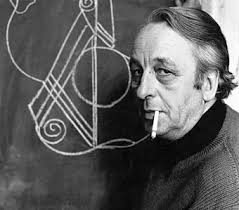
Open Althusser's interactive page (graphs of influences, similar and opposing positions, and quotes)
Background
Louis Althusser
Born: 16 October 1918 in Birmendreïs, French
Algeria
Died: 22 October 1990 (aged 72) Paris, France
Schools: Marxism, Structuralism, Structural
Marxism
Main interests: Politics, economics, ideology
Influences: Marx, Lenin, Lacan, Gramsci,
Machiavelli, Spinoza, Canguilhem, Bachelard,
Freud, Rousseau, Montesquieu, Kojève,
Saussure, Derrida, Hegel, Lévi-Strauss, Mao
Zedong, Durkheim, Epicurus, Lucretius, Brecht
Influenced: Foucault, Deleuze, Alain Badiou,
Jacques-Alain Miller, Žižek, Étienne Balibar,
Judith Butler, Anthony Giddens, Terry Eagleton,
Perry Anderson, D. Lecourt, Nicos Poulantzas,
Pierre Macherey, Stephen Resnick, Richard D.
Wolff, Giulio Angioni, Pierre Bourdieu, Jacques
Ranciere, Antonio Negri, G. A. Cohen
From Wikipedia
Althusser was a long-time member and some- times a strong critic of the French Communist Party.... His arguments and theses were set against the threats that he saw attacking the theo- retical foundations of Marxism. These included both the influence of empiricism on Marxist theo- ry, and humanist and reformist socialist orienta- tions which manifested as divisions in the Europe- an communist parties, as well as the problem of the cult of personality and of ideology. Althusser is commonly referred to as a structural Marxist….
Introductory Comments
Althusser set out to rescue Marxism from what he saw as its sentimental side - the humanism, the talk of alienation, the residual Hegelian ro- manticism - and replace it with something more "scientific." For Althusser, society is a complex structure of interlocking levels - economic, po- litical, and ideological - each with its own dy- namics. His most influential contribution was his theory of ideology: not as mere false con- sciousness or a fog of bad ideas, but as a materi- al force embedded in institutions - schools, churches, media, family - that actively produces the kinds of people capitalism needs. Ideology, in his account, doesn't just deceive people; it constitutes them, "interpellating" individuals into roles they then inhabit as though they had freely chosen them. It is, one might say, the invisible furniture of the mind - you don’t no- tice it because you're already sitting in it.
But here lies a tension that Althusser never fully escaped, and that was already latent in Marx's own later work. If ideology is powerful enough to construct the very subjects who participate in economic life - shaping not just what people believe but who they are - then in what sense is Marxism's economic base still foundational? The tension is clear: either material conditions call the tune, or ideology calls the shots. Trying to have it both ways can feel like insisting the puppet and the puppeteer are each pulling at the strings and equally in charge.
Some of Althusser's Key Positions
Marx's writings are frequently misunderstood and typically underestimated because they contain an "epistemological break" - a new way of thinking - that even Marx did not fully comprehend. This new epistemology rejects the distinction between subject and object, and it rejects all forms of empiricism based on the subject/object tradition. This tradition assumes that the experiencing subject encounters an objective world and gradually discovers the nature of that world through observation and analysis. The empiricist believes that truth is found in the correspondence between subjective thought and objective reality.
But Marx realized that knowledge does not lie in this mundane correlation between subject and object or mind and matter. Marx's historical materialism relies on its own energetic and internal methods of proof: the theory of class struggle, the belief in dialectical development, the ideal of economic justice. In other words, for Marx truth lies not in empirical data, but in ideological clarity.
This is why it is a mistake to think of Marx as an economic determinist. The most powerful forces at work in history are desires, values, intentions, preferences, and judgments. That is, Marx realized that thoughts and beliefs drive history much more then do economic and material forces.
Place in the History of Ideas
Althusser's Place in History of Ideas
William Lewis: Due to apparent reversals in his theoretical positions, to the ill-fated facts of his life, and to the historical fortunes of Marxism in the late twentieth century, this [earlier] intense interest in Althusser’s reading of Marx did not survive the 1970s. [However], the theory of ideology Althusser developed within it has been broadly deployed in the social sciences and humanities and has provided a foundation for much “post-Marxist” philosophy. In addition, aspects of Althusser’s project have served as inspiration for Analytic Marxism as well as for Critical Realism.... Though this influence is not always explicit, Althusser’s work and that of his students continues to inform the research programs of literary studies, political philoso- phy, history, economics, and sociology.
Tony Judt: Althusser's work and his life, with his drugs, his analysts, his self-pity, his illusions, and his moods, take on a curiously hermetic quality. He comes to resemble some minor medieval scholastic, desperately scrabbling around in categories of his own imagining…. From Althusser's musings, however, nothing followed. They were not subject to proof and they had no intelligible worldly application, except as abstruse political apologetics. What does it say about modern academic life that such a figure can have trapped teachers and students for so long in the cage of his insane fictions, and traps them still?
Random Thoughts on Althusser
Althusser's attempted solution to the tension between economics and ideology (see Introduc- tory Comments) was characteristically both in- genius and slippery. He introduced the concept of "overdetermination" to argue that every historical moment is shaped by the convegence of multiple, relatively autonomous forces. The economy, he conceded, is "determinant in the last instance," but then added with a wink that launched a thousand dissertations, the last instance "never comes." In other words, the economic base sets the broad limits of the possible, but within those limits, ideology and politics have real and independent power.
The general consensus, at least among non-Continental philosophers, now seems to be that Althusser's philosophy is in important respects too structurally rigid, too hostile to human agency, and haunted by a central contradiction it never quite resolved. And yet his theory of ideology's constitutive role has proven remark- ably durable, migrating far beyond orthodox Marxism into the social sciences and humanities at large. In literary theory, cultural studies, po- litical analysis, feminist theory, and media stud-ies, Althusser’s fingerprints are everywhere - even when his name is not. In the end, Althus- ser may have lost the philosophical argument but won the cultural war - a fate that, for a theorist of ideology's quiet power, carries a certain poetic justice.
Influences
Althusser was influenced by: Bachelard, Canguilhem, Derrida, Freud, Gramsci, Kojève, Lacan, Lenin, Levi-Strauss, Machiavelli, Marx, Rousseau, Saussure, Spinoza
Althusser influenced: Badiou, Balibar, E., Bourdieu, Butler, Judith, Deleuze, Eagleton, T., Foucault, Giddens, A., Poulantzas, Ranciere, J., Wolff, Richard, Zizek
Similar and opposing positions
Thinkers with similar positions:
- Butler, Judith (Ideology is a linked set of beliefs to justify those with power.)
- Durkheim (Collective consciousness produces a society & holds it together.)
- Durkheim (Society shapes individuals more than individuals shape society.)
- Fichte (The awareness of other rational beings leads to our own self-awareness.)
- Freud (Much of our behavior springs from unconscious motives and beliefs.)
- Gramsci (Often the ruling class imposes its worldview on the entire culture.)
- Lacan (The ego is a fictional character in stories we learn to tell ourselves.)
- Marx (Economic, ideological & politicolegal practices all interconnect.)
- Montesquieu (Material factors, such as climate, help shape society and politics.)
- Veblen (The economy is closely linked to social and cultural practices.)
- Zizek (We have absorbed our ideologies so completely we no longer see them.)
Thinkers with opposing positions:
- Daniel Bell (We are entering a post-ideological society in a parochial world.)
- Descartes (Self-consciousness is the inevitable result of introspection.)
- Einstein (Causality is universal. God does not play dice with the universe.)
- Hegel (History follows the dictates of reason and the dialectics of ideas.)
- Locke (Knowledge springs from experience of the actual world around us.)
What others said about Althusser
- Andrew Ryder: For Althusser, class struggle takes place within ideology, and Marxist science can discern this process…..
- Tony Judt: He was a guru, complete with texts, a cult, and true believers; and he showed occasional insight into the pathos of his followers, noting that they imitated his "smallest gestures and inflections."
- William Lewis: [Althusser argued] that regimes or states are able to maintain control by reproducing subjects who believe that their position within the social structure is a natural one. Ideology, or the background ideas that we possess about the way in which the world must function and of how we function within it is, in this account, understood to be always present.
- Peter Beilharz: After Althusser, it was inadmissible for Marxists to cut corners. They were now compelled to deal with their own theoretical heritage. A few clichés concerning the ubiquity of alienation… would no longer do.
- William Lewis: According to Althusser, most activity labeled "philosophy" is really a type of ideological production.
- Richard Wolin: … Althusser argued against traditional interpretations of Marx as an inveterate economic determinist by demonstrating the "quasi-autonomous" role accorded to politics, law, and ideology in Marx’s later writings.
- Tony Judt: It is not because he was mad that he was a mediocre philosopher; indeed, the recognition of his own intellectual mediocrity may have contributed to his depressions, and thence to his loss of sanity. If there is something humiliating about the Althusserian episode in intellectual history then, the humiliation is not his alone.
- Michel Lee: Within this framework, Althusser introduces the concept of interpellation, otherwise known as "hailing." Ideologies "call out" or "hail" people and offer a particular identity, which they accept as "natural"….
Schools: Continental Philosophy, Critical Theory, Dialectical Materialism, Marxism, Marxist Humanism, Neo-Marxism, Structuralism, Western Marxism
Main interests: Alienation, Economics, Ideology, Language, Politics, Popular Culture
Althusser's answers to philosophical questions
Economics
Mathematics & physics preceded Marx. "Marx opened up a third continent to scientific knowledge: the continent of History."
History
Though history in itself, separate from ideology, is a fundamental process , it is a "process without a subject or goal."
Historical events are shaped by multiple contradictions across different social levels, not reducible to a single cause.
History is driven by structures and processes, not by individuals - no matter how great they may appear to contemporaries.
Nature
Humans have no universal essence: The term "humanity" is itself simply an ideological construct.
Philosophy
"Philosophy is, in the last instance, class struggle in the field of theory."
"In the battle that is philosophy all the techniques of war, including looting and camouflage, are permissible."
"… a philosophy teacher is a petty bourgeois. When he opens his mouth, it is petty-bourgeois ideology that speaks."
Psychology
Social & political ideologies shape how people see themselves and the world around them, often without their awareness.
Society
Ideology "hails" individuals, constituting them as subjects who recognize themselves within the dominant social order.
Society should be understood as a complex structure of relatively autonomous levels (economic, political, and ideological).
"Ideology… is indispensable in any society if men are to be... transformed and equipped to respond to [societal demands]."
"Ideology has very little to do with 'consciousness' - it is profoundly unconscious."