Anselm (c. 1033 - 1109)
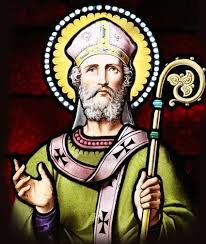
Open Anselm's interactive page (graphs of influences, similar and opposing positions, and quotes)
Background
Anselm of Canterbury
Born: c. 1033 in Aosta, Upper Burgundy (now in
Italy near boarder with France)
Died: 21 April 1109 in Canterbury, England
Buried: Canterbury Cathedral
Occupation: Monk, prior, abbot, archbishop
Canonized: 1163
Notable ideas: His ontological argument for the
existence of God, his doctrine of the
atonement, his view on the complex nature of
will and its involvement in free choice, his view
on the nature of evil as negation or privation,
his views on the implications of original sin
Influences: Plato, Aristotle, Boethius, Plotinus,
Augustine, Pseudo-Dionysius, John Scotus
Eriugena, Lanfranc of Canterbury
Influenced: Aquinas, Descartes, Bonaventure,
John Duns Scotus, William of Ockham, Leibniz,
Hegel, Spinoza
From Wikipedia
Anselm was an Italian Benedictine monk, abbot, philosopher and theologian of the Catholic Church, who held the office of Archbishop of Canterbury…. Beginning at Bec, Anselm composed dialogues and treatises with a rational and philosophical approach, which have sometimes caused him to be credited as the founder of Scholasticism. Despite his lack of recognition in this field in his own time, Anselm is now famed as the originator of the ontological argument for the existence of God and of the satisfaction theory of atonement.
Introductory Comments
As Archbishop of Canterbury, Anselm became a pawn in the high-stakes game between the King of England and the Pope - part of the Investiture Controversy that roiled Europe in the late eleventh and early twelfth centuries. The quarrel was about who held the power to appoint Church officials, bishops and abbots among them: local rulers such as kings and nobles, or the Pope? In England, both William II and Henry I wanted that power for themselves. And, adding injury to insult, William II wanted a slice of the Church's revenues besides.
In this long tug-of-war, Anselm found himself bounced about Europe like an obedient tennis ball: twice exiled from England, twice sent to Rome to seek the Pope's guidance, and three times back to England to regain the office of Archbishop. Through all the bouncing he never wavered in defending the rights and privileges of the Church. This took some nerve. About sixty years after Anselm's death, another Archbishop of Canterbury, Thomas Becket - the very man said to have petitioned Rome to canonize Anselm - landed in the same contest between King and Pope. But Henry II had little patience for tennis: rather than volley Becket back across the Channel, he simply had him murdered. Game, set, and match to the King - though two years later the sainthood went to Becket, and a year after that Henry was doing public penance at Canterbury, ritually whipped by monks and bishops beside Becket's very tomb. Correction: Game, set, and saint!
Some of Anselm's Key Positions
Christian doctrine is not only revealed truth, it is also a rational and coherent set of ideas. As theologians such as Augustine and Pseudo-Dionysius can be reconciled with the teachings of Platonists, so can Christian faith in general be reconciled with reason.
Though faith precedes reason ("I do not seek to understand that I may believe but believe that I might understand"), reason can both clarify and expand upon faith. Nor is this clarification and expansion at all impious, since a true love of God naturally seeks a deeper understanding of God.
To begin with what is most fundamental, reason can prove the very existence of God: Since existence is in itself a positive attribute, that which lacks existence would to that extent also lack perfection. But God is by defintition the most perfect being imaginable and therefore cannot be lacking in any way. Hence, God exists.
Reason also proves to us that God must be "just, truthful, happy, and whatever it is better to be than not to be." This includes merciful, wise, good, loving, omnipotent, and eternal.
As to humanity, we are anything but perfect. In fact, our original sin is so great that we on our own cannot atone for it. Only God himself in the figure of Jesus can atone for it through his ultimate sacrifice - the crucifixion of Christ.
Place in the History of Ideas
Anselm's Place in History of Ideas
William Turner: As a philosopher [Anselm] is best known by his ontological argument, which is his most important contribution to philosophy. The argument is one of many indications of the similarity of our philosopher's method and spirit to the method and spirit of St. Augustine. St. Anselm has been styled "the last of the Fathers," "the Augustine of the eleventh century." And indeed one cannot fail to observe the tendency of his mind to take the Augustinian, which is ultimately the Platonic, view of philosophical method, - to proceed by way of descent from the higher to the lower, rather than by way of ascent from the lower to the higher, in human thought and human knowledge. Still, our saint is a genuine Scholastic... a precursor of Albert and St.Thomas....
Hegel: Anselm may be regarded from this point of view as quite specially the founder of scholastic theology. For the thought of proving through a simple chain of reasoning what was believed - that God exists - left him no rest day and night, and tortured him for long. At first he believed his desire to prove the divine truths through reason to be a temptation of the devil, and he was in great anxiety and distress on that account; finally, however, success came to him by the grace of God in his Proslogium. This is the so-called ontological proof of the existence of God which he set forth, and which made him specially famous.
Random Thoughts on Anselm
Anselm is most famous for his ontological proof for the existence of God. In a nutshell: since God is "that than which nothing greater can be conceived," a being that possessed every divine perfection but lacked existence would not, after all, be the greatest conceivable being. We can always conceive of something greater: a being with all those same perfections plus actual existence. Therefore, the greatest conceivable being must exist. Hence, God exists.
Do you feel like you've just been conned? But where exactly is the con? A contemporary of Anselm's, Gaunilo, objected that a proof of God's existence cannot rest on human conceptions, since our conception of God is necessarily incomplete. Two centuries later, Aquinas argued that we cannot reason directly from God's essence to His existence because we do not know God's essence. Five centuries after that, Hume insisted that existence can never be established by a priori reasoning alone. Then Kant famously objected that existence is not a predicate. And so it has gone for nearly a thousand years. Philosophers keep lining up to deliver the knockout punch, yet the damn argument refuses to lie down on the canvas.
Perhaps that is because most people are far surer of God's existence - or nonexistence - than of their ability to prove or disprove God's existence. And so, the ontological argument may stagger under the blows, but it never throws in the towel.
Influences
Anselm was influenced by: Aristotle, Augustine, Boethius, Eriugena, Lanfranc, Paul of Tarsus, Plato, Plotinus, Pseudo-Denys
Anselm influenced: Aquinas, Bonaventure, Descartes, Duns Scotus, Hegel, Leibniz, Ockham, Spinoza
Similar and opposing positions
Thinkers with similar positions:
- Albertus Mag. (Reason cannot replace faith, but can work together with faith.)
- Aquinas (Jesus Christ suffered crucifixion as an atonement for human sin.)
- Boethius (God's perfect foreknowledge is compatible with human free will.)
- Descartes (God's existence is inferable from the mere idea of a Perfect Being.)
- Duns Scotus (In our concept of things, essence & existence are inseparable.)
- Gassendi (Even if universals existed, we would be incapable of knowing them.)
- Jesus (People must repent their sins and devote themselves completely to God.)
- Maimonides (God is all good. Evil is not a real force - just the absence of good.)
- Paul of Tarsus (Our faith must focus on the centrality of Christ as Redeemer.)
Thinkers with opposing positions:
- Dawkins (We, not God, are responsible for giving life meaning and purpose.)
- Descartes (Philosophy should begin with doubt or difficult questions, not faith.)
- Diderot (The universe is simply matter in motion, bound by laws of nature.)
- Kant (The existence of God cannot be deduced from the definition of God.)
- Maistre (Evil is real and exists because of its place in the divine plan.)
- Pseudo-Denys (God is beyond reason. We know what He isn't, not what He is.)
- Voltaire (The Catholic Church has often been guilty of oppression & corruption.)
What others said about Anselm
- Wallace Matson: Anselm [following Augustine] held that reason without faith is worthless. But he taught also that with faith, reason is unlimited.
- Anthony Gottlieb: Like most of his contemporaries, [Anselm] had little interest in philosophical topics for their own sake, and was certainly never tempted to stretch a doctrinal point in order to make better sense of it.
- Ralph McInerny: [Anselm argued] that no Catholic should entertain the possibility that what the Church believes and confesses is untrue; rather, holding tenaciously to the faith, humbly loving and living according to its truth, he can seek reasons why it is so. If understanding be achieved, one should thank God; if [not], one must [still accept church doctrine].
- Copleston: ... St. Anselm asserts that in a certain sense God alone is. The statement that all creatures are God refers primarily to their eternal presence in God, in the divine intellect....
- Wilhelm Gottlieb Tennemann: [In his ontological argument for God's existence] Anselm has laid the first formal ground of scholastic theology.
- Russell: Saint Anselm... is in the Platonic rather than the Aristotelian tradition. For this reason, he has not the distinctive characteristics of the philosophy which is called "scholastic," which culminated in Thomas Aquinas.
- Hegel: [Anselm's] ontological proof, which is the first properly metaphysical proof of the existence of God, consequently came to mean that God as the Idea of existence which unites all reality in itself, also has the reality of existence within Himself; this proof thus follows from the Notion of God, that He is the universal essence of all essence.
- Anthony Kenny: [Anselm said amends for Adam's sin] can only be adequate if it is made by one who is human (and therefore an heir of Adam) and also divine (and therefore capable of... infinite recompense). Hence... the Incarnation.
Schools: Augustinianism, Christian Theology, Medieval Realism, Scholasticism, Voluntarism
Main interests: Faith, Free/Unfree Will, Immortality, Religion, Spirituality, Theology
Anselm's answers to philosophical questions
Epistemology
We can trust reason, as long as we also have faith. "Reason and faith are not enemies, but partners in the pursuit of truth."
Ethics
"In seeking God, we find fulfillment that surpasses all earthly pleasures."
Language
Language is a system of signs. As such, language or grammatical forms can mislead us in a number of ways.
Metaphysics
Platonic ideas are real essences or universals and existed long before all particular things.
Free will is seen in our choice to sin or not sin. However, after the Adams's Fall, man needs divine grace to avoid all sin.
Nature
Man is God's creation: "God has made nothing more valuable than rational existence capable of enjoying him."
Psychology
"[E]scape for a little while from the tumult of your thoughts…. Abandon yourself for a little to God and rest for a little in Him."
Religion and Theology
Christianity rests on revelation. However, after faith accepts what is revealed, reason may seek further understanding.
"To seek God for his own sake, rather than for anything that may be gained from him, is the mark of true devotion."
Since God is the most perfect being and since a being that lacked existence would also lack perfection, God must exist.
God is all that is better to be than not to be: merciful, wise, good, just, loving, immaterial, omnipotent and eternal.
Faith comes first, then comes reason. Where reason seems to contradict or undermine faith, reason must bow to faith.
God's power does not mean we are unfree. "God does not impose His will upon us, but invites us to align our wills with His."
Though holy scripture must be accepted on faith, we may use reason to explain & expand upon what scripture teaches.