William Ockham (1285 - 1347)
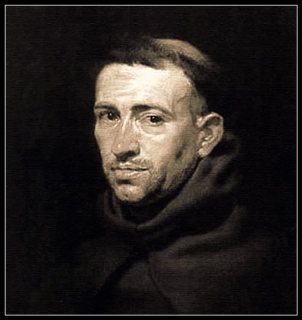
Open Ockham's interactive page (graphs of influences, similar and opposing positions, and quotes)
Background
William of Ockham
Born: 1285 in Ockham, Surrey, England
Died: 1347 in Munich, Bavaria, Holy Roman
Empire
Religion: Roman Catholicism
Era: Medieval philosophy
Schools: Scholasticism, Voluntarism,
Nominalism
Main interests: Metaphysics, epistemology,
theology, logic, ontology, politics
Notable ideas: Occam's razor, nominalism
Influences: Aristotle, Aquinas, Duns Scotus,
Peter Abelard, Petrus Aureolus, Durandus of
Saint-Pourçain, Anselm, Avicenna, Boethius,
Peter John Olivi, Peter Lombard
Influenced: Medieval science, Willard Van
Orman Quine, John Wycliffe, Descartes,
Geoffrey Chaucer, François Rabelais, William
Crathorn, William Rowan Hamilton, Luther
From Wikipedia
Ockham was an English Franciscan friar, scholastic philosopher, apologist, and Catholic theologian, who is believed to have been born in Ockham, a small village in Surrey. He is considered to be one of the major figures of medieval thought and was at the center of the major intellectual and political controversies of the 14th century. He is commonly known for Occam's razor, the methodological principle that bears his name, and also produced significant works on logic, physics and theology.
Introductory Comments
Born in a humble Surrey town and, while still a boy, "given" to the Franciscan Order, Ockham seemed an unlikely candidate to become a pope's hated enemy and an emperor's valued friend. Yet that is what he became, and he did it through the power of his pen alone. First came his assault on scholastic realists and their universal essences hovering behind all sorts of things. Next came his attack on Scholasticism's logic, which he increasingly regarded as overgrown and unreliable. Next, his unorthodox commentary on Peter Lombard's Sentences, the standard theological textbook of the age. Next, his defense of apostolic poverty, which amounted to a sharp criticism of the Church's opulence. And then - as if courting excommunication - Ockham wrote treatises arguing that even a pope could fall into heresy and that secular rulers answered to no one in Rome.
What explains such willfulness? By the lights of Ockham's own philosophy, nothing does - at least nothing causal. The human will is the product of nothing but itself. For Ockham, that meant the will is utterly free. Being free, the will can weigh what the intellect provides without being swayed by it. This "power of indifference" leaves the will somehow immune to influence, forever free to will whatever it wills. Yes, it is all a bit circular: the will is free because it wills freely. But for a man as willful as Ockham, the human will may have seemed too fundamental to explain and too powerful to rein in.
Some of Ockham's Key Positions
On basic theological questions, answers come through faith, not reason. Reason cannot demonstrate the immortality of the soul, and while a few weak arguments may point toward a first conserving cause, they never reach the God of faith - the existence, unity, and infinity of a single divine being. These truths, and others like them, are confirmed by revelation alone.
This is not to say reason has no work to do. It plays a real role in the philosophical questions that circle around religion, such as the status of universals and the place of will in both God and man.
Reason, though, needs principles to keep it on track. First among these is the principle of simplicity: the best explanation is the one that rests on the fewest assumptions (Ockham's razor).
Apply that principle to the old puzzle of universals and a sharp conclusion follows: only individual things actually exist. What we call universals are merely concepts in the mind. They let us label and make sense of the things around us, but they enjoy no existence outside our heads.
As for will, Duns Scotus was right: will alone drives the actions of both God and man. God's will answers to no constraint or limitation whatever. Human beings are more hemmed in, since our capacities are finite; yet we too remain free, for our actions spring entirely from our own will.
Place in the History of Ideas
Ockham's Place in History of Ideas
Johann Erdmann: His chief service is that he prepared the way for the banishment of a great deal of trash from theology. [H]e rejects a num- ber of distinctions which had hitherto been drawn; for instance, between the nature and the attributes of God.... The same tendency to simplification is shown by William in connection with his consideration of... man. He denies the plurality of the powers of the soul, maintains the unity of understanding and will, as well as that of the vegetative and sensitive soul.
Copleston: ... one of Ockham's main preoccupa- tions as a philosopher was to purge Christian theology and philosophy of all traces of Greek necessitarianism, particularly of the theory of essences, which in his opinion endangered the Christian doctrines of the divine liberty and om- nipotence. His activity as a logician and his at- tack on all forms of realism in regard to univer- sals can thus be looked on as subordinate in a sense to his preoccupations as a Christian theo- logian.... Ockham was a Franciscan and a theo- logian: he should not be interpreted as though he were a modern radical empiricist.
William J. Courtenay: And from the standpoint of the philosophy of the 1980s and 1990s, Ock- ham's interest in terminist logic, linguistic theo- ry, and semiotics has placed him in the fore- front of those medieval thinkers used as sources in contemporary philosophical discussion.
Random Thoughts on Ockham
Ockham's Razor is a methodological principle: the simplest explanation for a phenomenon - the one that makes the fewest assumptions - is the best. But the principle carries that vexatious proviso, "all things being equal." In science, the proviso means the simplest explanation must yield predictions as accurate and useful as those of its more complex rivals. What, though, does it mean for philosophy? Philosophical explanations do not issue in precise, measurable predictions. If they did, they would be science. So how can we show that the simplest explanation of a philosophical problem is at least as adequate as its more elaborate competitors?
Most philosophers answer that the proviso demands equal standing in coherence, consistency, explanatory power, and elegance. Where the simplest explanation measures up on these counts, it wins. But why that last one? Why should elegance matter at all? A philosophical explanation is not a work of art - except that, in some sense, it is. Philosophy is a form of humanistic discourse, and humanistic discourse is a kind of art. Seen this way, elegance may be the most telling virtue of all, for it gathers up the rest: coherence, consistency, explanatory power, and, yes, simplicity. Consider, for example, Descartes' cogito - "I think, therefore I am." It is so spare and self-evident that it has anchored philosophy for four centuries. But the allure of elegance can also mislead. Leibniz's "best of all possible worlds" charmed a generation before Voltaire laughed it off the stage.
Influences
Ockham was influenced by: Abelard, Anselm, Aquinas, Aristotle, Aureolus, P., Avicenna, Boethius, Duns Scotus, Lombard, P., Olivi, Peter, Paul of Tarsus, Saint-Pourcain
Ockham influenced: Chaucer, Crathorn, W., Descartes, Hamilton, W.R., Julian of N., Luther, Molinet, Jean, Quine, Rabelais, Skelton, John, Suarez, Wycliffe
Similar and opposing positions
Thinkers with similar positions:
- Abelard (Universals don't exist independent of concrete, individual things.)
- Al-Ghazali (Though God's foreknowledge is perfect, free will is still possible.)
- Bergson (Freedom is a fundamental component within life and duration.)
- Calvin (Jesus Christ suffered crucifixion as an atonement for human sin.)
- Dante (There should be a complete separation between Church and State.)
- Duns Scotus (God's foreknowledge is compatible with contingency of things.)
- Gassendi (Even if universals existed, we would be incapable of knowing them.)
- Pascal (God is infinitely incomprehensible. We can't reason our way to God.)
- St. Bernard (Faith, not reason, is the only foundation of Christian beliefs.)
Thinkers with opposing positions:
- Augustine (Being overwhelmed by sinfulness, we aren't free to choose good.)
- Berlin (Moral values may be equally valid yet also incompatible at times.)
- Dennett (Evolution can account for the origin of morality in our species.)
- Diderot (The universe is simply matter in motion, bound by laws of nature.)
- Eriugena (Philosophy is not in the service of theology. Reason precedes faith.)
- Holbach (Religion is an impediment to the moral advancement of humanity.)
- More (The state should support religioius faith and punish heretics.)
What others said about Ockham
- Anthony Gottlieb: But Ockham argued that talk of... essences is superfluous. It does not add anything to our understanding the phenomena concerned....
- Johannes Hirschberger: [Ockham claimed that] if there are no universal ideas in God, the will of God is entirely free.... The will is no longer required to carry out what has been prescribed for it; it can enfold itself in all its omnipotence.
- William Turner: In philosophy William advocated a reform of Scholasticism both in method and in content. The aim of this reformation movement in general was simplification.... With this tendency... was united a very marked tendency towards skepticism - a distrust, namely, of [our] ability... to reach certitude in the most important problems of philosophy.
- Ralph McInerny: [Ockham said] abstract knowledge expressed in judgments involving universal concepts makes no assertion [as] to factual existence; only when linked with a judgment of intuitive cognition is such a claim involved.
- Russell: By... studying logic and human knowledge without reference to metaphysics and theology, Ockham's work encouraged scientific research.
- Copleston: [Ockham believed] only individual things exist.... To assert the extramental existence of universals is [therfore] to commit the folly of asserting a contradiction; for if the universal exists, it must be individual.
- Johann Erdmann: In agreement with the stricter division of his Order..., [Ockham] had always deduced from the humility of Christ and of the Apostles the conclusion that the pope ought not to possess temporal power. To this was added later the conviction that as the pope must be subject to princes in worldly affairs, they ought to be subject to the Church in spiritual matters.
- Roger Scruton: Ockham was to anticipate many of the major conceptions of later philosophers, including Hume’s theory of causality, Leibniz’s theory of relations, and the attack on absolute space and time.
Schools: Christian Theology, Deontological Ethics, Fideism, Natural Law Theory, Nominalism, Scholasticism, Voluntarism
Main interests: Epistemology, Faith, Free/Unfree Will, Immortality, Logic, Metaphysics, Politics, Theology, Universals
Ockham's answers to philosophical questions
Economics
After the Fall, God gave man two secular powers: the right to set up earthly rulers and the right to private property.
Epistemology
Our perceptions directly perceive objects of our attention, but then "abstracts" from these objects certain qualities.
"For logic is the most useful tool of all the arts. Without it no science can be fully known."
When searching for the truth: "All things being equal, the simplest solution tends to be the best one."
Ethics
Since our actions reflect the nature of our will, they should be judged by their intentions, not their external manifestations.
Metaphysics
Universals do not exist in a separate realm. They are simply the ideas or concepts of the human mind.
Though humans, unlike God, have limited capabilities, our actions are free in that they spring entirely from our will.
Philosophy
Logic is the best tool we have in philosophy. However, regarding certain religious matters, we must rely on revelation.
Political Philosophy
The king must be held accountable for his actions. He should serve the interests of the people, not special interests.
Church and state are in some respects separate, but the emporer has ultimate control of the church within his domain.
Psychology
Human will, like God's will, has no constraints. That is to say, human will is completely free and subject only to itself.
Religion and Theology
God's omniscience and foreknowledge are not causative and in no way diminish our free will.
Science
"When you have two competing theories that make exactly the same predictions, the simpler one is the better."
Though mathematics is useful in natural philosophy, mathematical rules and theorems exist only inside the human mind.