Joseph de Maistre (1753 - 1821)
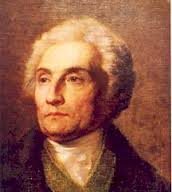
Open Maistre's interactive page (graphs of influences, similar and opposing positions, and quotes)
Background
Joseph de Maistre
Born: 1 April 1753 in Chambéry, Kingdom of
Sardinia, Duchy of Savoy (now part of France)
Died: 26 February 1821 (aged 67) in Turin,
Kingdom of Sardinia (now part of Italy)
Schools: Conservatism, Counter-Enlightenment,
Ultramontanism, Traditionalism, Mysticism
Main interests: Political Philosophy, politics,
religion
Influences: Plato, Plutarch, Giambattista Vico,
Aristotle, Thomas Aquinas, Edmund Burke,
Louis de Bonald, Nicolas Malebranche, Origen,
Rousseau, Hobbes, Augustine, Jacques-Bénigne
Bossuet, Cicero, Francis de Sales
Influenced: Louis de Bonald, Saint-Simon, Karl
Ludwig von Haller, Juan Donoso Cortés, Charles
Baudelaire, Louis Veuillot, Emil Cioran, Carl
Schmitt, Julius Evola, Isaiah Berlin, Tolstoy,
George Saintsbury, Charles Maurras, Comte
From Wikipedia
Maistre was a Savoyard philosopher, writer, lawyer, diplomat, and magistrate. One of the forefathers of conservatism, Maistre advocated social hierarchy and monarchy in the period immediately following the French Revolution…. A key figure of the Counter-Enlightenment and a precursor of Romanticism, Maistre regarded monarchy both as a divinely sanctioned institution and as the only stable form of government. He called for the... ultimate authority of the Pope in both spiritual and temporal matters.
Introductory Comments
Like Yuri Zhivago in Pasternak's novel, Joseph de Maistre was born into comfort and cultivation and lived to watch his world turned upside down and inside out - those at the bottom suddenly on top, those who had held power now out of it, if not dead. But where Zhivago stayed and was slowly ground down by his revolution, Maistre ran from his. When the armies of the French Republic marched into Savoy in 1792, he abandoned his house, his lands, and his seat on the Senate, and began a long life in exile. And he differed from Zhivago in one more respect. Maistre had a very big axe to grind, and he was eager to swing it.
The axe was aimed less at the revolutionaries than at the philosophers who, Maistre claimed, had made the revolution possible and the Reign of Terror inevitable. His argument went like this: Religious and political institutions are gifts from God, and their origins lie beyond human understanding. They are to be cherished, not interrogated - which is precisely what philosophes could not resist doing. And in so doing, they exchanged the reign of God for the Reign of Terror. One final twist: Maistre spent 14 of his exiled years in St. Petersburg, warning the Russian nobility over dinner that what had happened in France could happen to them. A century later their grandchildren were the ones in the freight cars, riding east to dig potatoes out of frozen ground - and somewhere among them, in Pasternak's imagining, a doctor with a notebook of poems.
Some of Maistre's Key Positions
The French Revolution shows where the modern democratic impulse leads. Attack the natural hierarchy of a society and it is not merely a government that falls, but the social order itself. What remains is bloodshed and chaos.
Sovereignty comes from God, not from any contract among men, and hereditary monarchy is its most durable form - steadied by a landed aristocracy and by the Roman Catholic Church. A throne without an altar cannot stand.
Genuine constitutions are grown, not drafted. A nation's fundamental law lives in custom, religion, and inherited prejudice, and the more of it men presume to write down, the weaker the institution becomes. What man makes, man can unmake. This was the error of the so-called rationalists: they imagined that private judgment could do in an afternoon what centuries of custom and faith had done slowly. Questioning throne and altar, they planted the seed that grew into the Terror.
The Revolution is therefore both a crime and a punishment - satanic in its methods, providential in its purpose. Order rests at last on force and on authority that cannot be appealed against. The executioner, horrible as he is, holds society together. So too in the spiritual realm: without a sovereign and infallible pontiff standing above kings, there is no final court and, thus, no authority - only opinion at war with itself.
Place in the History of Ideas
Maistre's Place in History of Ideas
Berlin: In place of the ideals of progress, liberty, perfectibility [Maistre] preached the sacredness of the past, the virtue, and the necessity, in- deed, of complete subjection, because of the incurably bad and corrupt nature of man. In place of science he preached the primacy of instinct, superstition, prejudice. In place of optimisim, pessimism. In place of eternal har- mony and eternal peace, the necessity - for him the divine necessity - of conflict, of suffering, of bloodshed, of war.
Corey Robin: Joseph de Maistre [was] the most visionary of France's early counterrevolutionar- ies.... A Catholic, he traced the French Revolu- tion to the acrid solvents of the Reformation. With its celebration of "private interpretation" of the Scriptures, Protestantism paved the way for century upon century of regicide and revolt originating in the lower classes. It is from the shadow of a cloister that there emerges one of mankind's very greatest scourges. Luther appears; Calvin follows him.
Kenneth T. Rivers: He gained notoriety from his paradoxical analysis of the French Revolution. While denouncing the revolution’s goals, he declared the Reign of Terror an act of divine intervention, a providential punishment upon the French people for their indulgence in what he perceived as the evil Enlightenment princi- ples of secularism and egalitarianism.
Random Thoughts on Maistre
Maistre and Burke both took aim at the philosophers who imagined that society could be redesigned along rational lines in one fell revolutionary swoop. Both defended the wisdom stored up in long-held traditions and the legitimacy of settled institutions, and both drew the same conclusion about the danger of tearing them down. Burke got there first - the Reflections appeared in 1790 - and Maistre read him in exile with real admiration. But on the question of where that wisdom and legitimacy come from, the two part company entirely. For Maistre, all legitimate authority descends directly from God, through the Catholic Church and the crown. The Revolution was therefore not merely a political catastrophe but a spiritual mutiny, a rebellion against the divine order of being itself.
Burke valued religion too - man is "by his constitution a religious animal," he wrote, and he defended the established church without embarrassment. But he did not think institutions arrived by divine decree, ready-made and untouchable. They were grown: the deposit of centuries of gradual and often painful adaptation to a world that will not hold still. This gave Burke room to maneuver that Maistre never allowed himself. "A state without the means of some change is without the means of its conservation," Burke wrote. Men like Maistre could only dig in, insisting ever more loudly that the ground beneath them was sacred, even as it crumbled.
Influences
Maistre was influenced by: Aquinas, Aristotle, Augustine, Bossuet, Burke, Cicero, Hobbes, Malebranche, Origen, Plato, Plutarch, Rousseau, Sales, Francis, Vico
Maistre influenced: Baudelaire, Berlin, Bonald, Cioran, Emil, Comte, Cortes, Juan D., Evola, Saintsbury, Saint-Simon, Schmitt, Tolstoy, Veuillot, L.
Similar and opposing positions
Thinkers with similar positions:
- Arendt (Only rights granted by the state matter, not "inalienable human rights.")
- Evola (Women are by nature completely subordinate to men & must remain so.)
- Hobbes (To maintain peace & order the sovereign must have absolute power.)
- Hobbes (The idea of the overthrowing government is horrible and dangerous.)
- Schmitt (In "exceptional" situations the ruler must be above the law.)
- Tillich (Humanism today has too much faith in man & all too little faith in God.)
Thinkers with opposing positions:
- Bakunin (Law & the state are at times obstacles to freedom & human rights.)
- Carlyle (Democracy is just the way to choose the best representatives to rule.)
- Condorcet (Enlightenment principles can lead us toward the perfect society.)
- Dewey (Democracy represents the ultimate ethical ideal of humanity.)
- Diderot (Governments should guarantee freedom of religion & expression.)
- Franklin (The only religion that's at all defensible is pure and simple deism.)
- Goldman (Revolution is a violent process, but also at times a necessary one.)
- Irigaray (Perceived sexual differences are due more to culture than biology.)
- Proudhon (All forms of absolutisms are evil: government, capitalism & religion.)
- Wollstonecraft (As rational beings, women must have same rights as men.)
What others said about Maistre
- Anthony Gottlieb: Maistre [was] a French polymath who has been described as more Catholic than the pope and more royalist than the king.
- John Herman Randall Jr.: [Maistre and Burke] both shrank from the bold and blasphemous elightenment doctrine that the reason of the indvididual should presume to examine and criticize the time-honored wisdom of the race.
- Émile Faguet: [Maistre is] a fierce absolutist, a furious theocrat, an intransigent legitimist, apostle of a monstrous trinity composed of pope, king and hangman, always and everywhere the champion of the hardest, narrowest and most inflexible dogmatism, a dark figure out of the Middle Ages, part learned doctor, part inquisitor, part executioner.
- Berlin: Every sovereignty must contain within it a principle of infallibiity, and the only thing that is absolutely infallible is the word of God…. [Only what is not man-made] is reliable…, for if it is man-made it can equally be unmade by man.
- George Saintsbury: [Maistre was] unquestionably one of the greatest thinkers and writers of the eighteenth century.
- Arnold: Joseph de Maistre is another of those men whose word, like that of Burke, has vitality. In imaginative power he is altogether inferior to Burke. On the other hand his thought moves in... more rapidly, more directly....
- John Herman Randall Jr.: Is de Maistre a Christian? There is no love, no goodness, no Christ save as bloody sacrifice. He is indeed a Roman, in his devotion to unity, continuity, and power. The bulwark of the State is the executioner and the inquisition.... Above all, he is a "realist" in his appeal to facts, to experience, against the optimism of revolutionaries....
- Kenneth T. Rivers: De Maistre sees bloodshed as a mysteriously positive thing, as a necessary part of religious sacrifice and human expiation even in the political and military realms.
Schools: Christian Theology, Conservatism, Counter-Enlightenment, Mysticism, Traditionalism
Main interests: Political Philosophy, Politics, Religion
Maistre's answers to philosophical questions
Epistemology
"Human reason reduced to its own resources is perfectly worthless…, because it only produces disputes [and disbelief]."
History
History is just the trials and errors of man: "History is experimental politics; this is the best or rather the only good politics."
"History is a constant conspiracy against the truth."
Law
"The best constituted people is the one that has the fewest... constitutional laws. Every written constitution is WORTHLESS."
Metaphysics
If we have any freedom at all, it is through faith in God. "Man in general, if reduced to himself, is too wicked to be free."
Nature
Unlike other creatures: "Man is insatiable for power; he is infinite in his desires, and, always discontented with what he has…."
"The whole earth, perpetually steeped in blood, is nothing but a vast altar upon which all that is living must be sacrificed...."
Philosophy
Philosophy is a destructive force, because it destroys what mankind most needs: foundational superstitions and prejudice.
Political Philosophy
Sovereignty is an article of faith or, if you will, an aggressive prejudice: "Sovereignty is always taken, never given."
The only truly stable form of government is a monarchy, especially when combined with a strong Christian church.
"... all power, all subordination to authority rests on the executioner: he is the horror and the bond of human association."
"Foolhardy undertakings, wild choices, & above all foolish & disastrous wars are eminently the prerogatives of [democracy]."
"War is divine in the mysterious glory that surrounds it and in the no less inexplicable attraction that draws us to it."
Revolution is never justified. Monarchs have been chosen by God. To challenge their rule is to challenge God's rule.
"[An] institution either rests on a religious idea or is ephemeral. [Durable] institutions... partake of the Divinity."
Religion and Theology
"[Prejudices are] the palladium of empires. Without them, there can be neither religion, morality, nor government."
Faith is energizing. "An unknown force makes itself felt everywhere, animating, warming, and vivifying everything."
Evil exists in the world as part of God's plan: The blood sacrifice of innocents is necessary attonement for the sins of man.
"God directs… all created things, but each according to its nature: and man having been created free, he is led freely."
Sex and Gender
Women are weak by nature: "It is not the mediocrity of women's education which makes their weakness…."
Woman should not try to be man's equal, for "the moment in which she desires to emulate man she is nothing but a monkey."
Society
Society is primal: "Man's natural state is therefore to be what he is today & what he has always been, that is to say, sociable."