Richard Dawkins (1941)
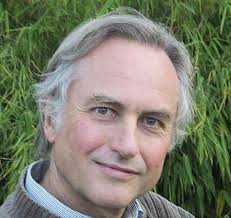
Open Dawkins's interactive page (graphs of influences, similar and opposing positions, and quotes)
Background
Richard Dawkins
Born: 26 March 1941 in Nairobi, Colony and
Protectorate of Kenya
Alma mater: Balliol College, Oxford
Main interests: Evolution, biology, atheism,
politics, science
Influences: Charles Darwin, George C. Williams,
W. D. Hamilton, Nikolaas Tinbergen, John
Maynard Smith, Peter Medawar, Robert Trivers,
Christopher Hitchens, Daniel Dennett,
Bertrand Russell, Douglas Adams, Ronald Fisher
Influenced: Andrew F. Read, Helena Cronin,
John Krebs, David Haig, Alan Grafen, Daniel
Dennett, David Deutsch, Steven Pinker, Martin
Daly, Margo Wilson, Randolph M. Nesse, Kim
Sterelny, Michael Shermer, Richard Harries,
A. C. Grayling, Marek Kohn, David P. Barash,
Matt Ridley, Philip Pullman, Sam Harris
From Wikipedia
Dawkins is a British evolutionary biologist and author…. He is well known for his criticism of creationism and intelligent design as well as for being a vocal atheist. Dawkins first came to prominence with his 1976 book The Selfish Gene, which popularized the gene-centred view of evolution and introduced the term meme. With his book The Extended Phenotype (1982), he introduced into evolutionary biology the influential concept that the phenotypic effects of a gene are not necessarily limited to an organism's body….
Introductory Comments
Dawkins argues that science doesn't just beat religion at its own game - it plays an entirely better game. Religion, he suggests, offers an-swers that close down inquiry: God made the universe, God made us, mystery solved. Science, by contrast, generates questions that cascade gloriously into further questions, each answer revealing a deeper and more dazzling layer of complexity. For Dawkins, this isn't a deficiency of science, but its greatest gift. And to those who claim that science leaves us intellectually home-less, Dawkins answers: yes, but magnificently so: cast into a universe infinitely more awe‑inspiring than the one revealed by dogma.
To flesh out his claims, Dawkins often points to discoveries that sound almost fictional until one remembers they are true. Tiny stretches of DNA quietly preserve the story of our kinship with mushrooms, whales, and oak trees. Natural selection, without foresight or pity, can sculpt the aerodynamic perfection of a falcon’s wing or the eerie mimicry of an insect masquerading as a dead leaf - or a Shakespeare. And then there is the strange grandeur of selfish genes producing acts of love, sacrifice, and cooperation - as though ruthless competition somehow morphed into poetry. Religion may promise a universe with purpose; science uncovers a universe with wonderful plot twists. One offers stained glass; the other hands you a telescope and whispers, "You won’t believe what’s out there."
Some of Dawkins's Key Positions
The best way to understand evolution is not from the perspective of the individual, but rather from the perspective of the gene. This surprises us, but shouldn't. After all, individual plants and animals don't survive or replicate themselves from one generation to the next.
But genes do. A particular gene can not only exist for extraordinarily long periods of time, it can finagle itself into an extraordinarily large number of species. Many genes found in jellyfish are found in us - persisting, unfailing and largely unaltered. And, of course, unconscious.
Genes don't survive through conscious determination, but by proving useful in the process of natural selection. That is, individuals possessing those genes are more likely to sur- vive long enough to mate and, through mating, pass on those genes to the next generation.
Of course these generalities don't even begin to tell the fascinating story of exactly how species have evolved through natural selection. But they do indicate that natural selection is a self-regulating process. It requires no intervention from external forces or bodies. And no impetus or guidance from God. This last fact should not be bemoaned. By providing us with facile an- swers to what are in fact complex and intriguing questions, religion short-circuits these ques- tions - and the joy and wonder they call forth.
Place in the History of Ideas
Dawkins's Place in History of Ideas
Anthony G. Craine: In 1976 he published his first book, The Selfish Gene, in which he tried to rectify what he maintained was a widespread misunderstanding of Darwinism. Dawkins argued that natural selection takes place at the genetic rather than species or individual level, as was often assumed. Genes, he maintained, use the bodies of living things to further their own survival. He also introduced the concept of "memes," the cultural equivalent of genes. Ideas and concepts, from fashion to music, take on a life of their own within society and, by propagating and mutating from mind to mind, affect the progress of human evolution. Daw- kins named the concept after the Greek word mimeme, meaning "to imitate." It later spawned an entire field of study called memetics.
Steven Shapin: He basks in the knowledge that he is worshipped by many, but he also seems aware that others - including those who would like to be counted among his intellectual allies - have long believed his cask-strength hectoring would have benefited from a splash of water and a willingness to teach rather than preach. You don’t read Dawkins to be converted from faith to science - though that’s possible; you read him to be fortified in your secular beliefs and to be armed against the Dark Side with handy facts, gestures at powerful theories, and rich stores of satirical rhetoric.
Random Thoughts on Dawkins
Human beings are not reasoning machines that occasionally feel emotion; we are storytelling creatures who occasionally reason. It's not sur- prising, therefore, that so many prefer religious answers to scientific questions. Religion offers moral clarity, cosmic reassurance, and the com- fort of belonging to a chain of ancestors who believed the same things. And when science says "we don’t know" - or worse, "that question may not have an answer"- religion steps in with a ready-made story, polished by centuries of repe- tition. For some, scientific humility sounds noble; for others, it sounds like standing in the cold without a coat.
Yet that’s not the whole story. Even Dawkins acknowledges that religion offers more than simply an existential blanket. It also offers communal worship that bind people together in ways that no laboratory report ever could and that encourages friendship and aid, at least within the congregation. Religious stories, at lesast at times, also carry spiritual weight that resonates across centuries. And rituals of faith mark birth, love, grief, and death with poetry and gravity that secular life has struggled to replicate. Even a committed atheist can see the beauty in a cathedral choir or a candlelit procession. In the end, religion remains compel-ling not because it explains the universe better, but because it explains us better - and that, as punchlines go, is a surprisingly gentle one.
Influences
Dawkins was influenced by: Adams, D., Darwin, Dennett, Fisher, Ronald, Hamilton, W.D., Hitchens, Medawar, Russell, Smith, John M., Tinbergen, N., Trivers, Robert, Williams, G.C.
Dawkins influenced: Cronin, Helena, Daly, Martin, Dennett, Deutsch, Grafen, Alan, Grayling, A.C., Harris, Krebs, John, Pinker, Pullman, Philip, Read, Andrew, Ridley, Matt, Shermer, M., Wilson, Margo
Similar and opposing positions
Thinkers with similar positions:
- Darwin (Intricate design in the natural world can be explained thru science.)
- Dennett (Human minds are to a large extent shaped by cultural memes.)
- Harris (One can be moral without having any religious beliefs.)
- Holbach (Religion is an impediment to the moral advancement of humanity.)
- Humboldt, A. (Nature is a "living whole” where all organisms are interdependent)
- Pinker (Evolution has created the cognitive tools we use to function & survive.)
- Shakespeare (Nature may guide us, but towards no rational purpose or end.)
- Singer, Peter (Since subject to pain, animals deserve certain legal protections.)
Thinkers with opposing positions:
- Averroes (Intricate design in the natural world must be due only to God.)
- Bayle (The value of faith is directly proportional with its repugnancy to reason.)
- Chesterton (Let your religion be less of a theory and more of a love affair.)
- Dostoyevsky (Without religion, we will drown in our own irrational impulses.)
- Ficino (The soul is immortal and seeks to ascend to a spiritual union with God.)
- Gould (Organisms are more important than genes in the dynamics of evolution)
- Strauss (Dogmatic atheism is as indefensible as dogmatic orthodoxy.)
- Sumner (Humans will always be in a struggle for survival with one another.)
What others said about Dawkins
- Jonathan Gathorne-Hardy: Richard Dawkins is quite simply incomparable. No one can make science so exciting, so interesting, or so clear.
- John Gray: ... Dawkins shows not a trace of skepticism anywhere in his writings. In comparison with Pascal, a man of restless intellectual energy, Dawkins is a monument to unthinking certitude.
- Dennett: ... I put Dawkins’ book ["The Selfish Gene"] alongside classics by such non-philosophers as Turing and Kuhn as essential thinking tools for any student of philosophy. In addition to everything else they will learn from it, they will discover that it is actually possible to write arguments that are both rigorous and a joy to read.
- Jane Goodall: [H]uman morality [has] a connection with primate behavior…. That gives a completely different view of ourselves than this nasty selfish-gene type view that has been promoted for the last 25 years.
- John Gray: Transfixed in wonderment at the workings of his own mind, Dawkins misses much that is of importance in human beings.
- Marian Dawkins: [I]f "The Selfish Gene" had not been written when it was, there would still be a need for it to be written today. There are simply no books that have taken its place, even now when so many… have followed in its wake.
- Francis Collins: Dawkins is a master of setting up a straw man, then dismantling it with great relish. In fact, it is hard to escape the conclusion that such repeated mischaracterizations of faith betray a vitriolic personal agenda, rather than a reliance on rational arguments that Dawkins so cherishes in the scientific realm.
- Steven Shapin: … if crushing the creationists and convincing the enemies of reason of their stupidity has secured him a reputation as something of a one-trick pony, it has been a polished trick and a best-in-show pony.
Schools: Atheism, Humanism, Naturalism, Secular Humanism, Secularism
Main interests: Artificial Intelligence, Biology, Evolution, Free/Unfree Will, Game Theory, Nature, Politics, Power, Religion, Science, Zoology
Dawkins's answers to philosophical questions
Art and Aesthetics
The poetry of science: "The world is wonderful. There’s real poetry in the real world. Science is the poetry of reality."
Education
"The world... is an extremely beautiful place, and the more we understand about it the more beautiful does it appears."
"I would like people to appreciate science in the same way they appreciate the arts."
Epistemology
"We must favor verifiable evidence over private feeling. Otherwise [we're] vulnerable to those who would obscure the truth."
"Reason... built the modern world…. [But it is] also a fragile thing, which can be corroded by apparently harmless irrationality."
"We should be open-minded, but not so open-minded that our brain falls out."
"The feeling of awed wonder that science can give us is one of the highest experiences of which the human psyche is capable."
"These beliefs contradict each other, so they can’t be all right."
Ethics
"Selfish genes actually explain altruistic individuals, and to me that's crystal-clear."
"Let us understand what our... selfish genes are up to, because we may then at least have the chance to upset their designs."
"There is something infantile in the presumption that somebody else [like God] has a responsibility to give your life meaning."
We will die. "[T]hat makes us the lucky ones. Most people are never going to die because they are never going to be born."
Metaphysics
"I am very comfortable with the idea that we can override biology with free will."
Mind
"The human mind is a wanton storyteller and even more, a profligate seeker after pattern."
"Why [evolution] should have [culminated in consciousness] is, to me, the most profound mystery facing modern biology."
Nature
Though evolution is a purely physical process, it's breathtaking how it has led to the amazing variety of life forms on earth.
"The selfish gene theory is Darwin’s theory, expressed in a way that Darwin did not choose but… would have recognized…."
"[Only we] have... the ability to communicate complicated conditionals & what-ifs & talk about things that are not present."
"[T]here is no evolutionary justification for the common assumption that evolution is somehow 'aimed' at humans…."
Our moral attitudes are too "discontinuous, speciesist." Great apes, for example, must have certain moral and legal rights.
The more we learn about the amazing productivity & ingenuity of evolution, the more reason we have for protecting its creations.
"Nature is not cruel, only pitilessly indifferent. This is one of the hardest lessons for humans to learn."
Religion and Theology
"What worries me about religion is that it teaches people to be satisfied with not understanding the world they live in."
"The God of the Old Testament is arguably the most unpleasant character in all fiction: … [a] capriciously malevolent bully."
"Faith is the great cop-out, the great excuse to evade the need to think and evaluate evidence."
"I would hope that our morals… are genuinely moral rather than based on outmoded scripture, or based on fear."
"The universe [has] the properties we should expect if there is, at bottom, no design, no purpose, [just] pitiless indifference."
"Religion teaches the dangerous nonsense that death is not the end." This belief can lead, for example, to suicide bombers.
"Miracles, magic, and myths, they can be fun…. [But] truth is more magical, in the best and most exciting sense of the word."
"Although Jesus probably existed, ... Biblical scholars do not in general regard the New Testament… as reliable… history...."
There's "no evidence for [fairies], but you can't prove... there aren't any, so shouldn't we be agnostic with respect to fairies?"
Atheists usually think that "mystery, the enthusiasm for that which we do not understand, is healthy and to be fostered."
"The Bible should be taught, but emphatically not as reality. It is fiction, myth, poetry, anything but reality."
Science
"Mystics exult in mystery and want it to stay mysterious. Scientists exult in mystery [because it] gives them something to do."
"What is interesting about [science] is that it is true, inspiring, remarkable and that [it] unites… phenomena under [one] heading."
"A good scientific theory is one which is falsifiable, [but] which has not been falsified."
Science is truer than religion - and more truly spiritual: "[S]cientific rationalism is the crowning glory of the human spirit."
Society
Memes are ideas, behaviors or styles that replicate thoughout a society & can, thereby, impact the evolution of society itself.
"[R]eligion... teaches us to be satisfied with answers which are not really answers at all." Thus, it can prevent social progress.