Alvin Plantinga (1932)
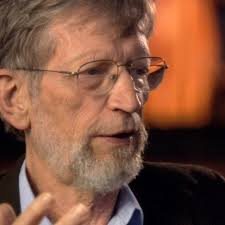
Open Plantinga's interactive page (graphs of influences, similar and opposing positions, and quotes)
Background
Alvin Plantinga
Born: November 15, 1932 in Ann Arbor,
Michigan, U.S.
Alma mater: Calvin College, University of
Michigan, Yale University
School: Analytic
Main interests: Epistemology, metaphysics,
religion, theology, Christian apologetics
Influences: Kant, Thomas Reid, Burke, Aquinas,
Dante, Thomas More, Abraham Kuyper, Luis de
Molina, Duns Scotus, John Calvin, William Harry
Jellema, William Alston, Augustine, C.S. Lewis,
Hilaire Belloc, John Henry Newman, Bas van
Fraassen, Kierkegaard, Nagel, William Frankena,
Plato, Etienne Gilson, Roderick Chisholm
Influenced: Nicholas Wolterstorff, Peter van
Inwagen, William Lane Craig, Michael Rea,
Robin Collins, Keith DeRose, Robert Koons,
Trenton Merricks, Michael Bergmann
From Wikipedia
Plantinga is an American analytic philosopher who works primarily in the fields of philosophy of religion, epistemology... and logic.... A prominent Christian philosopher, Plantinga served as president of the Society of Christian Philosophers from 1983 to 1986. He has delivered the Gifford Lectures two times and was described by Time magazine as "America's leading orthodox Protestant philosopher of God." … A fellow of the American Academy of Arts and Sciences, he was awarded the Templeton Prize in 2017.
Introductory Comments
Plantinga begins with a sly observation: nobody pauses each morning to demonstrate that the people around them have inner lives, yet only a philosopher in a particularly grim mood would call such confidence irrational. We simply find ourselves convinced - and rightly so. Belief in God, Plantinga argues, sits in much the same boat. The classical proofs for divine existence are no more airtight than the proofs for other minds, but most believers never reach for proofs at all; faith arises spontaneously, kindled by a sunset, a pang of conscience, or the stag- gering immensity of a starlit sky. Such beliefs, in Plantinga's terminology, are properly basic.
Critics, however, are not so easily convinced. Belief in other minds is anchored by a dense web of shared behavior, language, and biology - evidence so pervasive it scarcely needs cata- loguing. Belief in God enjoys no such tidy public corroboration; sincere and thoughtful people land on opposite sides, which is rarely the case for whether one's neighbor is conscious. The two beliefs may both lack airtight proofs, but they hardly share the same evidential neighbor- hood. Moreover, if "properly basic" is a status available to any belief that feels foundational to the believer, the category threatens to be- come a philosophical free-for-all. Which brings us to the so-called Great Pumpkin Objection: if your belief in God's can be properly basic, why not also Linus's belief in the Great Pumpkin?
Some of Plantinga's Key Positions
No one requires a logical proof of the existence of other minds, yet belief in them is plainly rational. Belief in God stands on the same epistemic footing: the arguments for other minds and for God are equally inconclusive, so if one belief is rational without proof, so is the other. Indeed, for most believers the existence of God is not inferred at all but formed directly - triggered by experiences of beauty, moral awareness, or the grandeur of the cosmos through what Plantinga, following Calvin, calls the sensus divinitatis.
Some people object that such belief is under-mined by the evil in the world, which they claim is logically incompatible with an omnipo-tent, omniscient, wholly good God. The free will defense answers this logical problem of evil: it is possible that even an omnipotent God could not create genuinely free creatures who always freely choose the good. And a wholly good God might well prefer a world containing evil if moral goodness requires free moral agents.
As to the claim that apparent design is merely the product of unguided natural selection, the response should point to the evolutionary argument against naturalism: if our cognitive faculties arose through evolution aimed only at survival, and no God guided the process, we have no reason to trust those faculties - and thus, naturalism becomes self-defeating.
Place in the History of Ideas
Plantinga's Place in History of Ideas
Michael C. Rea: Plantinga is one of the most important and influential philosophers of the twentieth and early twenty-first centuries. His publications range over a wide variety of fields, but his most enduring contributions have been in metaphysics, epistemology, and, especially, the philosophy of religion. He is best known for his work on the metaphysics of necessity and possibility, for his defense of the view that knowledge is to be analyzed partly in terms of proper function, for his development of the "free will defense" against the so-called "logical problem of evil," for his many and vigorous defenses of the rationality of religious belief, and for his much-discussed "evolutionary argument against naturalism."
David J. Baggett: Plantinga... contrasts the confidence and sense of certitude characteristic of religious phenomenology with the tentative, probabilistic inferences of arguments for reli- gious truth. Plantinga has dubbed the sense of congruity or certainty, of rightness and truth, that accompanies religious phenomenology... "impulsional evidence" .... Such evidence carries with it an assurance of conviction that exceeds what propositional evidence can provide…. Besides, it makes perfect sense that God, if he exists, would not structure our cognitive systems in such a way that only the most tutored evidentialists and skilled reasoners would believe in his existence….
Random Thoughts on Plantinga
Plantinga's Evolutionary Argument Against Nat- uralism (EAAN) turns the tables on his secular critics with considerable flair: If nature is all there is, and our minds were forged by natural selection alone, then evolution rewarded brains for keeping our ancestors alive - not for track-ing truths about quarks, ethics, or evolution itself. Survival and truth, after all, are not the same currency; a well-timed flinch beats a well-formed syllogism when a tiger appears. And so, if naturalism is true, we have strong reason to think that naturalism may not be true - a para- doxical predicament if there ever was one.
Yet the EAAN may be cleverer than it is conclu- sive. Natural selection plausibly favors roughly reliable cognition because creatures who con- sistently misread reality tend to walk off cliffs, eat the wrong berries, or mistake predators for playmates - pruning bad inferencing animals rather efficiently. Moreover, science itself supplies a powerful corrective: instruments, peer review, and mathematics catch the errors that unaided intuition smuggles in, which is why naturalists can build bridges that stay up and vaccines that work. Plus, the EAAN applies with equal force to the theist: if our cognitive faculties are unreliable guides to truth, they are unreliable guides to theological truth as well, which is not a particularly comfortable position for Plantinga to occupy. Indeed, it's a bit like pulling the rug from under one's own feet.
Influences
Plantinga was influenced by: Alston, William, Aquinas, Augustine, Belloc, H., Burke, Calvin, Duns Scotus, Fraassen, B., Kant, Kierkegaard, Lewis, C.S., Molina, L. de, More, Nagel, Newman, Paul of Tarsus, Plato, Reid
Plantinga influenced: Collins, Robin, Craig, W.L., DeRose, Keith, Inwagen, P., Koons, Robert, Merricks, T,, Rea, Michael, Wolterstorff
Similar and opposing positions
Thinkers with similar positions:
- Anselm (God's existence is inferable from the mere idea of a Perfect Being.)
- Bergson (There's a vital force in the world that pushes evolution onward.)
- Boethius (God's perfect foreknowledge is compatible with human free will.)
- King (Man is not sufficient unto himself. We need God’s living Word & guidance.)
- Tillich (Humanism today has too much faith in man & all too little faith in God.)
Thinkers with opposing positions:
- Borges (Man's search for meaning in a seemingly infinite universe is fruitless.)
- Collingwood (Metaphysics is just heuristic principles helping us grasp reality.)
- Diderot (Even if God created laws of nature, he isn't now at work in nature.)
- Feuerbach (God is for us the outward projection of a human's inward nature.)
- Goethe (One can be inwardly Christian w/o belonging to any Christian church.)
- Holbach (Religion is an impediment to the moral advancement of humanity.)
- Hume (Existence is not a perfection, so a Perfect Being need not exist.)
- Huxley (The most rational approach to religious belief is an agnostic one.)
- Lyotard (We've outgrown our need for universal theories & grand narratives.)
- Newman (Emphasis on emotional conversion undermines role of the church.)
- Spinoza (As natural creatures, we must base morality on the laws of nature.)
What others said about Plantinga
- Dennett: [Plantinga is] Exhibit A of how religious beliefs can damage or hinder or disable a philosopher.
- James N. Anderson: Plantinga not only sets forth a detailed exposition of the epistemology of religious belief..., but also takes on... some of the most serious contemporary objections to the rationality of such belief.
- William Lane Craig: While sympathetic to design arguments [for God's existence], Plantinga argues that we should not think of design in terms of an inference but in terms of a properly basic belief, a sort of perception, grounded in our experience of the world…. But even if we accept design as a perception, not an inference, will this not lend significant support to theism?
- Michael C. Rea: Plantinga's work in the philosophy of religion has focused on what is sometimes referred to as "negative apologetics": the task of showing that objections to religious belief are unsuccessful.
- John G. Stackhouse, Jr.: Alvin Plantinga is arguably the greatest philosopher of the last century.
- K. Scott Oliphint: Questions abound and will continue to do so regarding Plantinga’s approach, as he himself will admit. It is, however, of such influence currently that its place in the apologetic discussion is secure.
- J. N. Anderson: [For Plantinga] belief in God appears to be on a par... with belief in other minds. While there are no successful arguments for the latter..., it is nonetheless considered a rational belief to hold...; this being so, we should not think that belief in God suffers under any lesser epistemic credentials simply for lacking successful arguments in its favor.
- David J. Baggett: Plantinga in the past has had to contend with the "Great Pumpkin Objection": If belief in God can be properly basic, then so can any other belief, no matter how bizarre, including belief in the Great Pumpkin.
Schools: Analytic Philosophy, Christian Theology, Common Sense Realism, Innatism, Intuitionism
Main interests: Epistemology, Faith, Free/Unfree Will, Immortality, Metaphysics, Religion, Spirituality, Theology
Plantinga's answers to philosophical questions
Epistemology
Knowledge comes from our sensory and intellectual faculties when they are acting in accordance to their design plan.
Reason is not sublime: "Reason is the power or capacity whereby we see or detect logical relationships among propositions."
Nature
"[P]erhaps God designed us in such a way that it is by virtue of [natural selection] that we come to have knowledge of him."
Like all creatures, "… we have been created by the Lord, and utterly depend upon him for our continued existence."
Religion and Theology
"To show that there are natural processes that produce religious belief does nothing, so far, to discredit it…."
Belief in God can be rational without being based on rational argument. That is, it can arise directly from human experiences.
"Faith is not to be contrasted with knowledge: faith… is knowledge, knowledge of a certain special kind."
"Now God can create free creatures, but He can't cause or determine them to do only what is right."
"But if we don't know that there is such a person as God, we don't know the first thing… about ourselves... and our world."
Science
"Christians want to do things one way, secularists want to do things another way. But that's not a science/religion conflict...."