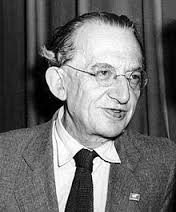
György Lukács was a Hungarian Marxist philosopher, literary historian, critic, and aesthetician. He was one of the founders of Western Marxism, an interpretive tradition that departed from the Marxist ideological orthodoxy of the Soviet Union. He... contributed to Marxist theory with developments of Karl Marx's theory of class consciousness. He was also a philosopher of Leninism. As a literary critic Lukács was especially influential due to his theoretical developments of realism and of the novel as a literary genre.
Introductory Comments
By the end of the First World War, official Marxism had become a curiously bloodless affair. Its guardians treated history as a machine driven by economic laws: wait long enough and capitalism would collapse on its own, no philosophy required. Lukács, a Budapest banker's son who had been writing about the soul, tragedy, and the novel, found this unbearable. So, after becoming a Communist in 1918, he set out to reform the movement. His History and Class Consciousness (1923) put consciousness back at the center of Marx's thought. Its key idea, reification, described how capitalism makes relations between people look like relations between things. Drawing on Max Weber as well as Marx, Lukács gave Marxists a way to talk about culture, alienation, and meaning, not just surplus value. Without quite intending it, he became the godfather of what Merleau-Ponty would later dub "Western Marxism."
Moscow rewarded the book with a public denunciation, and Lukács answered with self-criticism, the first of several. The ideas he disowned, however, took on a life of their own. They fed a tradition that came to reject much of what Soviet communism stood for: human beings reduced to cogs, the state swallowing society, and Marx’s dream of liberation turned into famine, purges, and labor camps. The irony is hard to miss. The man who kept proving his loyalty to the Soviet project had handed its sharpest Marxist critics their vocabulary.
Some of Lukacs's Key Positions
The defining feature of capitalist society is its focus on commodity, and its resulting reification ("thing-making"). Relations between people come to look like relations between things. This extends Marx's commodity fetishism beyond the market to factory labor, bureaucracy, law, and even science.
Workers sell their labor power as a commodity and become estranged from their own activity, from one another, and from themselves. Work is broken into ever narrower specialized tasks, and with that fragmentation goes any view of society as a whole.
The way out is collective: the class consciousness of the proletariat. This means not what workers happen to think, but what they would think if they fully grasped their place in history. Because the proletariat is itself reduced to a commodity, its self-knowledge would lead to knowledge of society as a whole. That understanding turns a "class in itself" into a "class for itself," able to abolish reification through revolution, with the Communist Party as its organized form.
Great realist literature restores the lost sense of totality through "typical" characters, in whom individual fate and historical forces meet. Scott, Balzac, and Tolstoy, despite conservative sympathies, portrayed social reality so truthfully that their novels expose what their politics would deny. Modernism, by contrast, retreats into private subjectivity and thus mirrors reification.
Place in the History of Ideas
Lukács's Place in History of Ideas
Daniel Lopez: By emphasizing human creativity and quality, Lukács makes the point that capitalism... can never subsist without creativity. Thus, the tension between use value and exchange value, or between quality and quantity, runs through society and our individual experience of it. This tension creates crises and incongruities, both at the level of society and in the everyday experience of the individual. [And these inconguities must be creatively dealt with.]
Titus Stahl: In terms of a general ontology, Lukács claims that we can distinguish three levels of being in the world: material or inorganic being, organic life, and social reality. All three levels are distinguished by a division between the genuine essence of entities and their appearance. While on all three levels, entities appear as fixed objects, their real essence is always that of interrelated, irreversible processes. This entails that the basic form of all being is temporality and historicity.
E. H. Carr: The work of Lukacs is important, not because he solves but because he poses in its sharpest and most acute form the fundamental dilemma of the Marxist conception of class and of the proletariat, the dilemma of the gap between the proletariat as an empirical entity and the role assigned by history to the proletariat as a class....
Random Thoughts on Lukács
What began with Lukács's attempt to rescue Marxism from mechanical determinism helped inspire one of the twentieth century's most fertile - and politically frustrated - intellectual movements. After the revolutionary failures of the early 1920s, much of Western Marxism moved from factory gates to university halls. Its concerns widened from economics and class struggle to philosophy, psychology, culture, and art. Critics saw a comfortable radicalism that had traded barricades for seminar rooms. The charge was unfair to some but apt for others: Marx had wanted philosophers to change the world, not merely interpret it.
Yet this retreat yielded a remarkable harvest of ideas. The Frankfurt School enlisted Freud to explain why people accepted, and sometimes embraced, their own domination. Sartre joined existentialism to Marxism to reconcile historical forces with individual freedom. Gramsci - an organizer imprisoned by Mussolini, hardly an armchair radical - developed his theory of cultural hegemony, showing how ruling groups secure consent through schools, churches, newspapers, and everyday assumptions, not just force. By the 1960s, Western Marxism had become a smorgasbord ranging from psychoanalysis to structuralism and aesthetics. The irony, which Lukács himself noted with some discomfort, is that his "romantic anti-capitalism" spawned a tradition that ended up shaping far more English literature departments than labor unions.
Buber (People must never be seen as mere means to our personal ends.)
Chomsky (Workers must unite to influence the economy and greater society.)
Engels (The just distribution of goods is an inherently political responsibility.)
Fromm (We need a socialist humanism that fights both injustice & alienation.)
Kropotkin (A communist republic based on a strongly centralized state will fail.)
Marcel (We too often define ourselves by what we own - not who we are.)
Marcuse (Transforming labor into pleasure is a humane and worthy goal.)
Veblen (The leisure class is addicted to wasteful and conspicuous consumption.)
Thinkers with opposing positions:
Bakunin (The dictatorship of the proletariat is still a form of tyranny.)
Burke (Laws of commerce are laws of Nature & therefore the laws of God.)
Croce (Works of art are essentially expressions of intuition and emotion.)
Dostoyevsky (The cure to social ills is not socialism, but a true Christianity.)
Godwin (Government by its very nature counteracts creative & original thinking.)
Goldman (Anarchism is the liberation from oppression of govt. & religion.)
Hayek (Only free market capitalism is consistent with freedom & democracy.)
Plato (Being a copy of a copy of a Form, art removes us even further from truth.)
What others said about Lukács
Paul Stasi: [For Lukács] the great pathology of modern thought [was] the detachment of consciousness from its social and material context.
George Lichtheim: A complex intellectual development carried Lukács from early involvement with the aestheticism fashionable before 1914 to a prominent role in the German and east European communist movements after 1918.
Daniel Lopez: ... the modern production process depends on standardizing these human types of labor. Time, which should be flowing, qualitative, and concrete becomes abstract and quantitative: time is reduced to flat space. This, in Lukács’s argument, makes the worker himself into an object. By no means is this logic restricted to manual labor.
Titus Stahl: [Lukács] describes Marxism as a purely methodological commitment to Marx’s dialectics rather than as depending on any belief regarding the truth of Marx’s economic theory.
John Bellamy Foster: ... it is often more difficult to perceive the essential continuity in the structure of Lukács’s thought than the discontinuities....
Mary Gluck: Marxist philosopher and literary critic, György Lukács was one of the foremost cultural theorists of the twentieth century; his Hegelian Marxism laid the groundwork for contemporary critical theory.
Titus Stahl: Today, his work remains of philosophical interest not only because it contains the promise of a reformulation of an undogmatic, non-reductionist Marxism, but also because it connects a philosophical approach drawing on Neo-Kantianism, Hegel, and Marx with an acute cultural sensitivity and a powerful critique of modern life....
Daniel Lopez: Lukács combined a fascination with Fichte, Kierkegaard, and classical modern literature with a detailed study of academic Neo-Kantian philosophy.
Main interests: Art and Aesthetics, Economics, History, Literary criticism, Literary theory, Literature, Political Philosophy, Politics, Revolution, Social Philosophy, Social Theory