Erich Fromm (1900 - 1980)
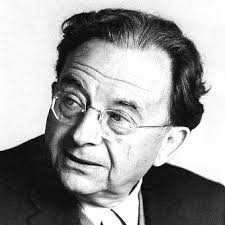
Open Fromm's interactive page (graphs of influences, similar and opposing positions, and quotes)
Background
Erich Fromm
Born: March 23, 1900 in Frankfurt am Main,
Germany
Died: March 18, 1980 (aged 79) in Muralto,
Ticino, Switzerland
Schools: Frankfurt School, critical theory,
humanistic psychoanalysis, Humanistic Judaism
Main interests: Psychology, Humanism, Social
theory, Marxism, Psychoanalysis, Politics,
Religion, Economics, Sociology, Ethics, Love
Notable ideas: Being and Having Modes of
Existence, Security versus Freedom, Social
character, Character orientation
Influences: Sigmund Freud, Baruch Spinoza,
Meister Eckhart, Søren Kierkegaard, Karl Marx,
Alfred Weber, Max Horkheimer, Johann Jakob
Bachofen, Hanns Sachs
Influenced: Bell Hooks, Elias Porter, Sally L.
Smith
From Wikipedia
Fromm was a German social psychologist, psycho- analyst, sociologist, humanistic philosopher, and democratic socialist. He was a German Jew who fled the Nazi regime and settled in the US. He was one of the founders of The William Alanson White Institute of Psychiatry, Psychoanalysis and Psychology in New York City and was associated with the Frankfurt School of critical theory.... Fromm's writings were notable as much for their social and political commentary as for their philosophical and psychological underpinnings.
Introductory Comments
In 1956 a German-born psychoanalyst published a slim bestseller with an odd premise: a manual for something nobody thinks needs learning. The Art of Loving begins far from romance. The distinctively human burden, Fromm argues, is separateness. Once self-aware, we know we are finite, vulnerable, and alone, with our own death already on the calendar. That knowledge breeds anxiety, and life becomes a series of attempted escapes - the crowd, drink or sex, work, domination and submission - most of which buy relief at the price of the self. Love alone is the sane answer, because it ends isolation while preserving each person's integrity. Love binds without chaining.
Readers hoping for a hymn to romance were in for a surprise. Erotic love, Fromm warns, is perhaps the most deceptive kind. It is exclusive by nature, and it easily becomes an egotism for two - you and I against the world. The most fundamental love is brotherly love - care and respect for others, not because they dazzle us but simply because they are human. Love for one person alone is mere attachment. Universal love is a demanding ideal, and Nietzsche's jibe that there was only one Christian, and he died on the cross, suggests how rarely it has been practiced. Nor was Fromm hopeful about a market culture that taught people to see one another as commodities. But rare is not impossible. Love, Fromm insisted, is an art, learned like any other through discipline, concentration, and patience. Hence the title.
Some of Fromm's Key Positions
We are animals aware of ourselves: of our separateness, our powerlessness, our mortality. That awareness creates needs that bodily comfort cannot satisfy: the need for relatedness, for identity, and for a way of making sense of the world.
Happiness is neither the satisfaction of a need nor the release of tension. It is the feeling that accompanies productive activity, the use of our own powers to reason, love, and create.
We can try to escape separateness by submitting to others or dominating them, but both cripple us. Love overcomes it, uniting people while preserving each one's integrity. Love is something we do, not something we fall into. It involves care, responsibility, respect, and knowledge.
Such love can extend to life itself (biophilia), as opposed to an attraction to death and control. At its fullest, it becomes a sense of oneness with the world, which is the core of genuine religious feeling, with or without a God.
Authoritarian religion demands submission to an outside power. Humanistic religion centers on realizing our own powers. God is best understood as a symbol of those powers, not as a being apart from us. Nor does life come with a meaning supplied from outside. Its only meaning is the one we create through love given and work well done.
Place in the History of Ideas
Fromm's Place in History of Ideas
Ernest Becker: As a psychoanalyst in the tradition of Sigmund Freund, love was a topic of central interest to Erich Fromm. One of his best-loved books is The Art of Loving, which contrasts the myths about love that are often being believed today (and promoted by Hollywood movies and pop culture) with the psychological reality of love.... Fromm believes that the main source of pain and anxiety for human beings comes from the feeling of separateness from others. To overcome this loneliness... the only true way out is love. For Fromm, real love is based on care, responsibility for the other person, respect [for] the other.
Marcuse: Fromm revives all the time-honored values of idealistic ethics as if nobody had ever demonstrated their conformist and repressive features. He speaks of the productive realiza- tion of the personality, of care, responsibility, and respect for one’s fellow men, of productive love and happiness - as if man could actually practice all this and still remain sane and full of "well-being" in a society which Fromm himself describes as one of total alienation, dominated by the commodity relations of the "market." In such a society, the self-realization of the "per- sonality" can proceed only on the basis of a double repression: first, the internalization of happiness & freedom; second, their reasonable restriction until they become compatible with the prevailing unfreedom and unhappiness.
Random Thoughts on Fromm
Love, Fromm believed, does not bloom in a vacuum. It grows - or withers - in the soil of society, and modern capitalism had left that soil badly depleted. Where human worth is measured by market value, people become products: polished, packaged, and forever angling for a better price on what Fromm called the "personality market." Buying and selling crowd out caring and giving. We fret less about how to love than about how to be lovable. Two people "fall in love," Fromm observed, much as they might close a deal, each landing the best bargain their own market value allows. The result is a society of lonely merchants of affection, rich in contacts and poor in connection. Still, though rare, love under capitalism, he thought, was not impossible.
His critics came at him from both flanks. Some heard socialism dressed in therapeutic clothing, with Freud recruited as Marx's wingman. Fromm could hardly deny the charge, since marrying Freud and Marx was his avowed project. From the left, Marcuse accused him of the opposite sin. Fromm, he argued, had blunted Freud's radical edge and offered a Sunday sermon on productive living in place of revolution. Others simply asked for evidence. How could anyone measure whether "the market" kills intimacy, or whether a different economy would breed better lovers? And one irony is hard to miss: Fromm's warning against turning love into merchandise became, in The Art of Loving, a remarkably marketable product.
Influences
Fromm was influenced by: Adler, Bachofen, Eckhart, Freud, Horkheimer, Kierkegaard, Marx, Sachs, Hanns, Spinoza, Weber, Alfred
Fromm influenced: Hooks, Porter, Elias, Smith, Sally L.
Similar and opposing positions
Thinkers with similar positions:
- Adler (Freud overstated role of sexual impulses and motives in psychology.)
- Buber (Human life is not self-enclosed. Relationships give birth to meaning.)
- de Beauvoir (We can neither escape our personal freedom nor give it away.)
- Dostoyevsky (Man is burdened by his freedom & often attempts to escape it.)
- Fourier (Transforming labor into pleasure is a humane and worthy goal.)
- Levinas (Philosophy must begin with respect & responsibility for the Other.)
- Lukács (Our obsession with commodities have made social relations “thinglike.”)
- Marcuse (Capitalism can lead to a dehumanizing objectification of ourselves.)
- Ruskin (Most importantly, govt. should promote economic and social justice.)
Thinkers with opposing positions:
- Bataille (To be free means to be unrestrained by any chains of morality.)
- Evola (The Ego is absolute. To deny this is to be both deluded and enfeebled.)
- Fichte (Freedom springs from submerging individuality into a larger group.)
- Gentile (The state is the source of all authority and the object of all loyalty.)
- Machiavelli (Living virtuously & wisely does not necessarily lead to happiness.)
- Schmitt (A strong leader must at times be above the law for the general good.)
- Schopenhauer (Love is a sexual obsession that invariably leads to anguish.)
- Stirner (Humans are always motivated by self-interest and selfishness.)
What others said about Fromm
- J.S. Glen: Fromm believed that everyone has a religious need and that religion is "the formalized and elaborate answer to man's existence."
- Andreas Matthias: Much of his later work was focused on understanding exactly how such phenomena as the Nazi state could come about and how perfectly sane people could... be turned into a raging horde of savage killers.
- Mark K. Smith: He had the ability to write for a popular audience, to develop a strong social critique, and to combine psychological insight with social theory (drawing on diverse sources such as Freud and Marx). These qualities did not endear him to a number of his colleagues who viewed his efforts with some suspicion and even alarm.
- Andreas Matthias: Erich Fromm... criticised modern capitalist society on the basis of Marxist and Freudian arguments. He is known for his books discussing how to create better societies and his analysis of love.
- Chomsky: I liked Fromm's attitudes but thought his work was pretty superficial.
- Ernest Becker: ... Erich Fromm wondered why most people did not become insane in the face of the existential contradiction between a symbolic self, that seems to give man infinite worth..., and a body that is worth about 98 cents.
- Andreas Matthias: In his [work] "To Have Or To Be"..., Erich Fromm diagnoses the profound unhappiness of Western modern men as the result of a flawed economic system. Capitalism, he believes, forces us to emphasize the possession of material goods (the "having" of things) and to neglect the qualities of our characters (our "being" as persons).
- Charlotte Nickerson: [Fromm's psychoanalysis] involved confronting the patient both as his therapist and as another, empathetic person, stressing that there is no trait or factor present in the patient that is not present in everyone....
Schools: Antipositivism, Critical Theory, Frankfurt School, Holism, Humanism, Marxist Humanism, Neo-Marxism, Personalism
Main interests: Alienation, Death, Desire, Economics, Ethics, Free/Unfree Will, Freedom, Habits, Happiness, Health, Love, Politics, Power, Psychoanalysis, Psychology, Social Philosophy, Social Theory, Will
Fromm's answers to philosophical questions
Economics
"The supreme principle of socialism is that man takes precedence over things, life over property, & hence, work over capital."
Neither pure Marxism nor pure capitalism leads to a healthy, loving society. Rather, we need a humanistic form of socialism.
Education
"Education is helping the child realize his potentialities."
"Why should society feel responsible only for the education of children, and not for the education of all adults of every age?"
Epistemology
"The narcissistic orientation is one in which one experiences as real only that which exists within oneself…."
Ethics
Man thinks he acts in his own "self-interest, though he actually serves everything else but the the interests of his real self."
"Love is the only sane and satisfactory answer to the problem of human existence."
"To love productively... implies labor and care and the responsibility for [the loved one's] growth."
To be moral we must embrace our freedom. Too often we try to escape our freedom by letting others control us.
Metaphysics
Being rational creatures, we can understand the forces we're subject to and thereby strengthen our ability to do what's right.
"Never is [man] free from the dichotomy of his existence: he cannot rid himself of his mind [nor] rid himself of his body...."
Nature
"Man is the only animal for whom his own existence is a problem which he has to solve and from which he cannot escape."
Political Philosophy
Human solidarity coupled with a sense of justice requires that we help those most in need.
Psychology
Because we're both part of nature & separate from it, we need to establish an identity & a sense of rootedness & relatedness.
Since we're not merely thinking entities, but also bodies with needs, we must listen to both our thoughts & our feelings.
"The most beautiful as well as the most ugly inclinations of man... result from the social process which creates man."
"If a person loves only one other person and is indifferent to all others, his love is [little more than] an enlarged egotism."
Conflicting emotions spring primarily from the fact "that man must simultaneously seek for closeness and for independence."
Happiness is neither a satisfaction of a need nor a release from tension, but a feeling that accompanies productive activity.
Religion and Theology
"... religion is not the problem of God but the problem of man; religious [beliefs and symbols express] human experience."
Though God springs from our need of love from one not subject to human weakness, it doesn't follow that he actually exists.
"Religious experience... is the experience of oneness..., based on one's relatedness to the world as it is grasped... with love."
"... some of the most ardent 'atheists' [devote] their lives to the betterment of mankind, to deeds of brotherliness and love...."
To know that there are forces we depend on is an essential part of wisdom, but to worship these forces is unhealthy.
Sex and Gender
"Love is not the result of adequate sexual satisfaction, but sexual happiness... is the result of love."
Society
We're all "in need of help & depend on one another. Human solidarity is the [basis] for the unfolding of any one individual."
Despite the religious lip service we pay to loving one's neighbor, social relations are best based on the principle of fairness.
"[A] person who has remained a person & not become a thing cannot help feeling lonely [&] isolated in present-day society."
Man's "happiness depends on the solidarity he feels with his fellow men, with past and future generations."