Franz Boas (1858 - 1942)
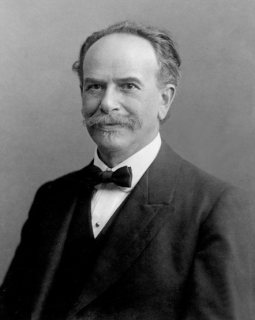
Open Boas's interactive page (graphs of influences, similar and opposing positions, and quotes)
Background
Franz Boas
Born: July 9, 1858 in Minden, Province of
Westphalia, Kingdom of Prussia
Died: December 21, 1942 (aged 84) in New York
CIty, New York
Alma mater: University of Heidelberg, University
of Bonn, University of Kiel
Main interests: Anthropology
Notable ideas: Cultural relativism, four-field
approach
Influences: Adolf Bastian, Moritz Lazarus,
Heymann Steinthal, Rudolf Virchow, Theodor
Waitz, Wilhelm Wundt
Influenced: Ruth Bunzel, Frederica de Laguna,
Gilberto Freyre, Pliny Earle Goddard, Alfred
Irving Hallowell, Otto Klineberg, Ruth Landes,
Rhoda Métraux, Elsie Clews Parsons, Ruth
Underhill, Ruth Benedict, Edward Sapir, Hurston
From Wikipedia
Boas was a German-American anthropologist and ethnomusicologist. He was a pioneer of modern anthropology who has been called the "Father of American Anthropology". His work is associated with the movements known as historical particu- larism and cultural relativism…. Boas also worked to demonstrate that differences in human behavior are not primarily determined by innate biological dispositions but are largely the result of cultural differences acquired through social learning.
Introductory Comments
When Boas came to anthropology in the 1880s, the field was under the spell of two theories that dressed up prejudice as science. Cultural evolutionism held that every society climbs the same ladder, from "savagery" to "barbarism" to "civilization," as reliably as a caterpillar becomes a butterfly. Some peoples were simply taking their time in the cocoon. "Scientific" racism explained the delay: the races differed in innate ability. Skull measurements confirmed the hierarchy, which was topped, of course, by those doing the measuring.
Boas took these theories apart not with a wrecking ball but with a jeweler’s loupe. Years of fieldwork and painstaking comparison showed that cultures follow no single track. Each grows from its own history of circumstance, accident, and borrowing. Nor could he find evidence that races differ in mental capacity. Curiously, Boas began as a geographer. He sailed to Baffin Island in 1883 to study how the Arctic shaped Inuit life. Interestingly enough, the most famous modern heir to his anti-racist argument, Jared Diamond’s Guns, Germs, and Steel (1997), explains Europe’s conquest of the Americas also through geography. In Diamond’s account, the decisive factors were domesticable crops and animals, the lay of the continents, and germs of different peoples. The two men agreed that history had dealt different peoples different hands. But where Boas wanted to examine what cards each group had been dealt, Diamond wanted to explain how the cards had been dealt.
Some of Boas's Key Positions
Differences in behavior, custom, and mental life among the world’s peoples are products of culture, not race. Culture here means the beliefs, norms, and practices each group learns and passes on. No reliable evidence shows that any race is innately superior or inferior in mental capacity. Even bodily traits long treated as fixed racial markers, such as head shape, can shift within a generation or two when the environment changes.
Cultures should not be ranked on an evolutionary ladder that climbs from "savagery" to a summit conveniently occupied by Western Europe. Each culture is the product of its own particular history: local circumstances, borrowings from neighbors, and plain accident. Each must therefore be understood on its own terms rather than measured against a foreign standard. Every observer, the anthropologist included, sees through the lenses of his own tradition.
The task of anthropology is to understand cultures, not to rank them. That understanding has to be built from the ground up, through long fieldwork, mastery of native languages, and careful recording of texts, customs, and artifacts. Grand theories of human development should wait until this patient work has gathered enough facts to support them.
To study human beings whole, anthropology should unite four subfields: physical anthropology, archaeology, linguistics, and cultural anthropology.
Place in the History of Ideas
Boas's Place in History of Ideas
Elizabeth Lewis: Boas is well known for his theory of cultural relativism, which held that all cultures were essentially equal but simply had to be understood in their own terms. Compar- ing two cultures was tantamount to comparing apples and oranges; they were fundamentally different and had to be approached as such. This marked a decisive break with the evolu- tionary thinking of the period, which attempt- ed to organize cultures and cultural artifacts by an imagined level of progress. For Boas, no cul- ture was more or less developed or advanced than any other. They were simply different.... Boas [also] denounced the belief that different racial or ethnic groups were more advanced than others. He opposed scientific racism, a dominant school of thought at that time.
Thomas Hylland Eriksen: Boas’s historical particularism, which is closely connected with cultural relativism, consists of the view that every society has its own, unique history, which is to say that there are no "necessary stages" that societies pass through. As a result, it is impossible to generalize about historical sequences; they are all unique. All societies have their own paths towards social sustaina- bility and their own logic of continuity and change, Boas argued. Both this view and certain forms of cultural relativism have always been debated among anthropologists, but they have been deeply influential up to the present.
Random Thoughts on Boas
There is a small joke buried in Boas’s bibliography. The man who did most to dismantle the ladder from “primitive” to “civilized” titled two of his books The Mind of Primitive Man and Primitive Art. The word was the common coin of the trade, and Boas kept spending it while draining it of value. His target was not the vocabulary but the habit of measuring every culture against one’s own and finding, with suspicious regularity, that one’s own came out on top. The cure was to understand a practice in its setting before judging it. Later anthropologists called this stance “cultural relativism,” a label Boas himself never used.
But does cultural relativism hold up under pressure? Take the culture of the Third Reich. It's hard not to condemn it - and Boas, a German-Jewish immigrant to America, did condemn it. So how does the relativist avoid contradicting himself? Probably by pointing out that relativism was never a gag order on moral judgment. What it forbids is premature judgment based on mere difference. A culture that systematically dehumanizes and destroys human beings isn't just "different"; it violates the conditions for human flourishing that any culture depends on. Respecting difference and condemning depravity, in other words, are not opposites - they're two edges of the same blade. Cultural relativism was meant as a tool for understanding and humility, not a suicide pact that disarms us the moment human rights are on the line.
Influences
Boas was influenced by: Bastian, A., Darwin, Kant, Lazarus, M., Steinthal, H., Virchow, R., Waitz, T., Wundt
Boas influenced: Benedict, R., Bunzel, Ruth, Cole, Fay-C., de Laguna, F., Freyre, G., Goddard, P. E., Hallowell, I., Hurston, Z. N., Klineberg, O., Kroeber, A. L., Landes, R., Levi-Strauss, Mead, M., Metraux, R., Parsons, Elsie, Rivet, Paul, Sapir, Underhill, R.
Similar and opposing positions
Thinkers with similar positions:
- Adler (The social realm plays a large role in shaping human psychology.)
- Barthes (Human consciousness is constrained by culture & its "structures.")
- Bourdieu (Language is not merely a means of expression, but also of power.)
- Derrida (Truth is relative and contextual - not objective and autonomous.)
- Fanon (Colonization is an attack on the dignity & self-worth of the colonized.)
- Gadamer (Our understanding is linked to the history and culture that shaped us.)
- Herder (Different cultures should not be measured against one another.)
- Jung (Symbols and rituals shape a large part of our psychology and culture.)
Thinkers with opposing positions:
- Evola (Mixing with inferior non-European races leads to cultural decline.)
- Freud (The social realm plays a minimal role in shaping human psychology.)
- Gentile (The state is the source of all authority and the object of all loyalty.)
- Green (Objective ethics can be based on the objective function of mankind.)
- Leibniz (Reason enables us to pass beyond the relative and subjective.)
- Moore (Though in part intuitive, moral judgments can be objectively true.)
- Pinker (The structure of a language does not affect its speakers' worldview.)
- Sade (The state is the source of all authority and the object of all loyalty.)
What others said about Boas
- Matthew Wills: As the founder of cultural anthropology, "Papa Franz" challenged the reigning notions of race and culture.
- Peter N. Peregrine: Boas developed historical particularism to oppose the unilineal evolutionary [cultural evolution with a set sequence of stages] and racial theories that dominated anthropology at the [time].
- Charles King: Races were unstable, Boas concluded. And if they didn't exist as physical realities in our present moment, then neither could they have existed in the past.... If there was no physical permanence to the concept of race, then there could be no clustering of other traits around it, such as intelligence, physical ability, collective fitness....
- Elizabeth Lewis: Boas was one of the most influential social scientists of the early twentieth century, noted for his commitment to cultural relativism and as a staunch opponent of racist ideologies.
- Peter N. Peregrine: Boas could be irascible and this, combined with his eagerness to challenge ideas he disagreed with, made him numerous enemies.
- Charles King: [Boas argued that what] people did, rather than who they were, ought to be the starting point for a legitimate science of society and, by extension, the basis for government policy on immigration.
- Matthew Wills: The combative Boas opposed the bogus rationalizations of racism, as well as the allegedly evolutionary classification of races this pseudoscience fostered. As an anthropologist, his biggest point was also his simplest: the assumption that one’s own culture or "race" was superior to others was not just wrong but harmful.
- Elizabeth Lewis: Anthropology, for him, constituted the holistic study of culture and experience, bringing together cultural anthropology, archaeology, linguistic anthropology, and physical anthropology.
Main interests: Anthropology, Geography, Physics
Boas's answers to philosophical questions
Ethics
Courtesy, kindness and other moral virtues are standard, but what constitutes such virtues differs according to culture.
Nature
"... the currents of thought due to the work of... Darwin... have helped to make anthropology what it is at the present time."
Psychology
"The activities of the individual are determined to a great extent by his social environment, but in turn," he influences society.
Science
Science is a type of dispassionate inquiry. As such, it must avoid all ideologies, all prejudices and all personal biases.
Physical sciences try to find laws governing phenomena; social sciences try to understand phenomena on their own terms.
Society
We should study the language, beliefs, norms and practices of a given society to understand the forces that shape it.
We shouldn't think of cultures in hierarchical terms - as a ladder from the so-called "primitive" up to the so-called "advanced."
People are shaped in large part by the culture in which they live. Without this culture, we'd be poorer in many respects.
Anthropology can help show people that mental faculties don't differ according to race. What differs is cultural environment.
We should act with openness and kindness toward all races, cultures, and ethnic groups. We are all kindred.