Julius Evola (1898 - 1974)
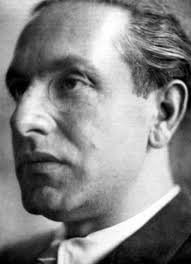
Open Evola's interactive page (graphs of influences, similar and opposing positions, and quotes)
Background
Julius Evola
Born: May 19, 1898 in Rome, Italy
Died: June 11, 1974 (aged 76) in Rome, Italy
Main interests: History, religion, politics
Influences: Siddhartha Gautama, Lao-Tze, St.
Athanasius, Nietzsche, Plato, Giovanni Papini,
Spengler, René Guénon, de Maistre, Juan D.
Cortes, Ernst Jünger, Oscar Wilde, Carlo
Michelstaedter, Gottfried Benn, Vico, Tristan
Tzara, Otto Weininger, Max Stirner, Gurdjieff,
Dostoevsky, Eckhart, Novalis, Merezhkovsky,
B. Croce, J. J. Bachofen, Louis de Bonald
Influenced: Hermann Hesse, Miguel Serrano, M.
J. Moynihan, Eduard Limonov, Aleksandr Dugin,
Alain de Benoist, Pino Rauti, Mircea Eliade,
Massimo Scaligero, Roberto Saviano, Joscelyn
Godwin, Marguerite Yourcenar, Francis P.
Yockey, Varg Vikernes, Aleksey Levkin, E.
Christian Kopff, R. B. Spencer, Steve Bannon
From Wikipedia
Evola was an Italian philosopher, poet, painter, and esotericist. Evola regarded his perspectives and spiritual values as aristocratic, masculine, traditionalist, heroic and defiantly reactionary.... The central postulation of Evola's theories and writings is centered on his own idiosyncratic spiritualism and mysticism; the inner life. The philosophy covers themes such as Hermeticism, the metaphysics of war and of sex, Tantra, Buddhism, Taoism, mountaineering, the Holy Grail, the essence and history of civilizations....
Introductory Comments
Few thinkers have traveled a stranger road. As a young man in Rome after the First World War, Evola painted abstract canvases and wrote poetry for Dada, the art world's grand experiment in nonsense. He soon abandoned it for Tradition: the conviction that every genuine civilization, from Vedic India to the medieval Holy Roman Empire, expressed one sacred, hierarchical order inherited from a lost golden age. Measured against that order, the modern world looked not merely flawed but upside down. Borrowing from Hindu cosmology, Evola called the present the Kali Yuga, the dark age at the bottom of a cosmic cycle. The sacred king and the warrior had given way to the merchant and the clerk, and transcendent values had dwindled into the pursuit of comfort.
Christianity began the rot; liberalism, capitalism, and communism finished it. Evola's remedy was a revival of hierarchy and warrior spirituality, and for a time, a "spiritual racism" that dressed old antisemitism in metaphysical robes. Evola courted both Fascist Italy and Nazi Germany, and both kept him at arm's length. In 1945, during an air raid on Vienna, a bomb blast left him paralyzed from the waist down. His postwar counsel was quieter: the rare "differentiated man" should "ride the tiger," staying inwardly detached while the age exhausts itself. The age, however, had other plans. From neo-fascist militants in postwar Italy to today's online far right, the man who despised the masses has become, posthumously, a meme.
Some of Evola's Key Positions
History is decline, not progress. The modern world sits deep in the Kali Yuga, the "dark age" of Hindu cosmology, The modern world sits deep in the Kali Yuga, the "dark age" of Hindu cosmology, marked by materialism, the rule of economics, and the leveling of human beings into interchangeable units. Capitalism and communism are two jaws of the same pincer, each reducing human beings to producers and consumers.
The measure of every society is Tradition: a timeless order of spiritual principles once embodied in the sacred civilizations of antiquity and the Middle Ages. Tradition is hierarchical. People are unequal and should be ranked by inner quality. Democracy, which counts heads instead of weighing them, inverts this order.
Supreme authority belongs not to priests but to a sacred king uniting spiritual and temporal power. Priestly supremacy, like Christianity's egalitarian otherworldliness, is a symptom of decay. Fascism and National Socialism deserve support where they revive hierarchy and the warrior ethic, but they fail wherever they court the masses.
War, rightly undertaken, is spiritual discipline: the battle against one's own weakness. The rare "differentiated man" should "ride the tiger." He stays inwardly detached, abstains from politics, and turns even the destructive forces of the age into means of self-transcendence.
Place in the History of Ideas
Evola's Place in History of Ideas
A. James Gregor: Evola has been seen as the source of neofascism's ideological rationale.... Others have identified Evola's thought as quin- tessentially fascist, as "creative" and "original." For still others, he is spoken of as a "post-war fascist," insisting that, after the passing of his- toric Fascism, his thought provided the inspira- tion for a resuscitated European neofascism.... Because so few Fascists of the time of the Ventennio were capable of writing articles or books, Evola, as one of the few, provided the texts that became one of "the most important" sources for the neofascism that arose out of the ruins of the Second World War.
Hans Thomas Hakl: Evola's efforts in populariz- ing Asian religions helped improve the Europe- an image of Asia at a time when a positive view of Asia was not customary. However, his quest was not scientific, although he remained as true to original sources as was possible at the time. For him, as in the case of his esoteric writings, his work in comparative religion was more about revealing paths that could extract mod- ern humans from rampant materialism and lead them to spiritual freedom. Therefore, Evola's religious-historical works examine only selected aspects corresponding to this quest, and they are unsuitable as surveys. This can be seen most clearly in Evola's handling of Hinduism, where he highlighted only the warrior and ascetic aspects of the Bhagavad Gita.
Random Thoughts on Evola
Historians rightly trace the rise of Fascism and Nazism to war, inflation, unemployment, and wounded pride. But mass movements also need a vocabulary, and one had been simmering for more than a century. Start with Maistre, who answered the Enlightenment's faith in reason with a defense of throne, altar, and executioner. Add Fichte, who lent German idealism a fervent nationalism. Then came Nietzsche, who despised nationalists and antisemites alike. Even so, his assault on "herd morality" and his talk of the will to power proved irresistible to readers eager to wield aphorisms like clubs. By the early 20th century, Sorel was celebrating the mobilizing power of myth and the ennobling force of violence.
Where does Evola fit? Awkwardly. He arrived too late to shape either movement's rise or its vocabulary, and the regimes he courted found him more embarrassing than useful: too esoteric for the party faithful, too contemptuous of the masses for movements built on them. His own complaint against Fascism was not that it went too far but that it did not go far enough. Perhaps that is the most unsettling thought of all: for at least one of its fellow travelers, Fascism was not a destination but a disappointment. To be sure, none of these thinkers drew a blueprint for what was built, and several would have recoiled from it. Yet ideas, those weightless abstractions, can acquire a terrible weight when they fall into the wrong hands, at the wrong time, in the wrong place.
Influences
Evola was influenced by: Athanasius, Cortes, Juan D., Croce, Dostoyevsky, Eckhart, Guenon, Rene, Gurdjieff, Junger, Ernst, Lao-Tze, Maistre, Nietzsche, Novalis, Plato, Spengler, Stirner, Vico, Weininger, Wilde
Evola influenced: Bannon, Steve, de Benoist, A., Dugin, A., Eliade, Mircea, Hesse, Mussolini, Rauti, Pino, Serrano, M.
Similar and opposing positions
Thinkers with similar positions:
- Bataille (Violence & erotic excess can be liberating & sacramental experiences.)
- Boccaccio (Despite its pagan beliefs, we can learn much from classical antiquity.)
- Foucault (All life, including science and other inquiry into truth, seeks power.)
- Gentile (The state is the source of all authority and the object of all loyalty.)
- Maistre (When a woman tries to emulate men, she is becomes a monkey.)
- Nietzsche (Christianity has a "slave morality" placing weakness over strength.)
- Sade (Heed nothing but your desires; let them alone be your laws.)
- Schmitt (A strong leader must at times be above the law for the general good.)
- Sorel (A moral revival of the country is needed to save it from decadence.)
- Stirner (Humans are always motivated by self-interest and selfishness.)
Thinkers with opposing positions:
- Agamben (In going beyond the law, the "state of exception" breeds violence.)
- Gandhi (Nonviolence & forgiveness are greatly superior to violence & revenge.)
- Grotius (International disagreements should be settled via law, not via war.)
- Jung (The replacement of God with the state leads to alienation & fanaticism.)
- Montesquieu (Government excesses can be avoided thru' checks & balances.)
- Proudhon (All forms of absolutisms are evil: government, capitalism & religion.)
- Royce (The Absolute is temporal, personal & the source of community & love)
- Tolstoy (There has never been nor will ever be a just war. All war is evil.)
- Wollstonecraft (As rational beings, women must have same rights as men.)
What others said about Evola
- Giorgio Almirante: Our Marcuse, only better.
- Jason Horowitz: [Evola] is best known as a leading proponent of Traditionalism, a worldview popular in far-right and alternative religious circles that believes progress and equality are poisonous illusions.
- Benjamin R. Teitelbaum: [Evola thought that Christianity] undermined entrenched masculinist ideals and promoted an embryonic form of liberal egalitarianism at the expense of traditional hierarchy. To regain past European virtues, Evola advocated a return to pre-Christian Indo-European paganism while also showing sympathy for Islam and Buddhism.
- Franco Ferraresi: Evola’s writing is one of the most consistently "antiegalitarian, antiliberal, antidemocratic, and antipopular systems in the twentieth century."
- Umberto Eco: [Evola was the] most influential theoretical source of the theories of the new Italian right.
- Hans Thomas Hakl: Evola's ambivalent attitude towards fascism, which he hoped would lead Italy back to a heathen-sacral Imperium Romanum, but which lacked any transcendent basis, led him closer to National Socialism....
- Paul Furlong: For Evola, the core of racial superiority lay in the spiritual qualities of the higher castes, which expressed themselves in physical [and] cultural features.... The law of the regression of castes places racism at the core of Evola's philosophy, since he sees an increasing predominance of lower races as directly expressed through modern mass democracies.
- Hans Thomas Hakl: Evola saw in Judaism the modern materialist and economic dominance that he fought against, although he highly valued Orthodox and kabbalistic Judaism.
Schools: Metaphysical Idealism, Mysticism, Perennial Philosophy, Traditionalism
Main interests: History, Politics, Racism, Religion, Social Philosophy
Evola's answers to philosophical questions
Economics
Unrestrained capitalism weakens a society by replacing higher ideals and spiritual values with vulgar materialistic possessions.
Marxism is just as misguided and destructive as is modern capitalism, for both endorse the ignoble materialistic view of life.
Ethics
Principles are what matter: "The liberated man acts without attachment to the outcome."
"Neither pleasure nor pain should enter as motives when one must do what must be done."
The most important thing is to be true to oneself: "He who clings to people, things, or opinions is already enslaved."
Freedom is not lazy indulgence, but energetic struggle: "Freedom is not doing what you want, but being what you are."
History
"[If] human progress is measured by the degree of wealth or indigence, then we are not even close to what is essential."
Law
"Everybody enjoys the freedom he deserves… and not by the abstract and elementary fact of merely being a 'human being'."
Political Philosophy
"A state is organic when it has a center, and this center is an idea that shapes the various domains of life [within it]."
Government should define and uphold the hierarchical differentiation of individuals and the rule of the heroic warrior.
We need to return to the noble aristocracy of antiquity: a clear caste system where superior individuals ascend to power.
If democracy means equality, it's depraved: "A society without natural hierarchies collapses into anarchy disguised as liberty."
The "right" to free speech is an ideological fiction tied to three bad things: egalitarianism, democracy, and materialism.
"Hierarchy reflects the structure of the cosmos - it cannot be abolished without cosmic consequences."
Psychology
One's aim in life should be neither peacefulness nor happiness, but rather struggle and achievement.
Religion and Theology
Spirituality is not weak passivity, but noble struggle: "He who seeks God must first become godlike."
"Christianity is at the root of the evil that has corrupted the West. This is the truth, and it does not admit uncertainty."
"The blood of the heroes is closer to God than the ink of the philosophers and the prayers of the faithful."
Sex and Gender
"As a rule, nothing stirs a man more than feeling the woman utterly exhausted beneath his own hostile rapture."
For the "pure, feminine" woman, "man is not perceived by her as a mere husband or lover, but as her lord."
So-called women's liberation is nothing but "the renunciation by woman of her right to be a woman."
A "just relations between the sexes" requires that women acknowledge their "inequality" with men.
Society
Strong, heroic rulers are needed to inspire and lead people in their war against all forms of decadence.
We need strong leaders to remind us of the higher ideals and spiritual values that energized the noble aristocracy of antiquity.