Colin McGinn (1950)
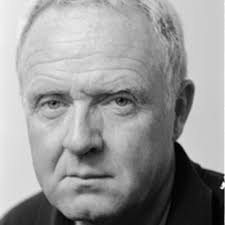
Open McGinn's interactive page (graphs of influences, similar and opposing positions, and quotes)
Background
Colin McGinn
Born: 10 March 1950 in West Hartlepool, County
Durham, England
Alma mater: University of Manchester (BA & MA,
psychology), Jesus College, Oxford (BPhil,
philosophy)
Known for: New mysterianism
School: Analytic
Main interests: Consciousness, philosophy of
mind, psychology, literature, film, aminal rights,
philosophy of language, metaphysics, logic,
sports, epistemology, ethics
Influences: Bertrand Russell, Noam Chomsky,
Donald Davidson, Peter Singer, P. F. Strawson,
Shakespeare, Thomas Nagel, Wittgenstein, Saul
Kripke, A. J. Ayer, Michael Ayers, Paul Grice,
Hilary Putnam, Freud, Bernard Williams
Influenced: David Chalmers, Arda Denkel,
Stephen Pinker
From Wikipedia
McGinn is best known for his work in the philoso- phy of mind, and in particular for what is known as new mysterianism, the idea that the human mind is not equipped to solve the problem of conscious- ness…. Owen Flanagan introduced the term "new mysterians" in 1991 to describe McGinn's position and that of Thomas Nagel, first described in Nagel's "What Is It Like to Be a Bat?" (1974). McGinn introduced his position in... The Problem of Consciousness, arguing that the human mind is incapable of comprehending itself entirely.
Introductory Comments
Consciousness, for Colin McGinn, is the great paradox sitting right under our noses - indeed, it is the nose, the eyes, and everything behind them. It is the most familiar thing imaginable, since every waking moment is soaked in it, and yet it remains the most baffling thing in the universe. Consider its peculiarities: its utter immateriality and non-spatiality, taking up no room while somehow living inside a three-pound brain; its intentionality, the strange power to be about things beyond itself; its transparency, that odd property whereby we seem to see straight through our mental states to the world itself; it is irreducible subjectivity, a private theater no one else can enter; and it is unity, binding a riot of sensations into a single seamless point of view.
What distinguished McGinn was his appetite for exploring consciousness in corners other philos- ophers swept past or sniffed at as beneath seri- ous inquiry. A fine example is his study of mov-ie-going in The Power of Movies, where he asks why we sit willingly in the dark, weeping and gasping at flickering patterns of light we know to be fictions. His answer is that the film image uncannily resembles the images of memory and dream - it bypasses our critical defenses and speaks directy to the mind's own native lan- guage. The screen, in other words is a mirror of consciousness itself, which may explain why we surrender to it so easily.
Some of McGinn's Key Positions
Though it's not good to brag, you must admit the human mind is a remarkable thing. It can write great literature, invent amazing devices, investigate the universe, and even (at times) make sense of the behavior of others. But there's one thing perhaps the human mind can't do: understand itself.
The problem here centers around the nature of consciousness or subjective experience. Though consciousness is in one sense the most familiar thing in our world - indeed, it is that through which we experience and make sense of the world - it is in another sense a complete myster-y: How can the material world, which of course includes our material brains, have given rise to something that seems so utterly unlike itself as the inner world of subjective experience?
No scientist or philosopher has yet explained this extraordinary link between objective physi-cal things and the subjective experience of things. Given that we are conscious during all our waking and mostly mundane hours, con- sciousness may seem anything but mysterious. Yet when we ask ourselves about the causal link between matter and mind, our befuddlement is testimony to the puzzle: The transition seems so absolutely stark to us - an apparently unbridge-able gap - that the human mind may be forever closed to understanding itself, even though that link is in fact a natural, physical one.
Place in the History of Ideas
McGinn's Place in History of Ideas
Daniel Dennett: McGinn's central thesis [in his book The Problem of Consciousness] is that the problem of consciousness is systematically insoluble by us (Martians or demigods might have better luck). Our brains just weren't meant to get a grip on this tough problem, but - there, there, it's all right - we mustn't draw the conclusion from the fact that we can't understand it, that the mind is intrinsically mysterious. After all, whoever promised that we should be able to understand all possible good science? … It is not that I disagree with McGinn about the possibility in principle that there are phenomena that will forever defy human understanding, but just that I find him arriving at his pessimistic verdict about consciousness after such a paltry canvassing of the opportunities…. So far as I can tell, he arrives at this judgment without having gone to the trouble of becoming acquainted with the new concepts [and technologies of cognitive science].
Mike Huemer: Colin McGinn openly insulted me in class when I challenged his view on free will.... I said it seemed like... he wanted to accept free will, but he also wanted to accept determinism, so he had to be a compatibilist. He said, "That's the stupidest thing I've heard you say. And that's saying something." I found that pretty surprising. I didn't think that professors would behave that way.
Random Thoughts on McGinn
On the question of free will, McGinn is unwilling to accept the traditional choice between deter- minism and randomness. If our actions are com- pletely determined by prior causes, genuine freedom seems to vanish; if they are merely random, responsibility disappears just as surely. So McGinn entertained another possibility: per-haps free will depends upon a form of mental causation that we don't yet understand. Just as consciousness may involve principles hidden from our cognitive grasp, the will may operate through mechanisms that current science and philosophy haven't yet uncovered. The answer, he suggests, may not be that free will is an illusion, but a mystery yet to be explained.
What might such mental causation actually be? Perhaps it is the mind in quiet conversation with itself, weighing reasons until one tips the scale - a causation made not of pushes and pulls but of meanings. Perhaps it demands a disci- pline of attention, the rare ability to step back and deliberate rather than merely react. Or per- haps it is nothing so demaning, but just the everyday thoughts of everyday people - so wo-ven everyday life that we overook it the way fish overlook water. If so, free will would be hiding not in some metaphysical vault but in plain sight. Then again, perhaps the determin-ists are right and the "water" we are overlook-ing is actually a steady, unyielding current, carrying us all willy-nilly into the future.
Influences
McGinn was influenced by: Ayer, Ayers, Michael, Chomsky, Davidson, Freud, Grice, Paul, Kripke, Nagel, Putnam, Russell, Shakespeare, Singer, Peter, Strawson, Williams, B., Wittgenstein
McGinn influenced: Chalmers, Denkel, Arda, Pinker
Similar and opposing positions
Thinkers with similar positions:
- Chalmers (A radical metaphysical split exists between realms of mind & matter)
- Davidson (Mental events (reasons & desires) can in fact cause physical events.)
- Fodor (Though mind springs from matter, it can't be reduced to matter.)
- Malebranche (We have no clear conception of the nature & power of the mind.)
- Montaigne (Animals have inner lives as rich and as animated as our own.)
- Pinker (Uncaused or random events do not support the concept of free will.)
- Singer, Peter (Since subject to pain, animals deserve certain legal protections.)
Thinkers with opposing positions:
- Chalmers (Consciousness might be the natural result or "feel" of information.)
- Collingwood (The mind-body "split" is more semantic than metaphysical.)
- Dennett (Consciousness can be explained with empirical methods.)
- Descartes (Animals have no rights because they are unconscious machines.)
- Feyerabend (The mind/body distinction is confused. The mind is a physical thing)
- Huxley (States of consciousness don't cause changes in the motion of matter.)
- Merleau-Ponty (Mind & body unite in a consciousness that is itself embodied.)
- Santayana (Mind is not mysterious. It's just a by-product of the working brain.)
- Santayana (Mind has no causal power. All motion has merely physical causes.)
What others said about McGinn
- Pinker: McGinn is an ingenious philosopher who thinks like a laser and writes like a dream.
- Searle: Why can’t we just think, as McGinn believes, in pure concepts and thus create institutional reality? For at least two reasons: first, the representations… of institutional reality have to be... shared and thus... communicable….
- Richard A. Watson: The British philosopher Colin McGinn, for example, is among a group of thinkers, known as "mysterians," who claim that, although we know that the conscious mind is nothing more than the brain, it is simply beyond the conceptual apparatus of human beings to understand how this can be the case.
- Dennett: In a backhanded way he has proven his case: armed only with the methods and concepts of traditional philosophy of mind, one cannot explain consciousness. But we've known that for a long time. [We need science.]
- Richard Marshall: His blog is an evergreen provocation and he's not out to make friends but to keep the controversies hot.
- Rebecca Goldstein: McGinn has succeeded brilliantly in demonstrating the substantive progress made in philosophy of language, carrying us to the next set of questions, none of which is going to be easy.
- Dennett: He argues that consciousness has... a hidden structure, and this structure is... Inaccessible from either of the two available routes: the first-person point of view of... introspection and the third-person point of view of science. For science to explain consciousness, it would have to create an intermediate level... something our science couldn't do.
- Justin Winberg: A philosophy graduate student... sued the University of Miami for failing to properly investigate her allegations that (now former) professor... Colin McGinn sexually harassed [her] and then retaliated against her….
Schools: Analytic Philosophy
Main interests: Animal Rights, Artificial Intelligence, Autobiography, Consciousness, Epistemology, Ethics, Film Theory, Language, Literature, Logic, Metaphysics, Mind, Popular Culture, Psychology
McGinn's answers to philosophical questions
Epistemology
"[T]he mind [is like] a sheet with characters in invisible ink written on it. [With proper stimulus,] the ink leaps into visibility."
Ethics
Virtues and vices "are, in one sense, entirely natural properties - they are part of what human beings naturally are."
Language
The modelling theory "represents thinking as (sometimes) expressed in language, but not as resting on it [or] issuing from it."
Language assails us. "Words can be menacing and dangerous, oppressive and noisy, as well as suspiciously seductive."
Hands were crucial in developing language. Hands were no doubt useful in mimicry, and this must have led to sign language.
Metaphysics
The mind-body problem is simply "the perimeter of our conceptual anatomy making itself felt."
Mind
"Consciousness can reduce even the most fastidious thinker to blabbering incoherence."
"The problem with materialism is that it tries to construct the mind out of properties that refuse to add up to mentality."
Nature
"Over the long course of evolution, [our hands and their tools] led to our becoming the dominant species that we are…."
We're prone to a "species solipsism" that sees other animals only as they relate to us. They have their own lives - and rights.
Psychology
"The psyche is more like a seething pit of warring factions than an orderly... progression of [logical] thoughts."
Religion and Theology
"To me the ultimate sin was refusing to listen to reason."
Science
"I used to think the basic mysteries of nature pertained exclusively to the mind; now I think that physics is rife with mystery."