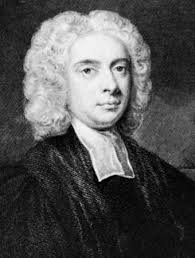
Butler, Joseph (1692 - 1752)
Open Butler, Joseph's interactive page (graphs of influences, similar and opposing positions, and quotes)
Background
Joseph Butler
Born: 18 May 1692 in Wantage, Berkshire,
England
Died: 16 June 1752 (aged 60) in Bath, Somerset,
Great Britain
Profession: theologian, apologist, philosopher
Alma mater: Oriel College, Oxford
Schools: British Empiricism, Christian philosophy
Main interests: Religion, theology, ethics
Influences: Plato, Thomas Hobbes, John Locke,
Francis Hutcheson, Jesus
Influenced: Adam Smith, David Hume, Thomas
Reid, William Paley, Jeremy Bentham, David
Seabury, C. S. Lewis, Henry Sidgwick, John
Warwick Montgomery, John Henry Newman,
C. D. Broad, John Wesley, David Hartley,
Samuel Taylor Coleridge, George Turnbull,
David Fordyce, Edmund Burke, John Rawls,
William Whewell, G. E. Moore, H. A. Prichard
From Wikipedia
Butler was an English Anglican bishop, theologian, apologist, and philosopher.... His principal works are the Fifteen Sermons Preached at the Rolls Chapel and The Analogy of Religion. He is known for critiques of Deism, Thomas Hobbes's egoism, and John Locke's theory of personal identity. The many philosophers and religious thinkers Butler influenced included David Hume, Thomas Reid, Adam Smith, Henry Sidgwick, John Henry Newman, and C. D. Broad, and is widely seen as "one of the preeminent English moralists."
Introductory Comments
Most of Butler's ethical writing took the form of sermons, which is unsurprising in a man who spent his life in the pulpit - preacher at the Rolls Chapel, later Bishop of Bristol and of Durham. Yet the fact is often mentioned and then dropped. Butler's clerical office did more than supply the obvious motive for defending Christianity against the deists. It shaped how he argued.
The Analogy of Religion - his one book not cast as sermons - takes its method from its title. Where we cannot demonstrate, Butler holds, we reason from likeness to likeness, and analogy becomes the instrument for getting on with the riddles nature sets us. There is a faintly modern ring here, enough to bring Lakoff and Johnson to mind, though the resemblance should not be pressed: Butler is describing how we reason toward probability, not how metaphor structures thought.
Why did a clergyman arrive at this? Not, as one might guess, from a preacher's fondness for vivid comparison; the Analogy is famously dry, and nobody has ever accused Butler of purple prose. The likelier debt is pastoral. A clergyman's work is not to prove but to persuade people to act on what cannot be proved - and Butler's central claim, that probability is the very guide of life, reads like a lesson learned at the parish level and then carried into philosophy. The obvious objection, that analogies establish nothing, he had already admitted. Analogies don't verify, they coax.
Some of Joseph Butler's Key Positions
Freethinking has carried many educated people astray. The fashion of the age is deism: God designed the universe, set it in motion, and thereafter leaves it alone - no revelation, no miracles. Some now treat Christianity as a question long since closed, fit only for ridicule.
The reply begins with a confession of ignorance. Nature is full of obscurities, apparent cruelties, and blessings distributed with no discernible fairness - and the deist accepts all of it as God's work. Why should the same difficulties, met in Scripture, count as decisive against revelation?
Nor can experience rule out miracles; it reports how the world usually runs, not what its Author may do. To demand demonstration in religion is to apply a standard we apply nowhere else. Probability is the very guide of life.
Moral philosophy has taken a worse turn. Hobbes holds that self-interest alone is what moves us. Yes, self-love seeks one's happiness on the whole, but it is a reflective principle with nothing to work on until the particular passions supply it. Hunger seeks food; compassion seeks another's relief.
Strip away the appetites aimed outside ourselves, and self-love would starve for want of an object. Human nature is arranged in ranks: appetites below, self-love and benevolence above them, conscience above both.
Place in the History of Ideas
Joseph Butler's Place in History of Ideas
David E. White: Overall, Butler’s philosophy is largely defensive. His general strategy is to accept the received systems of morality and religion and, then, defend them against those who think that such systems can be refuted or disregarded. Butler ultimately attempts to naturalize morality and religion, though not in an overly reductive way, by showing that they are essential components of nature and com- mon life. He argues that nature is a moral sys- tem to which humans are adapted via con- science. Thus, in denying morality, Butler takes his opponents to be denying our very nature, which is untenable. Given this conception of nature as a moral system and certain proofs of God’s existence, Butler is then in a position to defend religion by addressing objections to it, such as the problem of evil.
John Herman Randall, Jr.: Butler claimed that the much-heralded natural religion was really just as irrational as the specific Christian revelation, and just as much a matter of faith. In other words, the religious tradition was really all of one piece, and had to be accepted or rejected as a whole; no halfway compromise was tenable. Butler pointed out in particualr that the actual course of nature, the handiwork of God and his divinely established moral order, is much more incomprehensible to human reason thanthe so-called injustices taught in Scripture.
Random Thoughts on Joseph Butler
Much of Butler's ethical writing answers the egoism he saw spreading around him - Hobbes above all, and Mandeville, who had lately assured English readers that private vices make public benefits. The doctrine at issue is psychological egoism: every human action, however it looks from outside, is finally motivated by self-interest. Hobbes had defined pity as fear for oneself and charity as delight in one's own power. Generosity, on this account, is not rare. It is impossible. The argument's engine is a quiet slide. Desires arise within the self; therefore they serve the self. Whatever a person does, he does because he wanted to, and the wanting was his. So the benefactor is merely purchasing a warm glow, and the martyr is indulging a taste for martyrdom. The thesis has the charm of being unfalsifiable, which is also what should make one suspicious of it.
Butler's counter is the more striking for what it does not do. He does not appeal to Scripture, or to God's commands, or to anything a bishop might be expected to reach for. Rather, his central move is a distinction so simple it looks like a trick: the fact that a desire is mine says nothing about what the desire is for. Hunger belongs to me; food does not. Compassion belongs to me; the sufferer's relief does not. Every affection is equally the agent's own, benevolence no less than avarice - which means ownership cannot be what marks an action selfish. What marks it is the object, not the source. The destination, not the driver.
Influences
Butler, Joseph was influenced by: Hobbes, Hutcheson, Jesus, Locke, Plato
Butler, Joseph influenced: Bentham, Broad, C.D., Burke, Coleridge, Fordyce, David, Hartley, Hume, Lewis, C.S., Montgomery, Moore, Newman, Paley, William, Prichard, H.A., Rawls, Reid, Seabury, David, Sidgwick, Smith, Adam, Turnbull, G., Wesley, John, Whewell, W.
Similar and opposing positions
Thinkers with similar positions:
- Darwin (Our moral instincts are innate and evolved with our social instincts.)
- Freud (Our conscience naturally rules over our passions and self-love.)
- Hutcheson (We have s natural sense by which we perceive virtue and vice.)
- Kierkegaard (Revealed truth is beyond reason and human understanding.)
- Leibniz (Though evil exists, God created the best of all possible worlds.)
- Philo (God, not man, is the source of all meaning and purpose in life.)
- Reid (Like our senses and our reason, conscience is a natural faculty.)
- Singer, Peter (There's no evidence that God exists nor that belief in Him is good)
Thinkers with opposing positions:
- Bultmann (We must demythologize Scripture to make God relevant today.)
- Harris (Religious toleration can't justify beliefs based on no evidence or reason.)
- Hobbes (Our ultimate motive is always to experience pleasure and avoid pain.)
- Jefferson (I accept Jesus's precepts but not the corruptions of Christianity.)
- Locke (Memory is the source or basis of personal identity or sense of self.)
- Lucretius (Sensation is the ultimate source and criterion of truth.)
- Paine (Nature or creation is the Bible of the Deist. We need no other Bible.)
- Stirner (Humans are always motivated by self-interest and selfishness.)
What others said about Butler, Joseph
- Stephen Darwall: Probably no figure had a greater impact on nineteenth-century British moral philosophy than Butler.
- Copleston: At the time at which Butler was writing, religion was at a very low ebb in England, and his chief concern was to show belief in Christianity was not unreasonable.
- William Turner: [For Butler what determines our moral decisions is not] a sense of the pleasure and usefulness which others experience from our actions, but... conscience. This guide of conduct is not a deduction from practical reason..., but a faculty which directly and immediately approves or disapproves, and which must be obeyed....
- John Herman Randall, Jr.: It seems not to have occurred to the good Bishop that if natural religion were, rationally considered, on no firmer a foundation than revelation, there might be men willing to reject them both.
- Wallace Matson: Hume condescended to examine the question of miracles... in a vain attempt to placate Joseph Butler, Bishop of Bristol....
- Copleston: [Butler claimed that our] knowledge of nature is probable. True, probability can vary in degree; but the knowledge which we possess of nature is based on experience and, even when [highly probable], it is still only probable.
- John Herman Randall, Jr.: Butler insists as strongly as Kant that the principle of the moral life is autonomy. But whereas Kant makes autonomy obedience to a self-inposed law of reason, Butler makes it the functioning of the powers of human nature...; not obedience to rational commands, but the releasing of natural powers and capacities.
- Wallace Matson: [Butler denied the the claim of psychological hedonism.] Anything can be the object of desire; in particular, another person's well-being can. Benevolence is not selfishness in disguise.
Schools: Christian Theology, Empiricism
Main interests: Ethics, Free/Unfree Will, Religion, Theology
Butler, Joseph's answers to philosophical questions
Ethics
"We should strive to act according to the general laws of reason, equity, and truth."
Moral principles are not enough: "We should always act with caution, as our actions may have unintended consequences."
Human desires are aimed at objects - be they personal, impersonal, material or immaterial. They aren't necessarily egotistical.
Virtue springs from the heart: "Virtue consists in action and resolution, and not in the possession of a single good quality."
Conscience is our inborn and God-given sense of right and wrong. It is the source of both general and personal happiness.
"The love of liberty that is [unlinked to] dutiful behavior… is as hypocritical as the religion that is not productive of a good life."
Language
"The tongue may be employed... to serve all the purposes of vice, in tempting and deceiving, in perjury and injustice."
Metaphysics
"Every thing is what it is, and not another thing."
Mind
Memory is not the source of our personal identity. Rather, for memory to be real it must presuppose personal identity.
Nature
Though self-love is natural in man, so also is benevolence and the love for others. We're by nature capable of noble deeds.
"We should strive to live in harmony with the natural world, recognizing our interconnectedness with all living beings."
"There is a much more exact correspondence between the natural and moral world than we are apt to take notice of."
Psychology
"We should strive to cultivate a balanced and rational approach to life, not being swayed by extremes or impulses."
"We should strive to cultivate a sense of gratitude and appreciation for the blessings in our lives."
"True happiness lies in the pursuit of virtue and the fulfillment of our moral responsibilities."
Religion and Theology
"The principles of religion are the springs & motives of all virtue, and without them,… foundations of morality cannot be laid."
Though the wicked at times thrive when living, God makes sure that in death all are rewarded or punished as they deserve.
"[It is] incredible that a book... so long in the possession of mankind should contain many truths as yet undiscovered."
Science
Science is not as certain nor as clear as many proclaim. Much of science relies on mere probabilities and analogies.
Society
People need guidance and "custom is the great guide to human life." And custom, of course, springs only from society.
"By acting with kindness and compassion towards others, we can contribute to a more harmonious and just society."
We should help, not condemn: "We should not judge others too harshly, as we ourselves are prone to error & weakness."
Follow your sympathetic instincts: "Compassion is a call, a demand of nature, to relieve the unhappy…"
"Every man [is by nature] designed to pursue his own interest [and] the good of others" - whether individually or in groups.