Jerry Fodor (1935 - 2017)
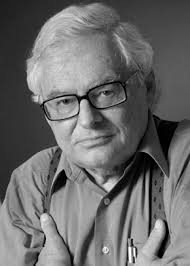
Open Fodor's interactive page (graphs of influences, similar and opposing positions, and quotes)
Background
Jerry Fodor
Born: 1935 in New York City, New York, United
States
Died: November 29, 2017 (aged 82) in New York
City, United States
Alma mater: Columbia University, Princeton
University
School: Analytic
Main interests: Philosophy of mind, Philosophy
of language, Cognitive science, Rationalism,
Cognitivism, Functionalism
Notable ideas: Modularity of mind, Language of
thought
Influences: Hilary Putnam, Nelson Goodman,
Sydney Morgenbesser, Franz Joseph Gall, Noam
Chomsky, David Hume, Wilfrid Sellars, René
Descartes, Jerome Bruner
Influenced: Ernest Lepore, Zenon Pylyshyn,
Steven Pinker, Peter Carruthers
From Wikipedia
Fodor was an American philosopher and the author of many crucial works in the fields of philosophy of mind and cognitive science. His writings in these fields laid the groundwork for the modularity of mind and the language of thought hypotheses, and he is recognized as having had "an enormous influence on virtually every portion of the philosophy of mind literature since 1960." … He maintained that mental representations can only be correctly explained in terms of a language of thought in the mind.
Introductory Comments
Just as Chomsky argued that beneath every spoken tongue lies an inborn Universal Gram- mar, Fodor proposed that beneath our spoken and written languages lies am even deeper, more primitive one: Mentalese, the language of thought. We are born with it. We did not learn it from our parents, and no Berlitz course was required. . On Fodor's analysis, every thought involves a three-place relation: a thinker, a mental representation, and the propositional content that representation expresses. Mental- ese is what gives those representations their structure, allowing thoughts to combine, re-combine, and travel in orderly sentences rather than tumbling about like socks in a dryer. The mind, Fodor suggested, is less a buzzing cloud than a silent syntax engine forever arranging concepts into meaningful order.
Mentalese, for Fordor operates through a three-place relation among individuals, repre-sentations, and propositional contents. This third element - propositional content - is where the real action is. It is what allows a mental state to be about something, to reach out and latch onto the world with both precision and purpose, linking intentions to their objects in ways that are ultimately non-intentional and thus fully compatible with a physical universe. In short: before we ever opened our mouths, our minds were already muttering to them- selves in a tongue older than speech.
Some of Fodor's Key Positions
Just as Chomsky argued that we have an inborn Universal Grammar underlying all natural lan- guages, so too, we must possess an inborn lan- guage of thought ("Mentalese"). The evidence lies not in speech itself but in the productivity and systematicity of thought: anyone who can think "John loves Mary" can think "Mary loves John." Indeed, learning a natural language al- ready presupposes an internal representational system in which to frame hypotheses about it - so Mentalese must come first.
To see how the language of thought works, we should first consider the nature of mental states. Perhaps their most important feature is intentionality - their "aboutness," their direct- edness toward objects and states of affairs. They are not floating aimlessly in the mind; they take the form of propositional attitudes, such as believing, desiring, or fearing that such-and-such is the case.
A propositional attitude is thus a three-place relation between a thinker, a mental represen- tation (a sentence in Mentalese), and the prop- osition that representation expresses. The lan- guage of thought supplies the compositional structure of those representations, while a causal-informational semantics aims to explain how "a piece of the world is relative to (expres-ses, represents, is true of) another piece" - grounding thought itself in nature.
Place in the History of Ideas
Fodor's Place in History of Ideas
Bradley Rives: In addition to exerting an enor- mous influence on virtually all parts of the literature in the philosophy of mind since 1960, Fodor’s work had a significant impact on the development of the cognitive sciences. In the 1960s, along with Hilary Putnam, Noam Chom- sky, and others, Fodor presented influential criticisms of the behaviorism that dominated much philosophy and psychology at the time. Fodor went on to articulate and defend an alternative conception of intentional states and their content that he argues vindicates the core elements of folk psychology within a physicalist framework.
Georges Rey: [Fodor] became the philosopher most responsible for the "cognitive revolution" that replaced the behaviorism that had domi- nated much of philosophy and psychology since the 1920s, replacing it with a computational approach derived from the work of Alan Turing. In this way he hoped to provide a basis for a naturalist and realist account of mental proc-esses that rendered them amenable to scientific study. Indeed, he is one of the few philosophers who has combined philosophical and empirical psychological research, publishing work in both domains, and developing at least two theories that have become highly influential in each: a computational/representational theory of thought processes ("CRTT") and a "modularity" theory of perception and linguistic processing.
Random Thoughts on Fodor
When Fodor first advanced his theories about the language of thought in the 1960s and '70s, they landed like a piano dropped through the roof of mid-century psychology. Together with Chomsky, Putnam, and a handful of co-con- spirators, Fodor helped dismantle behaviorism - the then-reigning doctrine that human beings were essentially elaborate vending machines, dispensing responses for the right stimuli, and that mental life was little more than ghostly stage decoration. In its place Fodor offered a physicalist but unmistakably mentalist picture: real beliefs, real desires, real representations, all doing real causal work, and all compatible with our everyday "folk psychology" of why Aunt Mildred reached for the kettle.
The revolution was not that Fodor discovered minds - minds, after all, had been making rather a nuisance of themselves for millennia - but that he made it intellectually respectable to ad- mit they existed. Which raises an awkward question: how did several generations of bril- liant philosophers and psychologists, equipped with the very minds in question, manage to deny they had any? It is one of the great ironies of the 20th century that the thinkers most con- fident there was nothing going on upstairs were the very ones using their upstairs to argue it. Apparently, having a mind is no guarantee of noticing one - and being clever, alas, is no defense against being spectacularly wrong.
Influences
Fodor was influenced by: Bruner, Jerome, Chomsky, Descartes, Gall, Franz J., Goodman, Hume, Morgenbesser, Putnam, Sellars
Fodor influenced: Carruthers, P., Lepore, E., Pinker, Pylyshyn, Z.
Similar and opposing positions
Thinkers with similar positions:
- Broad (From physics to chemistry to biology, irreducible properties emerge.)
- Chomsky (Certain ideas must be innate, since no empirical origin is possible.)
- Darwin (Evolution has created the cognitive tools we use to function & survive.)
- Davidson (Though mind springs from matter, it can't be reduced to matter.)
- Kant (Humans are born with certain innate ways or categories of thinking.)
- Nietzsche (It's fruitless to aspire to a "God's eye view" of reality.)
- Putnam (There are multiple descriptions of reality that are equally true.)
- Putnam (Identical mental states can be realized physically in multiple ways.)
- Sellars ("Manifest images" (intentions, thoughts, etc.) can complement science.)
Thinkers with opposing positions:
- Carnap (Meaning of a sentence is equivalent to stating its truth conditions.)
- Hegel (The finite world is a reflection of mind, which alone is truly real.)
- Hume (The mind is simply a bundle of perceptions without autonomy or unity.)
- Ibn Tufail (The mind at birth is a blank slate that experience will write upon.)
- Peirce (The truth about an event or thing is the totality of its consequences.)
- Skinner (Our behavior can be reduced to matters of stimulus and response.)
- Tarski (Scientific knowledge can be reduced to a series of sense-data claims.)
What others said about Fodor
- Samir Chopra: [H]is "put-downs" and sarcastic… objections… always left me feeling like this was not how I understood philosophy as a practice.
- James Russell: For my money, Jerry Fodor was also one of the great psychologists, so great indeed that one can, within cognitive developmental psychology at least, talk about BF (before Fodor) and AF (after him).
- Bradley Rives: He defended a “Representational Theory of Mind,” according to which thinking is a computational process defined over mental representations that are physically realized in the brain. On Fodor’s view, these mental representations are internally structured much like sentences in a natural language, in that they have both a syntax and a… semantics.
- Stephen Metcalf: Fodor was indifferent to recent developments in European thought - everything since Kant, more or less. But he was that rare thing, a man who could lift your spirits while derogating your world view.
- James Russell: His main complaint [against Darwin] was that the natural selection theory was a species of behaviorism….
- Mark Cain: [Fodor] argued that the mind is a computer housed in the brain that processes symbols of an internal language... of thought. This language... has a vocabulary and a battery of grammatical rules for combining words….
- McGinn: Fodor... is a gentle man inside a burly body, and prone to an even burlier style of arguing.... Disagreeing with Jerry on a philosophical issue, especially one dear to his heart, can be a chastening experience.... His quickness of mind, inventiveness, and sharp wit are not to be tangled with before your first cup of coffee in the morning.
- Stephen Metcalf: He became skeptical of his own earlier, more strictly modular thesis of the brain. Our reasoning is too holistic in its inferences for it to proceed solely from mechanical rule-following, he decided.
Schools: Analytic Philosophy, Antireductionism, Computationalism, Holism, Innatism
Main interests: Language, Mind, Semantics
Fodor's answers to philosophical questions
Epistemology
"Understanding the structure of galaxies is one thing, understanding how we understand [this] structure... is quite another."
We all possess a language of thought that helps us not only make sense of the world, but also use what the world offers.
"The sun will rise tomorrow morning…. But figuring out how I could know it is, as Hume pointed out, a bit of a puzzle."
"I hate relativism. I hate relativism more than I hate anything else, excepting, maybe, fiberglass powerboats."
"No doubt, intuitions deserve respect. ...[but] I think that it is always up for grabs what an intuition is an intuition of."
Language
Our thoughts are not built on language: language is built on thought. That is, the mind has its own prior language of thought.
Human languages are built upon an innate language of thought that all people possess, even infants to some extent.
Mind
"[M]any… different kinds of psychological mechanisms must be postulated in order to explain the facts of mental life."
"You need to posit internal representations if you are to [bridge the gap between the mind and the world]."
Thoughts don't float aimlessly about in our minds. They're aiming at something & they have aims in regards to that something.
The fact that language allows us to share thoughts indicates that the mind itself must have a more basic language of thought.
Philosophy
"Some philosophers hold that philosophy is what you do to a problem until it’s clear enough to solve it by doing science."
"I rather doubt that life has a meaning. [But if] I wanted to find out…, I don't imagine I'd ask… a PhD in philosophy."
Religion and Theology
"Why isn’t every basic law [of nature] a miracle by definition?"