Giovanni Boccaccio (1313 - 1375)
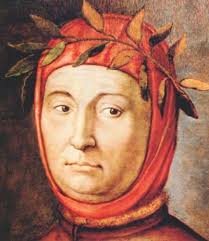
Open Boccaccio's interactive page (graphs of influences, similar and opposing positions, and quotes)
Background
Giovanni Boccaccio
Born: 1313 in Certaldo, Republic of Florence
Died: 21 December 1375 (aged about 62) in
Certaldo, Republic of Florence
Occupation: Writer, poet
Nationality: Italian
Period: Late Middle Ages
Main interests: Poetry, literature,
Influences: Dante, Francesco Petrarch, Paolo da
Perugia, Barbato da Sulmona, Giovanni Barrili,
Dionigi di Borgo San Sepolcro, Seneca, Ovid,
Tacitus, Virgil, Boethius, Aristotle, Aquinas,
Epicurus
Influenced: Chaucer, Shakespeare, George Eliot,
Tennyson, Keats, Longfellow, Swinburne,
Goethe, Montaigne
From Wikipedia
Boccaccio was an Italian writer, poet, correspond- ent of Petrarch, and an important Renaissance humanist. Born in the town of Certaldo, he became... one of the most important figures in the European literary panorama of the fourteenth century. Some scholars... define him as the greatest European prose writer of his time…. He is remembered for being one of the precursors of humanism, of which he helped lay the foundations in the city of Florence, in conjunction with the activity of his friend and teacher Petrarch.
Introductory Comments
Boccaccio was the youngest of the great fourteenth-century triumvirate - Dante, Petrarch, and Boccaccio - the three writers who, more than any others, helped shape the Italian Renaissance.
Yet they were very different men, with interests that overlapped in places and diverged in others. Dante enjoys a reputation as a religious writer, thanks to the theological scaffolding of his Divine Comedy; but it is fairer to say his work ranges across religion, ethics, politics, philosophy, and psychology. He was, in truth, as much a humanist as a devout Christian. Petrarch's humanism is easier to spot: it lives in his devotion to the human-centered works of classical antiquity and, in his sonnets, in his relentless excavation of his own inner life.
Boccaccio, the baby of the trio, was fittingly the most mischievous. He felt no need to dress his humanism in the robes of religion or the gown of classical scholarship. In the Decameron, at least, he was content simply to celebrate the bawdy humanity of his own contemporaries, uncesnored and unashamed. And to reach a wider audience he did so in Italian prose - a choice that was itself a celebration of his language's expressive range. Less pious, less refined, less scolding, less reverent, and rather more in-your-face: Boccaccio was, in short, the naughty little brother of the great Italian triumvirate.
Some of Boccaccio's Key Positions
Though the classical literature of Greece and Rome springs from pagan soil, it has much to teach us. Above all, it offers a worldly counterpoint to an otherworldly orthodoxy. We must of course love and honor God - but we do him no honor when we belittle his gift of human life.
In other words, we need not scorn the here and now merely to improve our prospects in the hereafter. Earthly life brims with adventures and pleasures, and the foremost of these is romantic love - though love, being what it is, can also lead us into our worst misadventures and sharpest pains.
If the pursuit of happiness now and then obliges us to bend social convention, or even our own moral principles, that is - within limits - forgivable. Virtue may sometimes be compromised for the sake of expediency. We should take life as it comes and seek our earthly happiness as best we can, neither weighed down by scruples nor haunted by remorse.
Human folly, meanwhile, is also one of life's great entertainments. Stories about how people actually behave - appetite-driven, self-interested, often absurd - engage readers far more than sermons about how they ought to behave. Such stories can be riotously funny and, at the same time, reveal enduring truths about human character.
Place in the History of Ideas
Boccaccio's Place in History of Ideas
Akash Kumar: The rediscovery of ancient texts such as Cicero's letters and reacquaintance with Ancient Greek literature in the early 14th cen- tury led to an important shift in the arts and intellectual life. There was an increased empha- sis on renewing Classical culture and learning as well as a consciousness of how much was lost after the fall of the Roman empire. These early Humanistic tendencies, seen in Dante as well as Boccaccio and Petrarch, are important precur- sors to the explosion of artistic and literary production during the Renaissance.
John Colin Dunlop: There are few works which have had an equal influence on literature with the Decameron of Boccaccio. Even in England its effects were powerful. From it Chaucer adopted the notion of the frame in which he has en- closed his tales, and the general manner of his stories.... In 1566, William Paynter printed many of Boccaccio's stories in English.... These are the pages of which Shakespeare made so much use.... In France, Boccaccio found early and illustrious imitators. In his own country he brought his native tongue to perfection, and gave stability to a mode of composition, which before his time had only existed in a rude state in Italy; he collected the current tales of the age,... delivered in a style which has no parallel for elegance, naivete, and grace. Hence... his imitators [were] more numerous than those of any author recorded in the annals of literature.
Random Thoughts on Boccaccio
Boccaccio's Decameron opens with ten attractive young men and women who, as the Black Death ravages Florence, flee the stricken city for a deserted villa in the countryside. But nested within this frame are a hundred other stories, for to pass some time most telling stories on a theme chosen by one of their number. Ten days, ten tales apiece -a hundred stories in all. As in Shakespeare's romantic comedies - which the Decameron clearly influenced - these tales turn on love, lust, wit, ambition, trickery, disguise, intrigue, hypocrisy, and slapstick. Unlike Shakespeare's comedies, whose naughtiness usually hides behind puns and other linguistic sleights of hand, most of Boccaccio's stories are explicitly, shamelessly, and - nearly seven hundred years on - still raucously bawdy.
Given the catastrophe these young people were fleeing, their stories are in one sense no surprise. Storytelling at that time must have flourished, not only as distraction but also as a way to make sense of it all: the Plague as divine retribution, as a test of faith, as the work of witches, as the vengeance of Jews. Stories then must have been ubiquitous. What is remarkable, then, is not that some young people spun tales while others perished around them, but that their tales were a raucous celebration of life in defiance of death. Faced with the devil at the gate, they did not pray, they did not sulk, and they did not blame. They told another story, and laughed in the devil's face.
Influences
Boccaccio was influenced by: Aquinas, Aristotle, Barrili, G., Boethius, Dante, Dionigi, Epicurus, Ovid, Perugia, P. da, Petrarch, Seneca, Sulmona, B. da, Tacitus, Virgil
Boccaccio influenced: Chaucer, Eliot, George, Goethe, Keats, Longfellow, Montaigne, Shakespeare, Swinburne, Tennyson
Similar and opposing positions
Thinkers with similar positions:
- Chaucer (Love cannot be constrained. It must be freely offered and accepted.)
- Epicurus (To realize happiness we must confine our desires to what is possible.)
- Erasmus (Everything of value in pagan culture is consistent with Christianity.)
- Ficino (Human dignity springs from our central place in the Chain of Being.)
- Herder (Poetry helps to define, if not also create, the uniqueness of a nation.)
- Ovid (Earthly or romantic love is the most appropriate subject for poetry.)
- Petrarch (Despite its pagan beliefs, we can learn much from classical antiquity.)
- Spinoza (As natural creatures, we must base morality on the laws of nature.)
Thinkers with opposing positions:
- Augustine (The end of all love is union with Christ - not with man or woman.)
- Dante (Virtue must never be compromised for the sake of expediency.)
- Foucault (Sex is more linked to the dynamics of power than to anything else.)
- Maimonides (Poetry is of little value, since it was founded on pure invention.)
- Plotinus (The highest form of love transforms the erotic into the ideal & pure.)
- Sade (Heed nothing but your desires; let them alone be your laws.)
- Schopenhauer (Since desire leads to suffering, self-denial is our best path.)
- Seneca (We should gracefully submit to fate - not try to overcome it.)
What others said about Boccaccio
- Umberto Bosco: With Petrarch he laid the foundations for the humanism... and raised vernacular literature to the level... of the classics of antiquity.
- Joan Acocella: Women are absolutely central to the "Decameron," and they are resourceful, direct, and frequently saucy.... Yet women are also... “fickle, quarrelsome, suspicious, weak, and fearful.”
- Michael Sherberg: The “Decameron”... speaks to the concerns of today.... Boccaccio urges us to change what we can and, in the face of what we can’t change, to chart a path to happiness anyway. He encourages compassion and empathy, companionship and generosity; he shows us how to tolerate ambiguity, and to respond with civility to those with whom we disagree.
- Albert William Levi: [Boccaccio both] undermine[s] the clergy with social criticism [and] demonstrate[s] the effectiveness of secular scholarship through [his] mastery of the literature and philosophy of the classical world.
- Mark Cartwright: [The "Decameron"] is a prescription for psychological survival, a way of mentally distancing from terrible visions [and] death counts….
- John Colin Dunlop: From Burton's "Anatomy of Melancholy," we learn that one of the great amusements of our ancestors was reading Boccaccio aloud, an entertainment [which quickly influenced] the literature of the country.
- Umberto Bosco: For the first time in the Middle Ages, Boccaccio in the "Decameron" deliberately shows man striving with fortune and learning to overcome it. To be truly noble... man must accept life as it is.... Thus Boccaccio insists both on man’s powers and on their inescapable limitations, without reference to the possible intervention of divine grace.
- Alyssa Granacki: ... I encourage readers everywhere to embrace the challenge the "Decameron" presents to envision the lives and communities we will build beyond the plague. [This was written during the The COVID-19 pandemic.]
Schools: Humanism
Main interests: Classics, Desire, History of Ideas, Literature, Love, Metaphors, Poetry, Psychology, Sexuality
Boccaccio's answers to philosophical questions
Art and Aesthetics
Literature need not always be morally uplifting. We delight in stories that describe our many flaws and indiscretions.
"Nothing is so indecent that it cannot be [written or] said to another person if the proper words are used to convey it."
Literature that describes how we humans actually behave is more engaging than lectures as to how we should behave.
Ethics
In our pursuit of happiness, virtue may at times be compromised for the sake of expediency.
We must accept life as it is & seek our earthly happiness as best we can, without being overly burdened with scruples.
"To have compassion for those who suffer is a human quality which everyone should possess, especially [the fortunate]."
Romantic love is an overwhelming feeling - one that can lead to both the most intense happiness and the greatest pain.
Enjoy life while you can, for "He that is Infinite has been pleased to decree immutably that all things have an end."
Law
"Every person born into this world has a natural right to sustain, preserve, and defend his own life to the best of his ability."
Psychology
"The heart is a wild and unpredictable thing; it leads us down paths we never thought we would tread."
The most pleasurable form of love is of course romantic love, but this is also at times the source of our greatest pain.
Religion and Theology
We do God a disservice when we belittle his gift to us of earthly life, with all its earthly pleasures and adventures.
"Heaven would indeed be heaven if lovers were there permitted as much enjoyment as they had experienced on earth."
Sex and Gender
Sex is both a moral issue and a psychological imperative. As such, it cannot be governed and contained. Nor should it.
Sex is a powerful instinct. And despite what many say, women can be as lustful and as lascivious as their male companions.
"[It is truly odd] that whereas a single cock is quite sufficient for ten hens, ten men are hard put to satisfy one woman."
Women should be given the same educational opportunities as do men, since they have the same capabilities as do men.
Society
Behavior can't be fully regulated, for "while superfluity engenders disgust, appetite is but whetted when fruit is forbidden."