Karl Barth (1886 - 1968)
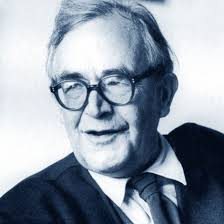
Open Barth's interactive page (graphs of influences, similar and opposing positions, and quotes)
Background
Karl Barth
Born: May 10, 1886 in Basel, Switzerland
Died: December 10, 1968 (aged 82) in Basel,
Switzerland
Notable work: The Epistle to the Romans,
Church Dogmatics
Tradition or movement: Reformed, Christian
socialism, Neo-Orthodoxy
Main interests: Theology, religion, politics, ethics
Influences: Jesus, St. Paul, Luther, Kant, Hegel,
Calvin, Schleiermacher, Kierkegaard, Hermann
Kutter, Christoph Blumhardt, Franz Overbeck,
Rudolf Bultmann, Wilhelm Herrmann,
Dostoyevsky
Influenced: Alasdair MacIntyre, Niebuhr, Dietrich
Bonhoeffer, Thomas F. Torrance, Jacques Ellul,
Stanley Hauerwas, Jürgen Moltmann, John
Updike, Miklós Szentkuthy, Emil Brunner,
Friedrich Gogarten, Eduard Thurneysen
From Wikipedia
Barth is well-known in theology for his landmark commentary The Epistle to the Romans, his involvement in the Confessing Church..., and especially his unfinished multi-volume theological summa the Church Dogmatics..... Like many Protestant theologians of his generation, Barth was educated in a liberal theology influenced by Adolf von Harnack, Friedrich Schleiermacher and others. [However, he later] became increasingly disillusioned with the liberal Christianity in which he had been trained.
Introductory Comments
In the autumn of 1914, a young Swiss pastor in the mill village of Safenwil read a manifesto in which 93 German intellectuals publicly endorsed the Kaiser's war. Among the signers were nearly all of his revered theology professors. Karl Barth later remembered it as a black day. If these apostles of progress and cultural Christianity could bless the guns so readily, what was their theology worth? It had turned God into a comfortable companion of human ethics and civilization and, apparently, of the German army. Barth answered with a commentary on Paul's Epistle to the Romans , which landed, as one Catholic reader put it, like a bomb on the playground of the theologians. God, Barth argued, is not the sum of our highest values. He is the "wholly other," who overturns our categories even as he enters history in Jesus Christ.
Barth never doubted that God truly revealed himself in a Jewish carpenter from Nazareth. Revelation was no pious metaphor. It was the staggering event in which God reconciled the world to himself. Yet in revealing himself, God does not hand himself over. He is known truly in Christ but never mastered, catalogued, or filed away. The moment we think we have God figured out, we are worshipping an idol of our own making. The cross makes the point vividly. Here is God at his most concrete, in flesh and blood, yet what kind of God displays his power through a Roman execution? Revelation, for Barth, is not a flashlight we wield but a lightning strike we survive.
Some of Barth's Key Positions
The God revealed in the life, death, and resurrection of Jesus stands in judgment over every human achievement, moral cause, and revered institution, including the church and the nation. Religion itself is no exception. As a human undertaking, it is humanity's attempt to lay hold of God, and it always fails.
God is "wholly other." Reason cannot reach him, religious feeling cannot reach him, and the study of nature cannot reach him. No road runs from humanity up to God. The gulf is real, but it is bridged from the other side: God speaks. His Word comes to us first and fully in Jesus Christ, then in the Scripture that testifies to Christ, and then in the preaching that proclaims him.
Faith, accordingly, is not a human achievement or a leap made from our side. It is a gift, the response that revelation itself awakens. Faith does not complete the work of salvation; it acknowledges what has already been done.
That work is done in Jesus Christ, who is both God's self-revelation to humanity and humanity's reconciliation with God. In him God and humanity meet. He is at once the God who chooses and the human being who is chosen. On the cross he takes upon himself the rejection humanity deserved, so that God’s final word to humanity is not No but Yes. Whether this means that all will in fact be saved, no one may presume to say.
Place in the History of Ideas
Barth's Place in History of Ideas
Thomas Forsyth Torrance: ... [Barth] initiated a radical change in Protestant thought, stressing the "wholly otherness of God" over the anthro- pocentrism of 19th-century liberal theology. Barth recovered the centrality of the doctrine of the Trinity within the dynamic and rational structure of Christian dogmatics; of particular importance was his reappropriation of the Christology of the ancient church. His vigorous opposition to German National Socialism led to his suspension as professor of theology at the University of Bonn. Subsequently, at Basel, he continued work on his monumental Church Dogmatics (completing four volumes) and delivered more than 500 sermons.
Martin Luther King: Most of my criticisms [of Barth] stem from the fact that I have been greatly influenced by liberal theology, maintaining a healthy respect for reason and a strong belief in the immanence as well as the transcendence of God.… Not that God is not transcendent. The liberal so believes, but he also contends that God is also immanent, expressing his creative genius throughout the universe which he is ever creating and always sustaining as well as through the essential goodness of the world and human life. It is not that God is above us to which the liberal objects, but he does demur when he is asked to affirm that God is with us only in a tiny segment of "experience."
Random Thoughts on Barth
Most theologians who pick a fight with Barth have tenure, but one of the more interesting fights came from a graduate student. In 1952, at Boston University, a young Martin Luther King Jr. wrote a seminar paper on Barth's conception of God and found it wanting. Barth's God, he complained, was too much the distant thunderer, breaking into history in the lightning flash of Christ and leaving the rest of existence in shadow. King had grown up in the Black church, where God was a daily presence. He had also been schooled in the Social Gospel. So, if God speaks only in Christ, what of the Hebrew prophets' passion for justice, or the neighbor's quiet act of love? King granted that Barth offered a needed corrective to a sentimental liberalism. But he would not give up his conviction that God's purposes run through all creation.
Barth might have replied that a God found everywhere is easily found agreeing with us. Read God's purposes off history, and you may end up blessing the Kaiser's cannons. Yet neither man lived his theology quite as the quarrel suggests. Barth's "distant" God made him the "red pastor" of Safenwil and later the chief author of the Barmen Declaration, which told the German church it owed obedience to Christ, not to the Nazi state. King's nearby God was no comfortable companion; he stood in judgment over segregated America. Perhaps, to step back a little, a God far enough away to judge us and near enough to march beside us is what both men were after.
Influences
Barth was influenced by: Blumhardt, C., Bultmann, R., Calvin, Dostoyevsky, Hegel, Herrmann, W., Jesus, Kant, Kierkegaard, Kutter, H., Luther, Overbeck, F., Paul of Tarsus, Schleiermacher
Barth influenced: Bonhoeffer, Brunner, Emil, Ellul, Jacques, Gogarten, F., Hauerwas, S., MacIntyre, Moltmann, J., Niebuhr, Szentkuthy, M., Thurneysen, E., Torrance, T., Updike, John
Similar and opposing positions
Thinkers with similar positions:
- Anselm (The sin of humanity cannot be removed by God's forgiveness alone.)
- Kierkegaard (Belief in God cannot be based on reason. Faith requires a leap.)
- Luther (Man's sinfulness is infinitely distinct from God's perfection.)
- Niebuhr (Man's innate sinfulness should temper our moral & political idealism.)
- Pascal (God is infinitely incomprehensible. We can't reason our way to God.)
- Paul of Tarsus (Our faith must focus on the centrality of Christ as Redeemer.)
- Pseudo-Denys (God is beyond reason. We know what He isn't, not what He is.)
Thinkers with opposing positions:
- Bultmann (We must demythologize Scripture to make God relevant today.)
- Calvin (Salvation is fated. God predestines both the saved & the damned.)
- Eckhart (We must empty our sense of self & let God's presence fill within us.)
- Eriugena (Philosophy is not in the service of theology. Reason precedes faith.)
- Feuerbach (God is for us the outward projection of a human's inward nature.)
- Fichte (The living moral order is itself God. There is no other God.)
- King (God is not only transcendent but also immanent: He dwells in us.)
- Nicholas of C. (We gain a mystic unity with God thru intellectual intuition.)
- Schleiermacher (Religion is above all & essentially an intuition & a feeling.)
What others said about Barth
- King: On every hand Barth speaks of time and eternity as two distinct realms, an unbridged chasm between God and man....
- King: It was once said of Herbert Spencer that he knew a great deal about the "Unknowable," so of Barth, one wonders how he came to know so much of the "Unknown God."
- T. F. Torrance: [Barth rejected] the 19th-century view that saw an identity between the Spirit of God and religious self-consciousness or between the laws of God and the natural structures of human life and history..... Drawing on the Church Fathers and the reformers, Barth demanded a return to the prophetic teaching of the Bible....
- Hans W. Frei: What emerges from Barth's theology is a breathtaking, daring vision of a universe in which tragedy, demonic evil and chaos have been met and defeated in the figure of Jesus Christ.
- Helmut Gollwitzer: It is because Barth turns his glance wholly away from the state of faith and directs it to the content of faith that he writes well.
- Tillich: [Barth's approach to theology denies the] possibility of understanding God's relation to man in any other way than heteronomously or extrinsically.
- King: Barth makes it explicit from the beginning that God is the unknowable and indescribable God. The hidden God remains hidden. Even when we say we know him our knowledge is of an incomprehensible Reality.… Barth's contention is summed up in the dictum: "Finitum non Capax infiniti," the finite has no capacity for the Infinite.
- Niebuhr: [Barth is a] man of infinite imagination and irresponsibility [writing] irrelevant theology to America. I don't read Barth any more.
Schools: Augustinianism, Christian Theology, Existentialism, Fideism
Main interests: Equality, Eschatology, Ethics, Faith, Immortality, Politics, Religion, Salvation, Theology
Barth's answers to philosophical questions
Religion and Theology
"To clasp the hands in prayer is the beginning of an uprising against the disorder of the world."
God can't be grasped or used. He is incomparable, unattainable and doesn't serve our needs. God is "wholly other."
"... we must believe in spite of God's hiddenness. This hiddenness of God necessarily reminds us of our human limitation."
God is absolutely transcendent. The gulf between God and the world we know is simply too wide to be bridged.
"No one can be saved - in virtue of what he can do. Everyone can be saved - in virtue of what God can do."
God and man converge in the "Christ event." Jesus's life, death and resurrection represent God's reconciliation to mankind.
In its composition the Bible "is everywhere a human word, and this human word is... intended to be... expounded as such."