Iamblichus (c. 245 - c. 325)
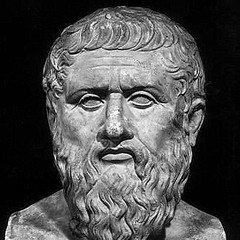
Open Iamblichus's interactive page (graphs of influences, similar and opposing positions, and quotes)
Background
Iamblichus
Born: c. 245 AD in Chalcis ad Belum (in what is
now Syria)
Died: c. 325 AD
Notable works: On the Pythagorean Way of Life,
Protrepticus, On the Egyptian Mysteries, On the
General Science of Mathematics, Theological
Principles of Arithmetic
Era: Ancient philosophy
School: Neoplatonism
Main interests: Cosmology, metaphysics,
salvation of the soul, religion, mathematics
Influences: Porphyry, Pythagoras and the
Neopythagoreans, Plato, Aristotle, Plotinus
Influenced: Proclus, Aedesius, Julian the
Apostate, Pseudo-Dionysius the Areopagite,
Marsilio Ficino, Giovanni Pico della Mirandola,
Giordano Bruno, Heinrich Cornelius Agrippa,
Carl Jung
From Wikipedia
Iamblichus detailed Plotinus's Neoplatonic formal divisions, applied Pythagorean number symbolism more systematically, and... interpreted Neoplaton-ic concepts mythically. Unlike Plotinus, who broke from Platonic tradition by positing a separate soul, Iamblichus reaffirmed the soul's embodiment in matter and believed that matter was as divine as the rest of the cosmos…. During the 15th & 16th century revival of interest in his philosophy, Iamblichus's name was rarely mentioned without the epithet "divine" or "most divine."
Introductory Comments
Iamblichus was an intellectual magpie, and a surprising one. He gathered up Neoplatonism (his teacher, after all, was Porphyry), Pythagoreanism (he held that mathematics unlocks the universe), and Platonism (no shock, given the Neoplatonism). More startling is the Aristotle in the mix, since Aristotle's philosophy pulls hard against Plato's. And threading through it all was religion: Iamblichus embraced the pagan gods but tethered them to Neoplatonic principles.
That tethering had consequences. By giving the old gods a Neoplatonic frame, Iamblichus lent religion a decidedly Neoplatonic cast - one that would echo, sometimes verbatim, in the early Christian Fathers. A sharp line between soul and body, an insistence on bodily restraint and spiritual purity, and the need for rites and rituals by which the soul might ascend toward union with the One: these notions he elaborated at length, and each left its mark on early Christian thought.
He also handed the Fathers a ready-made blueprint of a hierarchical universe. From the One, down through the gods, the archangels, angels, daimons, all the way to the human soul, Iamblichus mapped what looks like a spiritual trail - a path the soul might climb back to its source. A little like the mountain Moses climbed to meet God. Or - for readers schooled in the negative theology that defines God only by what he is not - a bit like the hill Sisyphus climbed to meet... nothing at all.
Some of Iamblichus's Key Positions
Plotinus and Porphyry are right that the One is the first principle of all being. But they underestimate the sheer density of reality between the One and ourselves: the divine does not descend in a few great steps but through many graded ranks, each requiring its own mediation.
They are also right that we should rise above merely bodily existence and live more spiritual lives. Yet they go too far in disparaging the body. The soul is not a reluctant prisoner of matter but fully descends into it, and the body, like the soul, has a divine origin.
Reality is arranged in many ranks of being - from the highest gods, through lesser but still divine beings, down to human beings and the lower animals. These ranks are ordered according to numerical proportions, so that number is woven into the very structure of the cosmos. Studying Pythagorean number symbolism therefore helps us understand the world and live in tune with it, aligning the soul with the mathematical order that governs all things.
Above all, mental contemplation alone cannot awaken our spirituality. As embodied souls, we need embodied practices. The rites, myths, and divinities of the old religions - and even sacred incantations and ritual acts (theurgy) - can carry us toward an enlightened and divinized life, reminding us of the divinity we already bear.
Place in the History of Ideas
Iamblichus's Place in History of Ideas
Randall Collins: Plotinus' pure intellectuality... could not be maintained; popular techniques of magic increasingly prevailed as [Neoplatonism] went underground. Iamblichus put theurgy - the process of becoming a god by magical procedures - above intellectual philosophy. From now on, Neoplatonists claimed powers such as clairvoyance, the ability to raise phantoms and to work magic spells. The coalition was widened into one last grand effort to oppose Christianity. Iamblichus brought in Gnosticism (anathema to Plotinus), The Egyptian mysteries, the anachronistic Chaldean Oracles. The movement was not without political successes: a circle of Iamblichus' spirit-calling followers at Pergamum encouraged the young Julian in the direction that would lead to his brief overthrow of official Christianity during 361-362.
Anthony Gottlieb: [T]he main significance of Iamblichus in the history of philosophy is as a theologian.... Like Porphyry, he tried to turn the dry concepts of Plotinus' system into living deities by identifying abstractions such as Intellect and Soul with gods from the Greek and Egyptian pantheons. He thus helped to create a philosophical theology for paganism which influenced the development of Christian thought. This project culminated in the work of Proclus, who was head of the Plotinian philosophical school in Athens....
Random Thoughts on Iamblichus
How does one shake off bad habits, dangerous compulsions, personal demons? How does one become the person one wants to be - or ought to be? Many would insist that genuine transformation must come from within. You must do the hard inner work, the soul-searching; otherwise whatever changes you make will be superficial, and short-lived. Iamblichus disagreed, at least where spiritual improvement was concerned. He held that the soul is too deeply enmeshed in the body to free itself by its own efforts. Hence the need for physical rites and rituals - practices that seep through the flesh, take hold of the core, and work from the outside in.
Inside-out or outside-in: the quarrel is not so different from the one that divides actors. Method actors work from within, inhabiting the inner life of the character they play. Technical actors work from without, building the role out of externals - makeup, voice, posture, mannerism. Both want to become someone else; they simply approach the border from opposite sides. Which brings us to a favorite Hollywood story. Dustin Hoffman, a devoted Method man, is said to have stayed up all night to play a character who had done the same. Arriving haggard on set, he drew a question from Laurence Olivier, consummate technician, who asked why he looked so wrecked. Hoffman explained. Olivier's reply: "My dear boy, why don't you just try acting? It's so much easier." Iamblichus would surely have approved.
Influences
Iamblichus was influenced by: Aristotle, Plato, Plotinus, Porphyry, Pythagoras
Iamblichus influenced: Aedesius, Agrippa, H. C., Bruno, Ficino, Julian, Jung, Pico, Proclus, Pseudo-Denys
Similar and opposing positions
Thinkers with similar positions:
- Aristotle (Happiness springs from living in accordance with reason and virtue.)
- Ficino (A hierarchy of substances descends from God down to lowly matter.)
- James (Tho' our bodies live in a physical world, our souls live a spiritual universe)
- Newton (Mathematics is key to understanding actual workings of this world.)
- Plotinus (The One, being perfect & eternal, is stable, uniform and unchanging.)
- Porphyry (The purely contemplative part of the Soul is its higher & eternal part.)
- Proclus (Philosophy can liberate the soul from subjection to bodily passions.)
- Pythagoras (Ultimate truth is revealed to the intellect but not to the senses.)
Thinkers with opposing positions:
- Averroes (The individual's soul ends when he or she dies. It is not eternal.)
- Bradley (Reality is ideal, whole and one. There are no real separate things.)
- Democritus (Everything is the result of natural laws related to matter & motion)
- Diderot (The universe is simply matter in motion, bound by laws of nature.)
- Hobbes (All things, including humans and their minds, are entirely material.)
- Ovid (Earthly or romantic love is the most appropriate subject for poetry.)
- Plotinus (Enlightenment requires only spirituality - not magic and ritual.)
- Pyrrho (Given our human limitations, we can never be sure of what is true.)
What others said about Iamblichus
- John Dillon: [Iamblichus attempted] to create a more elaborate philosophical system that integrates Platonic and Pythagorean doctrines.
- Eunapius: [Iamblichus often] conversed with his pupils and was unexacting in his mode of life and of an ancient simplicity. As they drank their wine he used to charm those present by his conversation and filled them as with nectar.
- Henry Osborn Taylor: [Plotinus] had a disciple Porphyry, like himself a sage - and yet a different sage [whose] supra-rationalities hungered for many things from which his rational nature turned askance. But he has a disciple, Iamblicus by name, whose rational nature not only ceases to protest, but of its free will prostitutes itself in the service of unreason.
- Anthony Gottlieb: ... Iamblichus was [also] quite a scholar. [H]e produced commentaries on many of Plato's dialogues, several of Aristotle's treatises,... [and his own mathematical] treatises on acoustics and astronomy.
- Thomas Taylor: After Plotinus, there was an inferiority [and] a degradation of philosophy, which was not recovered until the time of Iamblichus.
- Manly P. Hall: [N]ot so very long ago the greatest minds of the world believed in the existence of fairies, and it is still an open question as to whether Plato... and Iamblichus were wrong when they avowed their reality.
- Emperor Julian: I am aware that the great Plato himself, and after him, a man posterior to him in date, though not in mind, I mean Iamblichus of Chalcis... did both of them as far as hypothesis goes, take for granted the fact of a Creation and assumed the universe to have been, in a certain sense, the Work of Time....
- Anthony Gottlieb: Flying in the face of the mainly intellectual spirit of Plotinus, Iamblichus believed that an important part of philosophy lay in the performance of ritual acts that one should not even try to understand.
Schools: Neoplatonism, Platonism, Pythagoreanism
Main interests: Cosmology, Free/Unfree Will, Immortality, Mathematics, Metaphysics, Religion
Iamblichus's answers to philosophical questions
Ethics
Love or desire is the firstborn of the One. It is a cosmic force that brings the multiplicity of the universe into unity.
A spiritual life is best in many ways. However, the body, like the soul, has a divine origin and should not be despised.
Law
"Perfect justice rules the world for the Powers that are superior to us know the whole life of the Soul and all its former lives."
Metaphysics
Though the One is the first principle, the Many produces soul and intellect. Nature is the embodiment of these forces.
"All things in the world of Nature are not controlled by Fate for the soul has a principle of its own."
Nature
Nature springs from higher, spiritual powers becoming corporeal and is bound by chains of necessity called fate.
Religion and Theology
When divinely inspired, people live "another and diviner kind [of life], which fills them & takes complete possession of them."
The One is "Great and Supreme, the Source of all things, and root of the first ideals subsisting in the Supreme Mind."
From the One springs all the levels of being that exist in our world, from the highest divinities down to the lowest animals.
As embodied souls we need embodied rites and rituals to show us the divinity we all possess.
The theurgic discipline "leads the soul to the Creator of the world... & frees it of everything pertaining to the realm of matter."
Science
The various levels of being are ordered according to numerical symbols and possess certain mathematical proportions.