H. L. A. Hart (1907 - 1992)
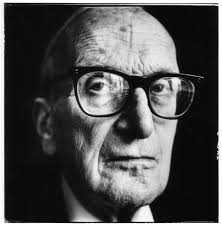
Open Hart's interactive page (graphs of influences, similar and opposing positions, and quotes)
Background
H. L. A. Hart
Born: 18 July 1907 in Harrogate, United Kingdom
Died: 19 December 1992 (aged 85) in Oxford,
United Kingdom
Alma mater: New College, Oxford
Era: 20th-century philosophy
Region: Western philosophers
School: Analytic
Main interests: Jurisprudence, legal positivism,
linguistic philosophy, political philosophy,
liberalism, utilitarianism
Influences: Jeremy Bentham, John Austin, J. L.
Austin, Ludwig Wittgenstein, Hans Kelsen, Max
Weber, John Stuart Mill, Gilbert Ryle, Stuart
Hampshire
Influenced: Ronald Dworkin, John Rawls, Joseph
Raz, John Finnis, Neil MacCormick, Brian Barry,
John Gardner, Jeremy Waldron, Peter Hacker,
Frederick Schauer
From Wikipedia
Hart is considered one of the world's foremost legal philosophers in the twentieth century, alongside Hans Kelsen…. Hart's method combined the careful analysis of twentieth-century analytic philosophy with the jurisprudential tradition of Jeremy Bentham, the great English legal, political, and moral philosopher. Hart's conception of law had parallels to the Pure Theory of Law formulated by Austrian legal philosopher Hans Kelsen, though Hart rejected several distinctive features of Kelsen's theory.
Introductory Comments
Hart insisted that law and morality are separate beasts: they may share a bed from time to time, but they are under no obligation to do so. In The Concept of Law (1961), Hart argued that a rule's legal validity depends entirely on its social pedi- gree - whether it was enacted through recog- nized procedures and institutions - not on whether it passes some moral smell test. To say "an unjust law is no law at all," as natural law theorists were fond of doing, struck Hart as not only confused but dangerous: it blurred the very distinction we need in order to criticize bad laws clearly. Against the natural law tradition, Hart maintained that legal systems are observable social facts, not reflections of a higher moral order. Nature, he might have said, has enough to answer for without also being blamed for tax codes and parking regulations.
Not everyone was persuaded, of course. Lon Fuller fired back that law has an inner morality - requirements like clarity, consistency, and non-retroactivity - without which a system of rules simply cannot function as law at all. If your legal code is secret, contradictory, and changes retro- actively on Tuesdays, you don't have a wicked legal system; you have no legal system. More damningly, Gustav Radbruch argued that a law sufficiently cruel or unjust forfeits its claim to legal validity entirely - a principle the Nurem- berg trials implicitly relied on when Nazi officials claimed to be merely obeying legal orders.
Some of Hart's Key Positions
The law is, among other things, a work of language and, as such, analyis of the law can benefit from the insights of modern linguistic philosophers. Consider the abstract word "right" itself: Instead of immediately jumping to transcendent claims, we should first look at how people actually use the term "right."
Likewise, we should take a down-to-earth, empirical approach when analyzing how the law actually functions. We should avoid moral categories and transcendent categories, and instead look at the actual behavior: how lawyers make their cases, how judges make their decisions.
This is not to say that moral principles have no place in legal analysis. Above and beyond the written law and the established legal proce- dures, certain principles - at times moral in nature - serve as "secondary rules" that help judges interpret and implement the "primary rules" spelled out in the written law.
Case in point is Mill’s "harm principle," which maintains that no activity should be outlawed if it harms no one other than its willing adult participants. Using this principle, it's clear that homosexual activity between consenting adults should not be outlawed. The fact that this activity is offensive to some does not constitute actual harm.
Place in the History of Ideas
Hart's Place in History of Ideas
Matthew H. Kramer: Hart is best known for his contributions to legal philosophy generally and to legal positivism specifically. [Though] he acknowledged his intellectual debts to his positivist predecessors Jeremy Bentham he and John Austin, he... criticized their theories for obscuring the normative dimension of law (i.e., law’s orientation toward what ought to be). At the same time, he emphasized that the normativity of law is not necessarily moral; throughout his jurisprudential work, he maintained a legal-positivist insistence on the separability of law and morality. In his classic 1961 book The Concept of Law, and in a number of essays written approximately contemporane- ously, he presented a hugely influential account of the ways in which different types of norms combine to form the structure of a legal system.
William C. Starr: Hart is clearly the leading contemporary legal positivist in Anglo-American jurisprudence.... Yet it seems many neglect to look deeply enough at his view on morality and the law. This article will explain the basic premise of Hart's philosophy and demonstrate that Hart (a) believes that certain fundamental principles of justice are required for a legal system; (b) takes the relationship between law and morality extremely seriously; (c) finds that there is much in natural law theory which any philosophically defensible theory of law must include….
Random Thoughts on Hart
Though Hart insisted that law and morality are not necessarily connected, he was no crude re- ductionist. He rejected John Austin's blunt theo- ry that law is just the command of a sovereign backed by the threat of punishment. Hart recog- nized that a mature legal order is far more so- phisticated than a series of orders barked from on high. It requires not only primary rules, which govern the conduct of citizens, but also second- ary rules that give the system its structure and legitimacy. Secondary rules specify how laws may be created, altered, and repealed and how disputes are resolved and violations remedied.
Ronald Dworkin, who later held Hart's same chair at Oxford, agreed that Hart had captured something vital about how legal systems are structured, but he insisted that Hart’s model faltered precisely where the action is hottest: in hard cases. When statutes run thin or collide, judges don't simply consult a rulebook; they interpret the law as if it were the work of a sin- gle, morally coherent author, seeking the read- ing that best fits legal history and casts it in its most principled light. For Dworkin, adjudication is not a mechanical exercise but a moral perfor- mance, one that exposes the deep gap between Hart’s positivism and the lived reality of judicial reasoning. Try as the positivists might to sweep morality out the front door, she has a habit of tiptoeing it back in through the back door, and smiling innocently as if she had never left.
Influences
Hart was influenced by: Austin, J.L., Austin, John, Bentham, Hampshire, S., Kelsen, Hans, Mill, Ryle, Weber, Wittgenstein
Hart influenced: Barry, Brian, Dworkin, Finnis, John, Gardner, John, Hacker, Peter, MacCormick, N., Rawls, Raz, Joseph, Schauer, F., Waldron, J.
Similar and opposing positions
Thinkers with similar positions:
- Bentham (There is no necessary connection between law and morals.)
- Hobbes (Law leaves people free to do whatever it does not explicitly forbid.)
- Holmes (Natural law does not exist. Morality has nothing to do with law.)
- Hume (Consequences, not intentions, determine the moral value of actions.)
- Kelsen (Law is a hierarchy of norms all springing from a basic hypothetical norm.)
- Mill (Laws should only proscribe activities that do nontrivial harm to others.)
- Nussbaum (Laws that punish should be based on harm done, not disgust felt.)
- Rawls (Anyone who benefits from an institution is obliged to help sustain it.)
- Wittgenstein (Words are tools. A word's meaning is its use in the language.)
Thinkers with opposing positions:
- Austin (Law is the command of the sovereign backed by threat of punishment.)
- Berlin (Certain values, like liberty, are universal and qualify as "natural laws.")
- Godwin (The goods that benefit us must be regulated by justice alone, not laws.)
- Grotius (God's natural laws form the basis of our moral and political systems.)
- MacIntyre (God is both the source and the pinnacle of justice and natural law.)
- Nozick (No laws should limit people's consensual acts in economic matters.)
- Rawls (Though laws don't always have a moral basis, they should when possible.)
What others said about Hart
- William C. Starr: Hart is a legal positivist, but he is a critical moral philosopher as well.
- Shane J. Ralston: Elements of Hart’s positivism were inspired by the works of John Austin [and] Jeremy Bentham…. [Some other] legal philosophers lean… towards the natural law tradition… of Aristotle, Aquinas, and Blackstone.
- William C. Starr: [Hart distinguished between primary and secondary rules.] Primary rules are "duty imposing" rules. They impose certain specific duties upon the citizens of a state…. Secondary rules are not duty-imposing rules. They are what Hart calls power-conferring rules. They state the manner in which primary rules may be recognized, changed, and adjudicated.
- John Gardner: [Hart and Rawls] together revived political philosophy (and helped to shape as well as capture the... liberalism of the 1960s) by asserting political philosophy's relative autonomy from the rest of moral philosophy.
- Matthew H. Kramer: Generally sympathetic to Rawls’s ideas, Hart nonetheless challenged Rawls’s remarks about the overriding priority of liberty.
- Shane J. Ralston: ... Hart insisted that it is best to take a linguistic approach to rights analysis…. As such, we should first consider how people ordinarily use the term "right" as preparation for comprehending the concept itself.
- Matthew H. Kramer: [Hart] contended that anyone who benefits greatly from the presence of some institution is morally required to bear a... share of the burden of sustaining that institution’s existence. Although the principle of fair play has often come under attack in the decades since Hart fleetingly propounded it, the theory continues to be espoused by some….
- Robert S. Summers: For Hart, to say that a law is justly administered is to say that it is impartially applied to all those and only those who are "alike in the relevant respect marked out by the law itself."
Schools: Analytic Philosophy, Legal Positivism, Liberalism, Ordinary Language Philosophy, Positivism, Utilitarianism
Main interests: Jurisprudence, Justice, Language, Law, Political Philosophy, Politics
Hart's answers to philosophical questions
Ethics
First, acknowledge the problem: "the history of morals [shows us that] the thing to do with a moral quandary is not to hide it."
Law
[look up what he says on natural law]
Analysis of the law can benefit from the insights of modern linguistic philosophers, like those of Wittgenstein's.
We must realize "that different principles... are relevant at different points in any morally acceptable account of punishment."